


Expression of surface and intracellular Toll-like receptors by mature mast cells
- PMID: 28450795
- PMCID: PMC5382879
- DOI: 10.5114/ceji.2016.65131
Expression of surface and intracellular Toll-like receptors by mature mast cells
Abstract
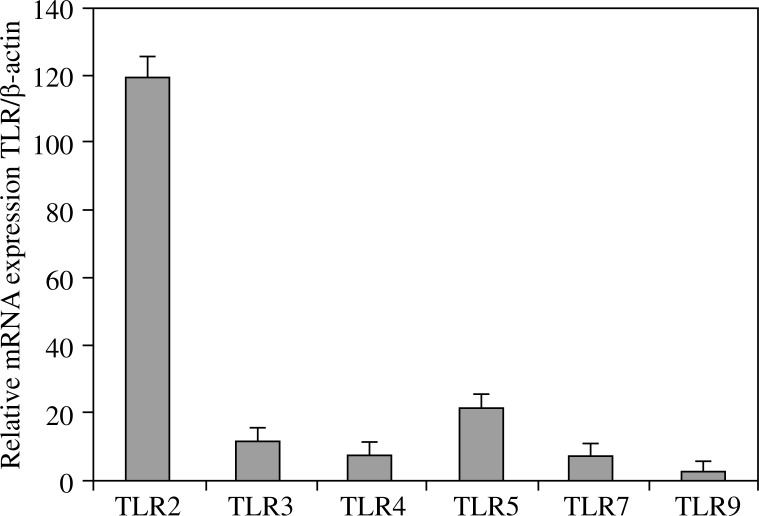
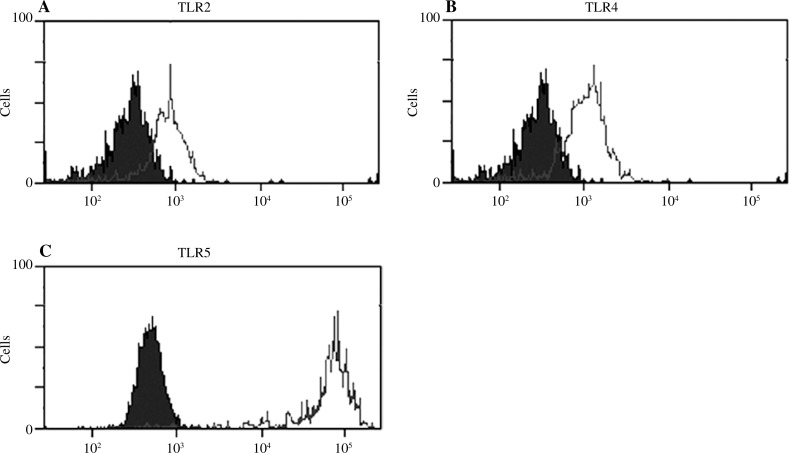
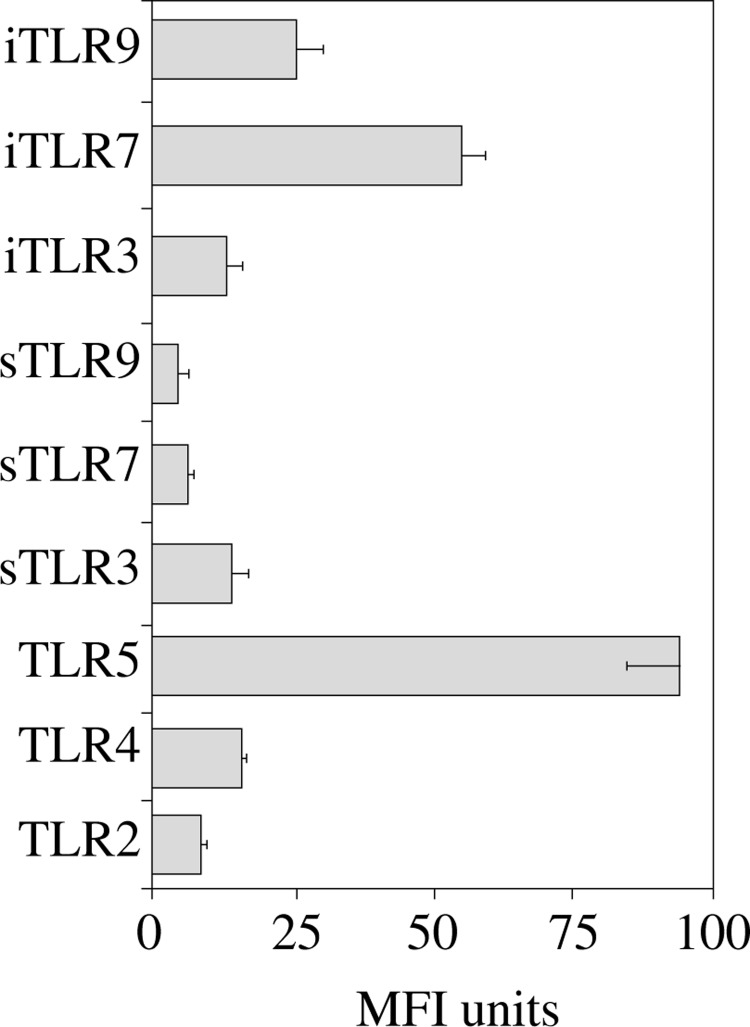
Nowadays, more and more data indicate that mast cells play an important role in host defense against pathogens. That is why it is essential to understand the expression of Toll-like receptors (TLRs) by mast cells, because these molecules play particularly significant role in initiation host defense against microorganisms as they recognize both wide range of microbial pathogen-associated molecular patterns (PAMPs) and various endogenous damage-associated molecular patterns (DAMPs) released in response to infection. Therefore, we examined the constitutive expression of both surface and endosomal TLRs in rat native fully mature tissue mast cells. By the use of qRT-PCR we found that these cells express mRNAs for TLR2, TLR3, TLR4, TLR5, TLR7, and TLR9. The expression of TLR3, TLR4, TLR5, TLR7, and TLR9 transcripts were low and comparable and only the expression of TLR2 transcript was significant. By the use of flow cytometry technique, we clearly documented that mast cells express TLR2, TLR4, and TLR5 on cell surface, while TLR3, TLR7, and TLR9 proteins are located both on the cell membrane and intracellularly. The highest expression was observed for TLR5 and the lowest for surface TLR7. These observations undoubtedly indicate that mature tissue mast cells have a broad set of TLR molecules, thus can recognize and bind bacterial, viral, and fungal PAMPs as well as various endogenous molecules generated in response to infection.
Keywords: Toll-like receptors; antimicrobial defense; mast cells; pattern recognition receptors.
Conflict of interest statement
The authors declare no conflict of interest.
Figures

References
LinkOut - more resources
Full Text Sources
Other Literature Sources
