


The Impact of Osseous Malalignment and Realignment Procedures in Knee Ligament Surgery: A Systematic Review of the Clinical Evidence
- PMID: 28451605
- PMCID: PMC5400157
- DOI: 10.1177/2325967117697287
The Impact of Osseous Malalignment and Realignment Procedures in Knee Ligament Surgery: A Systematic Review of the Clinical Evidence
Abstract
Background: Failure rates of knee ligament surgery may be high, and the impact of osseous alignment on surgical outcome remains controversial. Basic science studies have demonstrated that osseous malalignment can negatively affect ligament strain and that realignment procedures may improve knee joint stability.
Hypothesis/purpose: The purpose of this review was to summarize the clinical evidence concerning the impact of osseous malalignment and realignment procedures in knee ligament surgery. The hypotheses were that lower extremity malalignment would be an important contributor to knee ligament surgery failure and that realignment surgery would contribute to increased knee stability and improved outcome in select cases.
Study design: Systematic review; Level of evidence, 4.
Methods: According to the PRISMA (Preferred Reporting Items for Systematic Reviews and Meta-Analyses) guidelines, a systematic electronic search of the PubMed database was performed in November 2015 to identify clinical studies investigating (A) the influence of osseous alignment on postoperative stability and/or failure rates after knee ligament surgery and (B) the impact of osseous realignment procedures in unstable knees with or without additional knee ligament surgery on postoperative knee function and stability. Methodological quality of the studies was assessed using the Oxford Centre for Evidence-Based Medicine Levels of Evidence and the Coleman Methodological Score (CMS).
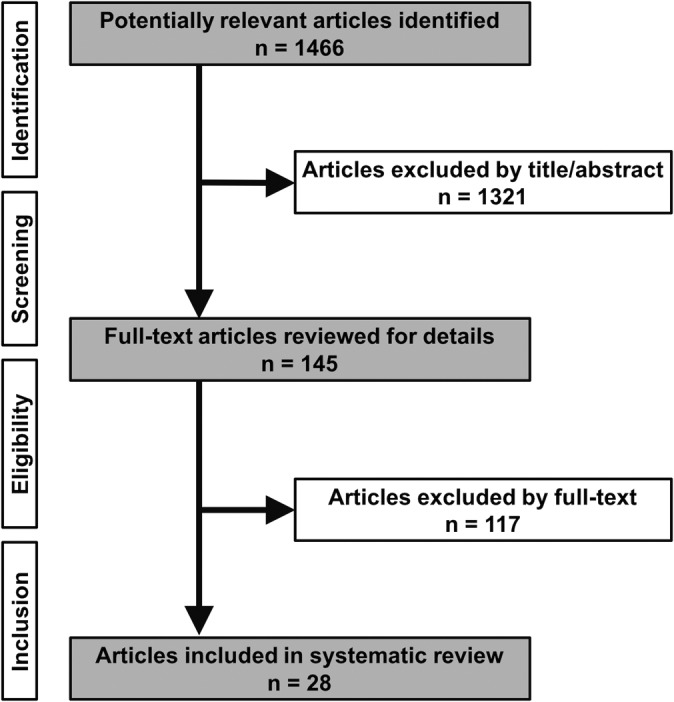
Results: Of the 1466 potentially relevant articles, 28 studies fulfilled the inclusion and exclusion criteria. Average study quality was poor (CMS, 40). For part A, studies showed increased rerupture rate after anterior cruciate ligament (ACL) replacement in patients with increased tibial slope. Concerning the posterior cruciate ligament (PCL)/posterolateral corner (PLC)/lateral collateral ligament (LCL), varus malalignment was considered a significant risk factor for failure. For part B, studies showed decreased anterior tibial translation after slope-decreasing high tibial osteotomy in ACL-deficient knees. Correcting varus malalignment in PCL/PLC/LCL instability also showed increased stability and better outcomes.
Conclusion: In cases of complex knee instability, the 3-dimensional osseous alignment of the knee should be considered (eg, mechanical weightbearing line and tibial slope). In cases of failed ACL reconstruction, the tibial slope should be considered, and slope-reducing osteotomies are often helpful in the patient revised multiple times. In cases of chronic PCL and/or PLC instability, osseous correction of the varus alignment may reduce the failure rate and is often the first step in treatment. Changes in the mechanical axis should be considered in all cases of instability accompanied by early unicompartmental osteoarthritis.
Keywords: ACL revision; high tibial osteotomy; knee instability; osseous geometry; tibial slope.
Conflict of interest statement
One or more of the authors has declared the following potential conflict of interest or source of funding: T.T. is a consultant for Arthrex and Bauerfeind. J.P. is a consultant for Stryker. S.H. is a consultant for Arthrex. M.T.H. is a consultant for Depuy Synthes and Smith & Nephew; received a research grant from Mathys; and is a paid speaker for Arthrex and Zimmer. A.B.I. is a consultant for Arthrex and receives royalties from Arthrex and Arthrosurface.
Figures
References
-
- Agneskirchner JD, Hurschler C, Stukenborg-Colsman C, Imhoff AB, Lobenhoffer P. Effect of high tibial flexion osteotomy on cartilage pressure and joint kinematics: a biomechanical study in human cadaveric knees. Winner of the AGA-DonJoy Award 2004. Arch Orthop Trauma Surg. 2004;124:575–584. - PubMed
-
- Agneskirchner JD, Hurschler C, Wrann CD, Lobenhoffer P. The effects of valgus medial opening wedge high tibial osteotomy on articular cartilage pressure of the knee: a biomechanical study. Arthroscopy. 2007;23:852–861. - PubMed
-
- Amis AA. Biomechanics of high tibial osteotomy. Knee Surg Sports Traumatol Arthrosc. 2013;21:197–205. - PubMed
-
- Arthur A, LaPrade RF, Agel J. Proximal tibial opening wedge osteotomy as the initial treatment for chronic posterolateral corner deficiency in the varus knee: a prospective clinical study. Am J Sports Med. 2007;35:1844–1850. - PubMed
Publication types
LinkOut - more resources
Full Text Sources
Other Literature Sources
Medical
