


Isolation, cloning, and characterization of a cuticle collagen gene, Mi-col-5, in Meloidogyne incognita
- PMID: 28452012
- PMCID: PMC5428120
- DOI: 10.1007/s13205-017-0665-1
Isolation, cloning, and characterization of a cuticle collagen gene, Mi-col-5, in Meloidogyne incognita
Abstract
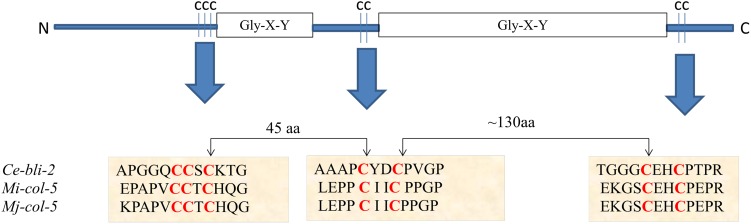
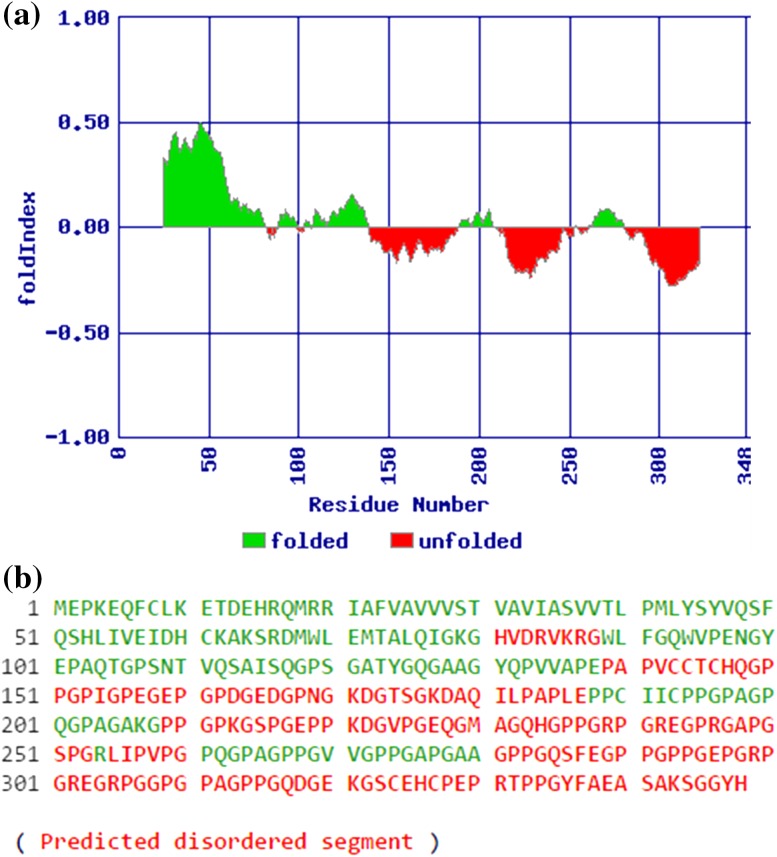
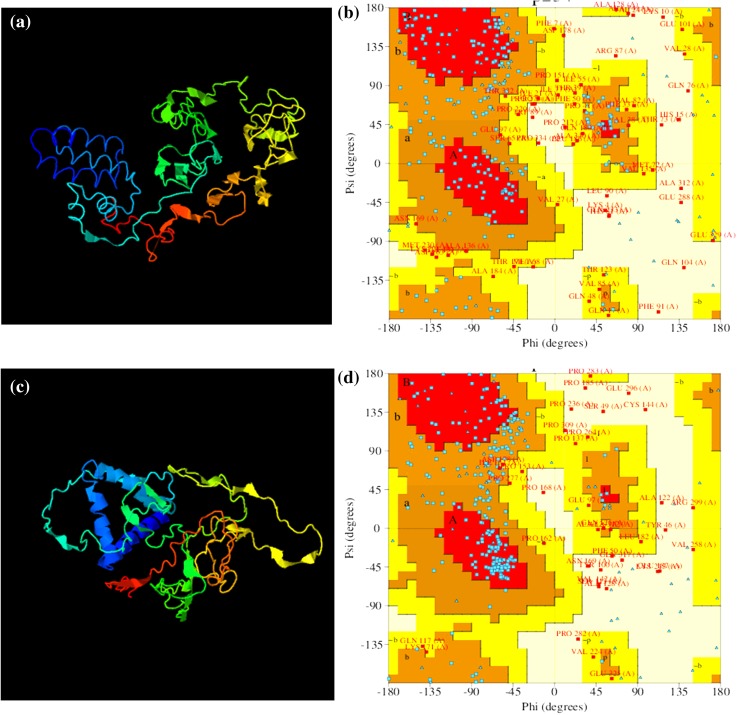
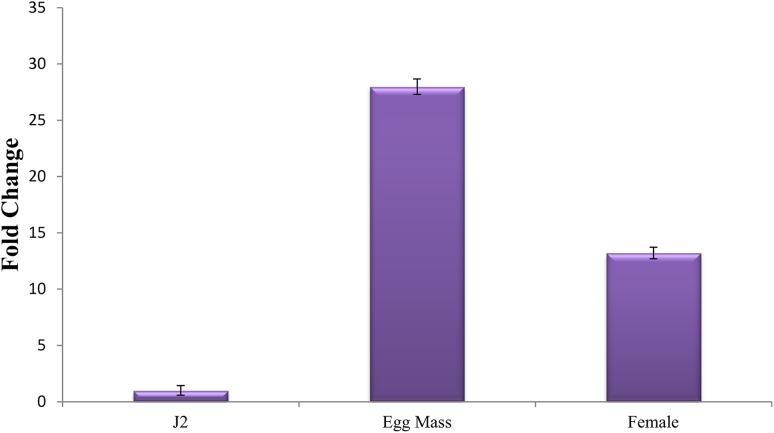
Cuticle collagens form a major part of the nematode cuticle and are responsible for maintaining the overall shape of the animal and its protection from the external environment. Although substantial research on cuticle collagen genes has been carried out in Caenorhabditis elegans, their isolation and characterization in plant parasitic nematodes have been limited to a few genes only. In this study, a cuticle collagen gene, Mi-col-5, was isolated from root-knot nematode, Meloidogyne incognita. A partial segment of 402 bp was first cloned and analyzed on Gbrowse followed by subsequent cloning of the 1047 bp long full cDNA specifying the open reading frame. The deduced amino acid sequence showed 92% sequence identity with that of Mj-col-5. However, a transmembrane helix was predicted in Mi-col-5 which was not present in Mj-col-5. The conserved pattern of cysteine residues in Mi-col-5 suggested that it belonged to group 2 of nematode cuticle collagens but with a longer carboxy terminal region as was the case with Mj-col-5. Domain prediction revealed the presence of a nematode cuticle collagen N terminal domain and a pfam collagen domain along with collagen triple helix repeats. A phylogenetic tree based on the amino acid sequences showed evolutionary relationship of Mi-col-5 with cuticle collagens genes of other nematodes. 3D models for Mi-col-5 were predicted with the best confidence score of -2.78. Expression of Mi-col-5 transcript was found to be maximum in egg masses followed by adult females and J2s suggesting its role in the early stages of the development of the nematode during its life cycle.
Keywords: Cuticle collagens; Egg masses; Meloidogyne incognita; Mi-col-5.
Conflict of interest statement
The authors declare that there is no conflict of interest regarding the publication of this article.
Figures





References
-
- Abad P, Gouzy J, Aury JM, Castagnone-Sereno P, Danchin EG, Deleury E, Perfus-Barbeoch L, Anthouard V, Artiguenave F, Blok VC, Caillaud MC, Coutinho PM, Dasilva C, De Luca F, Deau F, Esquibet M, Flutre T, Goldstone JV, Hamamouch N, Hewezi T, Jaillon O, Jubin C, Leonetti P, Magliano M, Maier TR, Markov GV, McVeigh P, Pesole G, Poulai J, Robinson-Rechavi M, Sallet E, Segurens B, Steinbach D, Tytgat T, Ugarte E, van Ghelder C, Veronico P, Baum TJ, Blaxter M, Bleve-Zacheo T, Davis EL, Ewbank JJ, Favery B, Grenier E, Henrissat B, Jones JT, Laudet V, Maule AG, Quesneville H, Rosso MN, Schiex T, Smant G, Weissenbach J, Wincker P. Genome sequence of the metazoan plant-parasitic nematode Meloidogyne incognita. Nat Biotechnol. 2008;26:909–915. doi: 10.1038/nbt.1482. - DOI - PubMed
-
- Gasteiger E, Hoogland C, Gattiker A, Duvaud S, Wilkins MR, Appel RD, Bairoch A. Protein identification and analysis tools on the expasy server. In: Walker JM, editor. The proteomics protocols handbook. Totowa: Humana; 2005. pp. 571–607.
LinkOut - more resources
Full Text Sources
Other Literature Sources
