


Gene signatures associated with drug resistance to irinotecan and oxaliplatin predict a poor prognosis in patients with colorectal cancer
- PMID: 28454366
- PMCID: PMC5403337
- DOI: 10.3892/ol.2017.5691
Gene signatures associated with drug resistance to irinotecan and oxaliplatin predict a poor prognosis in patients with colorectal cancer
Abstract
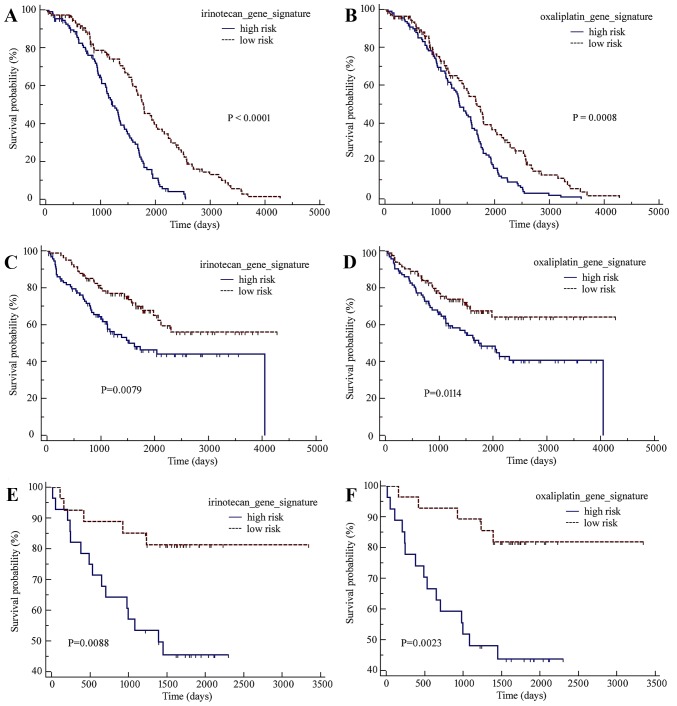
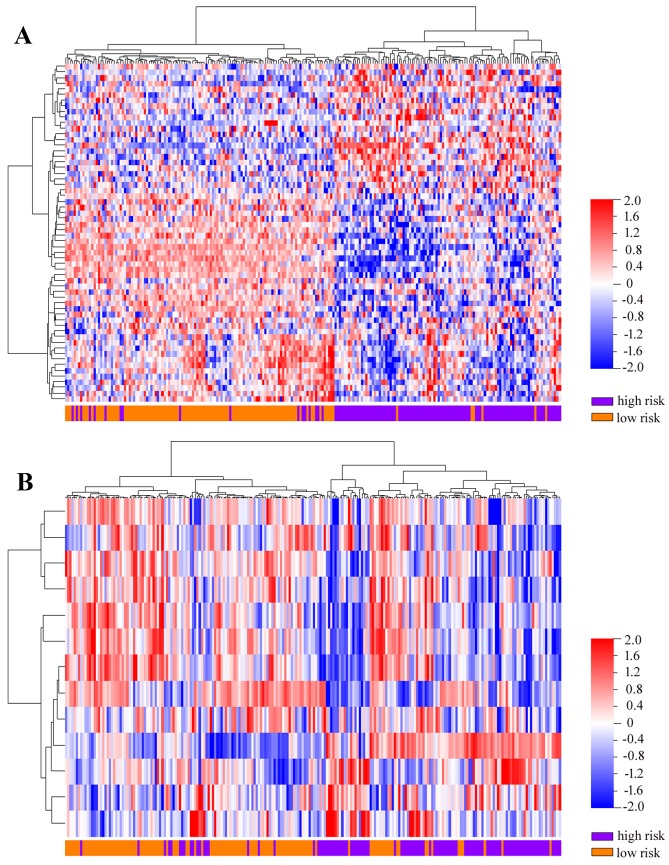
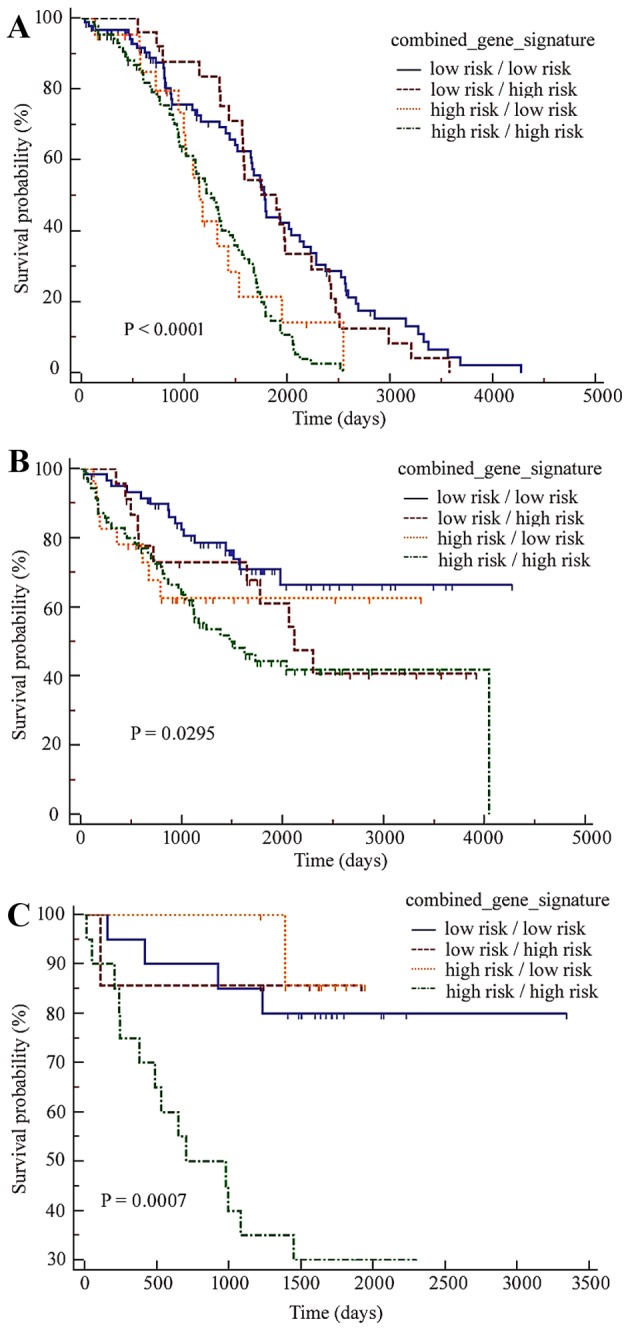
The identification of novel survival predictors may help to improve the appropriate management of colorectal cancer (CRC). In the present study, two gene sets associated with irinotecan or oxaliplatin resistance in CRC cell lines were first identified and subsequently applied to the clinical CRC microarray dataset GSE14333. Subsequently, a 60-gene irinotecan resistance-associated signature and a 13-gene oxaliplatin resistance-associated signature were established, which were able to classify CRC patients into high- and low-risk subgroups with varied clinical outcomes [irinotecan-resistance gene signature: hazard ratio (HR)=0.4607, 95% confidence interval (CI)=0.3369-0.6300, P<0.0001; oxaliplatin-resistance gene signature: HR=0.6119, 95% CI=0.4547-0.8233, P=0.0008]. The performance of these two gene expression signatures in predicting outcome risk were also validated in two other independent CRC gene expression microarray datasets, GSE17536 (irinotecan-resistance gene signature: HR=0.5318, 95% CI=0.3359-0.8419, P=0.0079; oxaliplatin-resistance gene signature: HR=0.5383, 95% CI=0.3400-0.8521, P=0.0114) and GSE17537 (irinotecan-resistance gene signature: HR=0.2827, 95% CI=0.1173-0.6813, P=0.0088; oxaliplatin-resistance gene signature: HR=0.2378, 95% CI=0.09773-0.5784, P=0.0023). Furthermore, the combination of these two gene classifiers demonstrated a superior performance in CRC prognosis prediction than either used individually. Therefore, this study proposed novel gene classifier models for CRC prognosis prediction, which may be potentially useful to inform treatment decisions for patients with CRC in clinical settings.
Keywords: chemotherapy resistance; colorectal cancer; gene signature; microarray; prognosis.
Figures
References
-
- Simons CC, Hughes LA, Smits KM, Khalid-de Bakker CA, de Bruïne AP, Carvalho B, Meijer GA, Schouten LJ, van den Brandt PA, Weijenberg MP, van Engeland M. A novel classification of colorectal tumors based on microsatellite instability, the CpG island methylator phenotype and chromosomal instability: Implications for prognosis. Ann Oncol. 2013;24:2048–2056. doi: 10.1093/annonc/mdt076. - DOI - PubMed
LinkOut - more resources
Full Text Sources
Other Literature Sources