


Chemoresistance in pancreatic cancer: Emerging concepts
- PMID: 28454427
- PMCID: PMC5403303
- DOI: 10.3892/ol.2017.5777
Chemoresistance in pancreatic cancer: Emerging concepts
Abstract
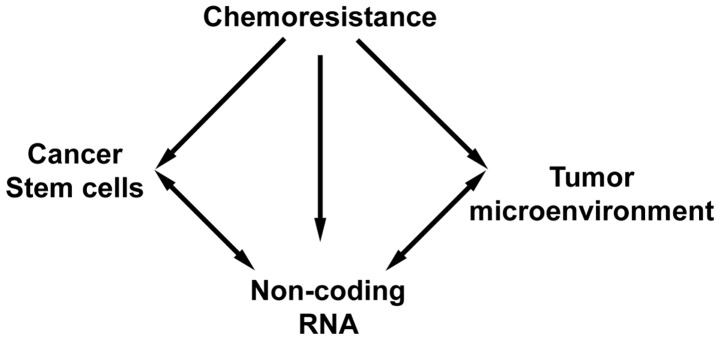
Pancreatic cancer is one of the most lethal types of cancer in the world. The incidence of pancreatic cancer increases each year with no significant decrease in mortality. Pancreatic cancer is a complex disease, and this complexity is partly attributed to late diagnosis, an aggressive phenotype, environmental factors and lack of effective treatment options. Surgical resection followed by adjuvant chemotherapy is the treatment of choice for early stage cancer, whereas gemcitabine is the standard first line therapy for patients with advanced stage disease. Treatment regimens comprising folinic acid, 5-fluorouracil, irinotecan, oxaliplatin and nab-paclitaxel have demonstrated modest effects in improving median survival rates. A number of other chemotherapeutics are currently undergoing clinical trials as components of combination therapies with gemcitabine. An increasing number of novel molecular targets and cellular pathways are being identified, which highlights the complexity of this disease. The development of chemoresistance to gemcitabine is multifactorial and there exists an interplay between pancreatic cancer cells, the tumor microenvironment and cancer stem cells. These components appear to be governed by a complex network of non-coding RNAs such as micro RNAs and long non-coding RNAs. In the present study, studies describing previous research on the understanding of the factors associated with the development of chemoresistance to gemcitabine in pancreatic cancer are reviewed. A comprehensive understanding of the multiple pathways of chemoresistance is key to develop next generation therapeutics to pancreatic cancer.
Keywords: cancer stem cells; chemoresistance; gemcitabine; pancreatic cancer; tumor microenvironment.
Figures
References
-
- Burris HA, III, Moore MJ, Andersen J, Green MR, Rothenberg ML, Modiano MR, Cripps MC, Portenoy RK, Storniolo AM, Tarassoff P, et al. Improvements in survival and clinical benefit with gemcitabine as first-line therapy for patients with advanced pancreas cancer: A randomized trial. J Clin Oncol. 1997;15:2403–2413. doi: 10.1200/JCO.1997.15.6.2403. - DOI - PubMed
LinkOut - more resources
Full Text Sources
Other Literature Sources