


Setting-related influences on physical inactivity of older adults in residential care settings: a review
- PMID: 28454563
- PMCID: PMC5408383
- DOI: 10.1186/s12877-017-0487-3
Setting-related influences on physical inactivity of older adults in residential care settings: a review
Abstract
Background: Despite the detrimental effects of physical inactivity for older adults, especially aged residents of residential care settings may spend much time in inactive behavior. This may be partly due to their poorer physical condition; however, there may also be other, setting-related factors that influence the amount of inactivity. The aim of this review was to review setting-related factors (including the social and physical environment) that may contribute to the amount of older adults' physical inactivity in a wide range of residential care settings (e.g., nursing homes, assisted care facilities).
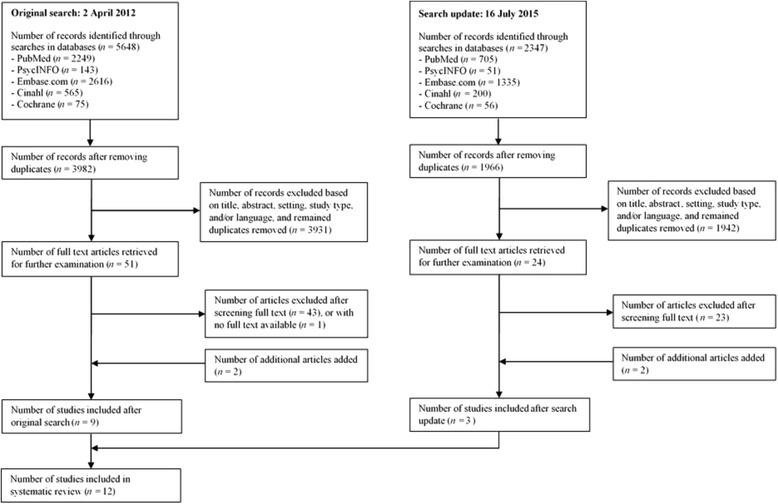
Methods: Five databases were systematically searched for eligible studies, using the key words 'inactivity', 'care facilities', and 'older adults', including their synonyms and MeSH terms. Additional studies were selected from references used in articles included from the search. Based on specific eligibility criteria, a total of 12 studies were included. Quality of the included studies was assessed using the Mixed Methods Appraisal Tool (MMAT).
Results: Based on studies using different methodologies (e.g., interviews and observations), and of different quality (assessed quality range: 25-100%), we report several aspects related to the physical environment and caregivers. Factors of the physical environment that may be related to physical inactivity included, among others, the environment's compatibility with the abilities of a resident, the presence of equipment, the accessibility, security, comfort, and aesthetics of the environment/corridors, and possibly the presence of some specific areas. Caregiver-related factors included staffing levels, the available time, and the amount and type of care being provided.
Conclusions: Inactivity levels in residential care settings may be reduced by improving several features of the physical environment and with the help of caregivers. Intervention studies could be performed in order to gain more insight into causal effects of improving setting-related factors on physical inactivity of aged residents.
Keywords: Aged; Caregiver; Environment design; Nursing home; Review; Sedentary lifestyle.
References
-
- National Center for Health Statistics: Health, United States, 2009: with special feature on medical technology. 2010. https://www.cdc.gov/nchs/data/hus/hus09.pdf. Accessed 21 Apr 2017. - PubMed
Publication types
MeSH terms
LinkOut - more resources
Full Text Sources
Other Literature Sources
Medical
