


Combined GWAS and 'guilt by association'-based prioritization analysis identifies functional candidate genes for body size in sheep
- PMID: 28454565
- PMCID: PMC5408376
- DOI: 10.1186/s12711-017-0316-3
Combined GWAS and 'guilt by association'-based prioritization analysis identifies functional candidate genes for body size in sheep
Abstract
Background: Body size in sheep is an important indicator of productivity, growth and health as well as of environmental adaptation. It is a composite quantitative trait that has been studied with high-throughput genomic methods, i.e. genome-wide association studies (GWAS) in various mammalian species. Several genomic markers have been associated with body size traits and genes have been identified as causative candidates in humans, dog and cattle. A limited number of related GWAS have been performed in various sheep breeds and have identified genomic regions and candidate genes that partly account for body size variability. Here, we conducted a GWAS in Frizarta dairy sheep with phenotypic data from 10 body size measurements and genotypic data (from Illumina ovineSNP50 BeadChip) for 459 ewes.
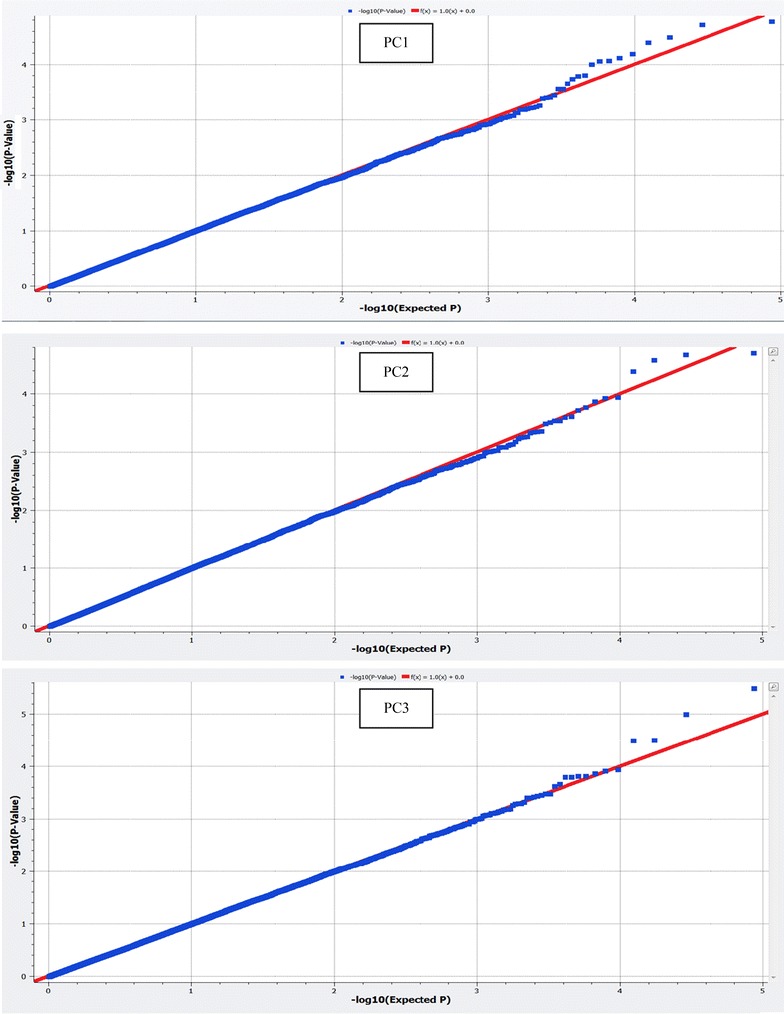
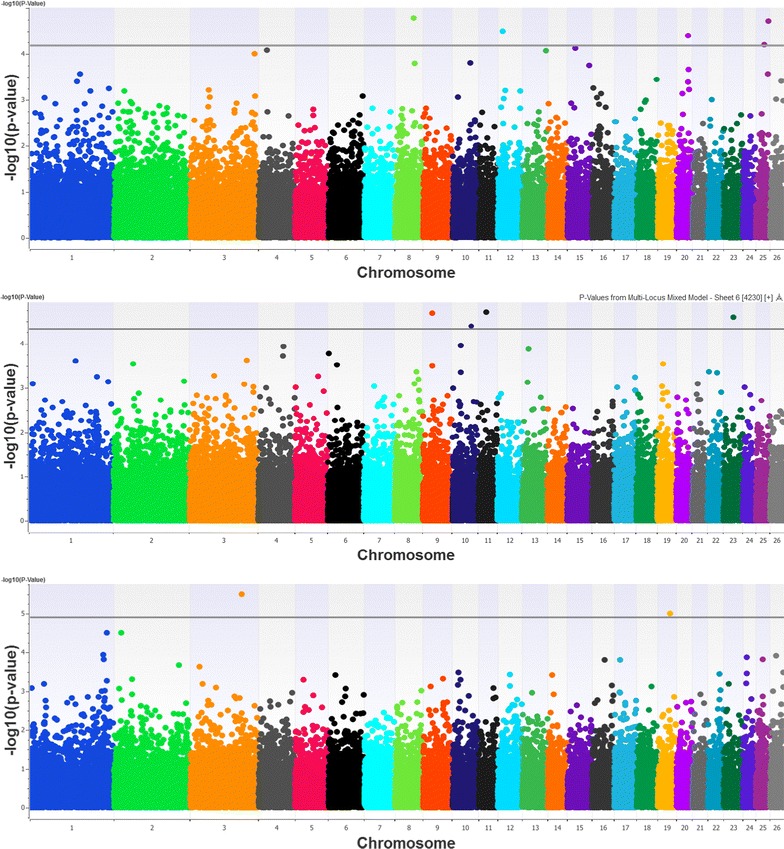
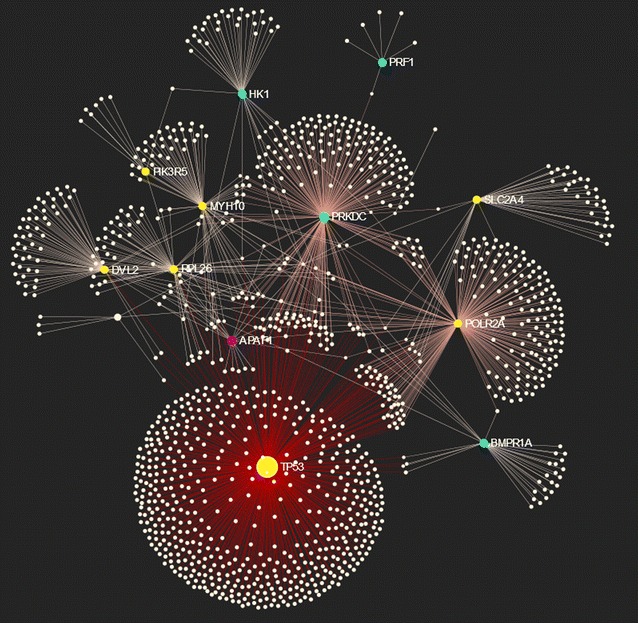
Results: The 10 body size measurements were subjected to principal component analysis and three independent principal components (PC) were constructed, interpretable as width, height and length dimensions, respectively. The GWAS performed for each PC identified 11 significant SNPs, at the chromosome level, one on each of the chromosomes 3, 8, 9, 10, 11, 12, 19, 20, 23 and two on chromosome 25. Nine out of the 11 SNPs were located on previously identified quantitative trait loci for sheep meat, production or reproduction. One hundred and ninety-seven positional candidate genes within a 1-Mb distance from each significant SNP were found. A guilt-by-association-based (GBA) prioritization analysis (PA) was performed to identify the most plausible functional candidate genes. GBA-based PA identified 39 genes that were significantly associated with gene networks relevant to body size traits. Prioritized genes were identified in the vicinity of all significant SNPs except for those on chromosomes 10 and 12. The top five ranking genes were TP53, BMPR1A, PIK3R5, RPL26 and PRKDC.
Conclusions: The results of this GWAS provide evidence for 39 causative candidate genes across nine chromosomal regions for body size traits, some of which are novel and some are previously identified candidates from other studies (e.g. TP53, NTN1 and ZNF521). GBA-based PA has proved to be a useful tool to identify genes with increased biological relevance but it is subjected to certain limitations.
Figures
References
-
- Fisher RA. XV.-The correlation between relatives on the supposition of mendelian inheritance. Earth Environ Sci Trans R Soc Edinb. 1919;52:399–433. doi: 10.1017/S0080456800012163. - DOI
Publication types
MeSH terms
LinkOut - more resources
Full Text Sources
Other Literature Sources
Research Materials
Miscellaneous
