Transient transcription factor (OSKM) expression is key towards clinical translation of in vivo cell reprogramming
- PMID: 28455313
- PMCID: PMC5452046
- DOI: 10.15252/emmm.201707650
Transient transcription factor (OSKM) expression is key towards clinical translation of in vivo cell reprogramming
Abstract
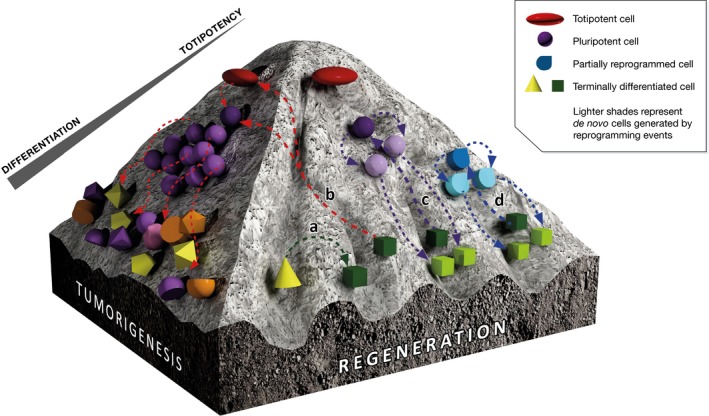
Reprogramming adult, fully differentiated cells to pluripotency in vivo via Oct3/4, Sox2, Klf4 and c-Myc (OSKM) overexpression has proved feasible in various independent studies and could be used to induce tissue regeneration owing to the proliferative capacity and differentiation potential of the reprogrammed cells. However, a number of these reports have described the generation of teratomas caused by sustained reprogramming, which precludes the therapeutic translation of this technology. A recent study by the Izpisúa-Belmonte laboratory described a cyclic regime for short-term OSKM expression in vivo that prevents complete reprogramming to the pluripotent state as well as tumorigenesis. We comment here on this and other studies that provide evidence that in vivo OSKM induction can enhance tissue regeneration, while avoiding the feared formation of teratomas. These results could inspire more research to explore the potential of in vivo reprogramming in regenerative medicine.
© 2017 The Authors. Published under the terms of the CC BY 4.0 license.
Figures
Comment on
-
In Vivo Amelioration of Age-Associated Hallmarks by Partial Reprogramming.Cell. 2016 Dec 15;167(7):1719-1733.e12. doi: 10.1016/j.cell.2016.11.052. Cell. 2016. PMID: 27984723 Free PMC article.
References
-
- Abad M, Mosteiro L, Pantoja C, Canamero M, Rayon T, Ors I, Grana O, Megias D, Dominguez O, Martinez D et al (2013) Reprogramming in vivo produces teratomas and iPS cells with totipotency features. Nature 502: 340–345 - PubMed
-
- Chiche A, Le Roux I, von Joest M, Sakai H, Aguin SB, Cazin C, Salam R, Fiette L, Alegria O, Flamant P et al (2016) Injury‐induced senescence enables in vivo reprogramming in skeletal muscle. Cell Stem Cell 20: 407–414 - PubMed
-
- de Lazaro I, Kostarelos K (2014) In vivo cell reprogramming to pluripotency: exploring a novel tool for cell replenishment and tissue regeneration. Biochem Soc Trans 42: 711–716
Publication types
MeSH terms
Substances
LinkOut - more resources
Full Text Sources
Other Literature Sources