. 2018 Oct:256:97-108.
doi: 10.1016/j.resp.2017.04.010. Epub 2017 Apr 27.

Chronic intermittent hypoxia worsens bleomycin-induced lung fibrosis in rats

Affiliations

Chronic intermittent hypoxia worsens bleomycin-induced lung fibrosis in rats

Rudolf K Braun et al. Respir Physiol Neurobiol. 2018 Oct.

Abstract

Obstructive sleep apnea (OSA) has been linked to increased mortality in pulmonary fibrosis. Its key feature, chronic intermittent hypoxia (CIH), can lead to oxidative stress and inflammation, known to lead to fibrotic pathology in other organs. We tested the effects of CIH in an animal model of bleomycin-induced lung fibrosis. Sprague Dawley rats were instilled intratracheally with bleomycin (Blm) or saline (Sal), and exposed to CIH or normal air (Norm) for 9 or 30 days. Pulmonary function was tested and lungs were harvested for histological and molecular analyses. In Blm-treated animals, 30days of CIH compared to Norm increased total lung collagen content (p=0.008) and reduced Quasi-static lung compliance (p=0.04). CIH upregulated lipid peroxidation and increased NF-κB activation, IL-17 mRNA and Col1α1 mRNA expression. Our results indicate that following Blm-induced lung injury, CIH amplifies collagen deposition via oxidative and inflammatory pathways, culminating in stiffer lungs. Thus, OSA may augment fibrosis in patients with interstitial lung disease.

Keywords: Fibrosis; Hypoxia; Intermittent; Lung/immunology/metabolism/pathology; Obstructive; Sleep apnea.


Figures

Figure 1
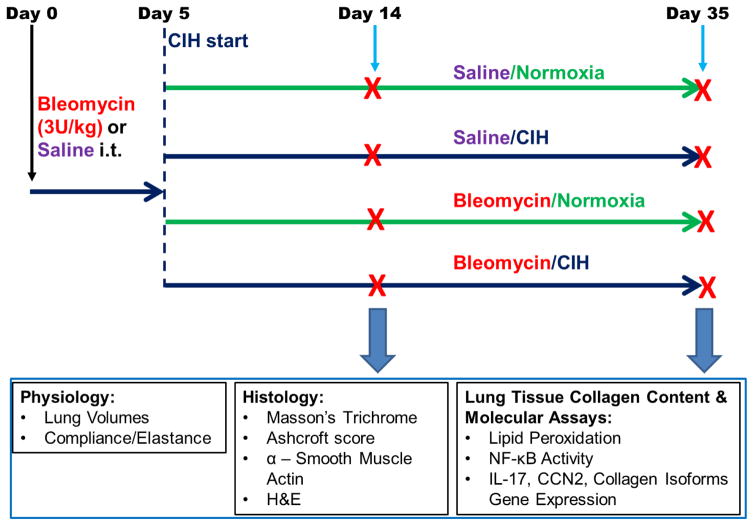
Figure 1. Experimental Protocol
Animals were given a single intratracheal instillation of Blm or saline on Day 0. CIH or Normoxia exposures commenced on Day 5 after Blm. Endpoints were collected on Day 14 or Day 35 after Blm instillation. i.t. = intratracheal instillation of Blm.
Figure 2
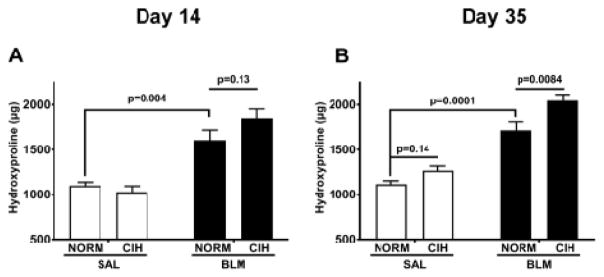
Figure 2. 30 days of CIH and Blm increased total right lung collagen content
Total hydroxyproline content (μg) in lung tissue at day 14 (A) and day 35 following Blm (B).
Figure 3
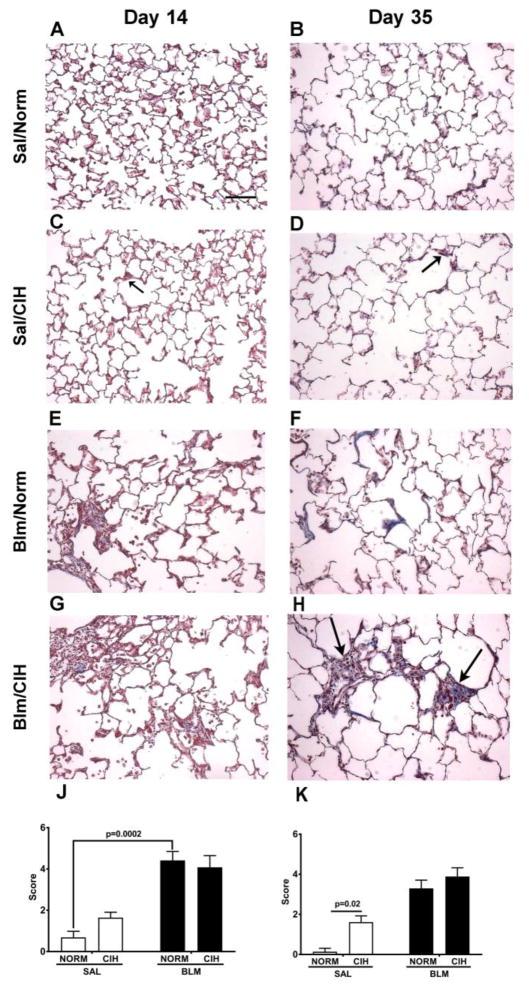
Figure 3. Blm and 30 days of CIH increased fibrotic lung pathology
(A–H): Representative Masson Trichrome stain images (20×) of lung parenchyma in Sal/Norm (A, B), Sal/CIH (C, D), Blm/Norm (E, F) and Blm/CIH – treated (G, H) animals on Day 14 (A, C, E, G) and Day 35 (B, D, F, H) following Blm instillation; black arrows pointing towards areas of alveolar wall thickening (blue colour) in Sal/CIH – treated animals at Day 14 (C) and Day 35 (D), as well as dense fibrotic areas in Blm/CIH, 35 days after Blm injury (H). (J, K) Ashcroft scores of Masson Trichrome stained sections on Day 14 (J) and Day 35 following Blm instillation (K). Scale bar (Panel A): 100 μm.
Figure 4
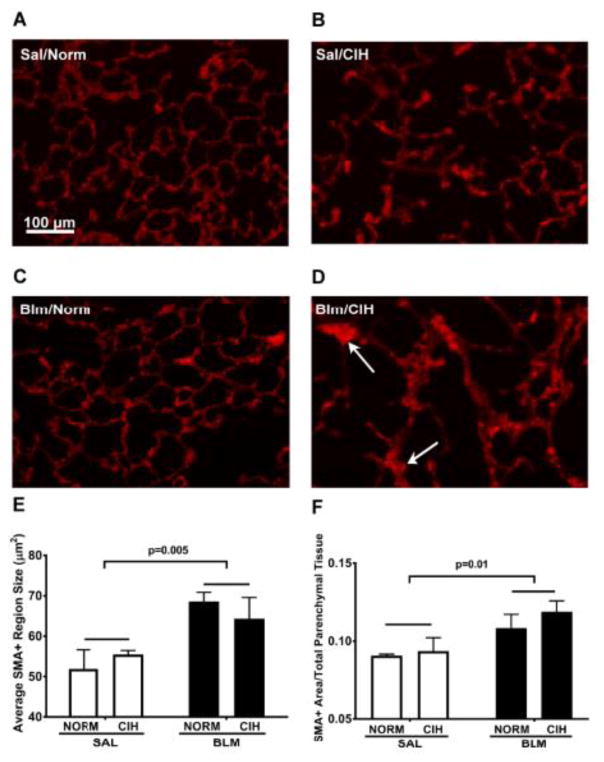
Figure 4. Thirty days of CIH following Blm injury increased average area of α-Smooth Muscle Actin positive staining relative to total lung parenchymal tissue area
(A–D): Representative α-SMA immunostained images of Sal/Norm (A), Sal/CIH (B), Blm/Norm (C) and Blm/CIH (D) animals, 35 days after Sal or Blm treatment (20×). Emphysema-like changes are present in CIH treated animals (B, D) and increased foci of α-SMA+ staining (D; arrows) are seen in the lungs of Blm/CIH treated rats. Scale bar (shown in Panel A): 100 μm. (E): Average α-SMA+ region area (μm2). (F): Average SMA+ region area divided by total parenchymal tissue area in the microscope field, to account for presence of “emphysema-like” areas. Each symbol represents the average of all images (≥15) from one rat.
Figure 5
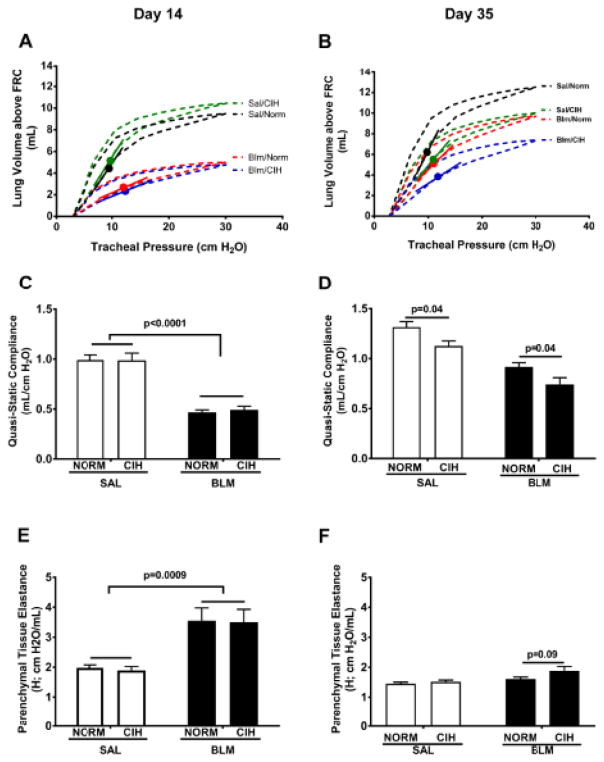
Figure 5. CIH leads to pulmonary function deficits following Blm injury
(A, B): Representative Pressure-Volume loops from Cst measurement in the indicated treatment groups; line segments indicate slope of the inspiratory curve at the point of half-maximum inflation (circles). (D–F): Quasi-static compliance (Cst) (C, D) and Parenchymal Tissue Elastance (H) (E, F) were measured on the indicated days after Blm instillation.
Figure 6
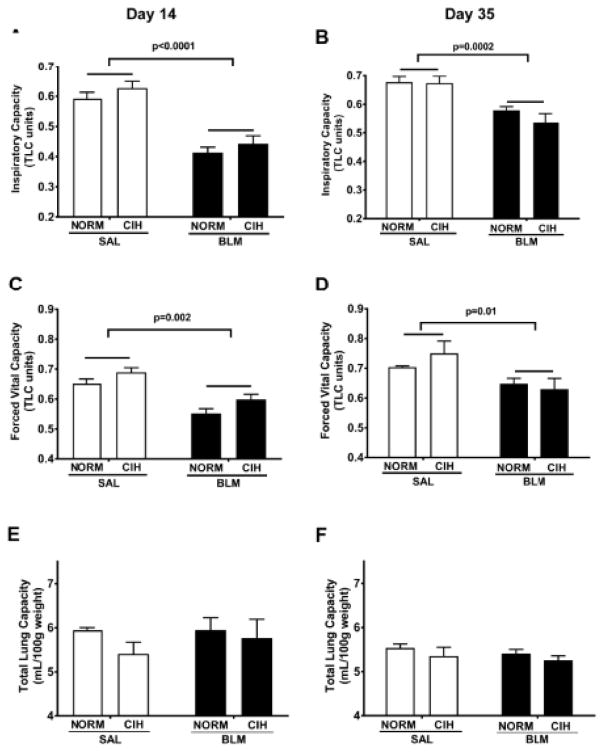
Figure 6. CIH did not affect the Blm-induced decline in lung volumes
Inspiratory Capacity (A, B) and Forced Vital Capacity (C, D) as a fraction of total lung capacity (TLC), and TLC (E, F) normalized to rat body weight were measured at the indicated days after bleomycin.
Figure 7
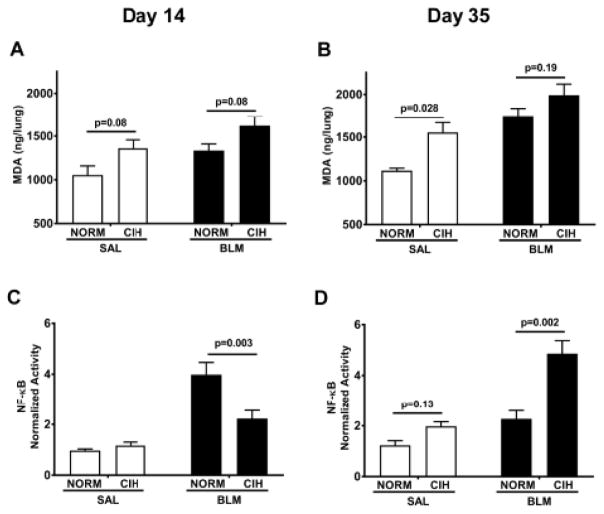
Figure 7. Prolonged CIH enhances Blm – induced oxidative stress and NF-κB activation in lung tissue
Total malondialdehyde (MDA) content (A, B) and NF-κB activity (C, D) were measured in lung tissue on day 14 (A, C) or day 35 (B, D) after Blm instillation. 30 days of CIH exposure enhanced Blm – induced increase in MDA content and led to increased NF-κB activity.
Figure 8
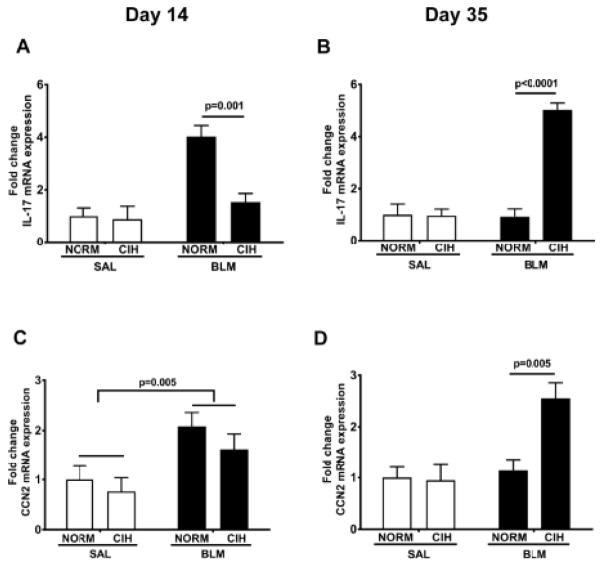
Figure 8. Prolonged CIH iIncreased IL-17 and CCN-2 mRNA expression
IL-17 (A, B) and CCN-2 (C, D) mRNA expression in lung tissue were measured by qPCR on day 14 (A, C) or day 35 (B, D) after Blm instillation. A.U: Arbitrary Units.
Figure 9
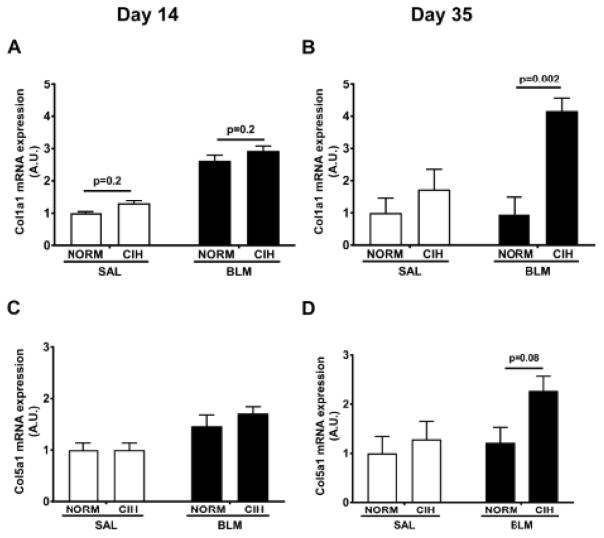
Figure 9. CIH increased Col1α1 and Col5α1 mRNA expression
Col1α1 (A, B) and Col5α1 (C, D) mRNA expression in lung tissue was measured by qPCR on day 14 (A, C) or day 35 (B, D) after Blm instillation. A.U: Arbitrary Units.

References

    1. Barrientos S, Stojadinovic O, Golinko MS, Brem H, Tomic-Canic M. Growth factors and cytokines in wound healing. Wound repair and regeneration: official publication of the Wound Healing Society [and] the European Tissue Repair Society. 2008;16:585–601. - PubMed
    1. Berend N. Protective effect of hypoxia on bleomycin lung toxicity in the rat. The American review of respiratory disease. 1984;130:307–308. - PubMed
    1. Borzone G, Moreno R, Urrea R, Meneses M, Oyarzun M, Lisboa C. Bleomycin-induced chronic lung damage does not resemble human idiopathic pulmonary fibrosis. American journal of respiratory and critical care medicine. 2001;163:1648–1653. - PubMed
    1. Braun FM, Braun RK, Broytman O, Pegelow DF, Eldridge MW, Teodorescu M. LUNG INJURY, REPAIR, AND FIBROSIS: THE PLOT THICKENS FOR THREE’S COMPANY. American Thoracic Society; 2015. Chronic Intermittent Hypoxia Amplifies Oxidative Stress and Pulmonary Fibrosis Following Bleomycin-Induced Injury, A57; pp. A2080–A2080.
    1. Braun RK, Martin A, Shah S, Iwashima M, Medina M, Byrne K, Sethupathi P, Wigfield CH, Brand DD, Love RB. Inhibition of bleomycin-induced pulmonary fibrosis through pre-treatment with collagen type V. The Journal of heart and lung transplantation: the official publication of the International Society for Heart Transplantation. 2010;29:873–880. - PubMed

Publication types

MeSH terms