Review
. 2017 Apr:36:118-127.
doi: 10.1016/j.mib.2017.03.013. Epub 2017 Apr 28.

Selective adaptor dependent protein degradation in bacteria

Affiliations
Review

Selective adaptor dependent protein degradation in bacteria

Nathan J Kuhlmann et al. Curr Opin Microbiol. 2017 Apr.

Abstract

Energy dependent proteolysis is essential for all life, but uncontrolled degradation leads to devastating consequences. In bacteria, oligomeric AAA+ proteases are responsible for controlling protein destruction and are regulated in part by adaptor proteins. Adaptors are regulatory factors that shape protease substrate choice by either restricting or enhancing substrate recognition in several ways. In some cases, protease activity or assembly itself requires adaptor binding. Adaptors can also alter specificity by acting as scaffolds to tether particular substrates to already active proteases. Finally, hierarchical assembly of adaptors can use combinations of several activities to enhance the protease's selectivity. Because the lifetime of the constituent proteins directly affects the duration of a particular signaling pathway, regulated proteolysis impacts almost all cellular responses. In this review, we describe recent progress in regulated protein degradation, focusing on fundamental principles of adaptors and how they perform critical biological functions, such as promoting cell cycle progression and quality control.


Figures

Figure 1
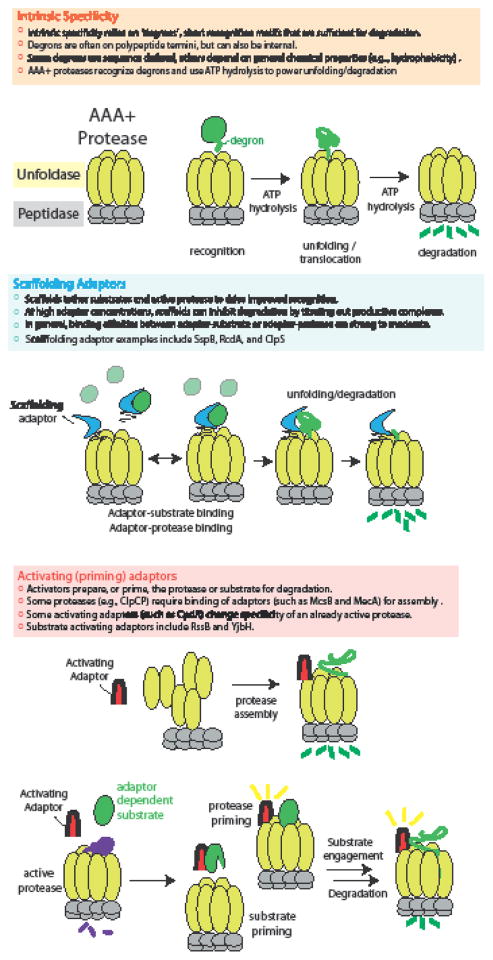
Figure 1. Specificity of AAA+ proteases
Regulated protein degradation relies on both the intrinsic specificity of the proteases and the presence of adaptor proteins that alter specificity. In the most general sense, adaptors can act as simple scaffolds or as activators.
Figure 2
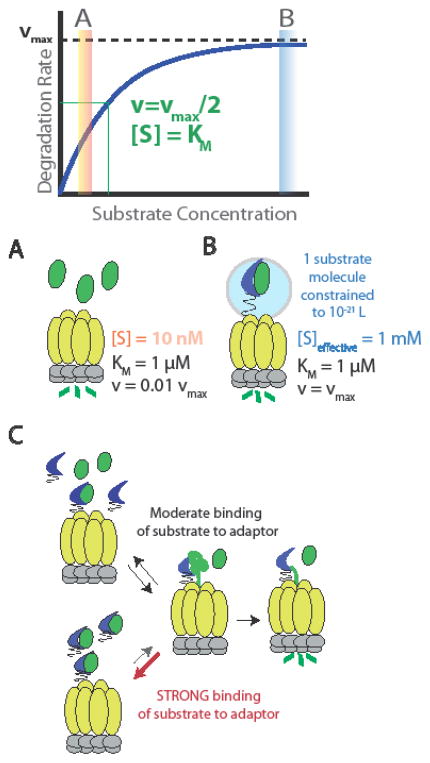
Figure 2. Mechanisms and consequences of scaffolding adaptors
Schematized Michaelis-Menten kinetics of substrate degradation illustrating two regimes of substrate concentration: [S] is well below the KM (A) and well above the KM (B). If [S] is 100-fold below the KM, then the degradation rate is ~1% of the maximum velocity (A). Scaffolding adaptors can tether substrates to the protease and increase local concentration by this leashing. As shown in B, a tether length of ~25 residues would result in constraining a single molecule to a volume of ~10−21 L, which yields an effective concentration of ~1 mM, sufficient to drive degradation at the maximum rate. (C) Substrate recognition by the adaptor must be of at least moderate affinity in order to ensure specificity. However, excessively tight binding of the adaptor restricts delivery of the substrate and inhibits overall degradation.
Figure 3
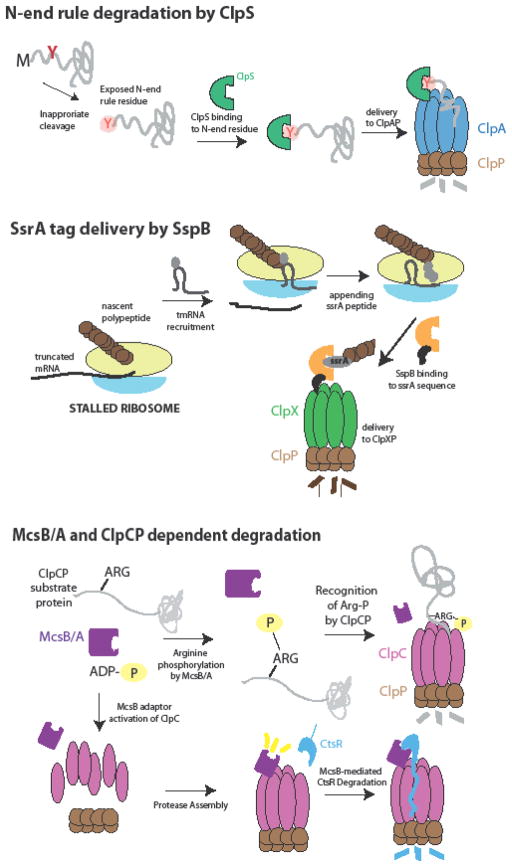
Figure 3. Examples of scaffolding adaptors
(a) Residues that are recognized by N-end rule degradation (L,F,W,Y) are shielded in normally synthesized proteins. Processing or cleavage can result in exposure of an N-end rule residue, which is bound by ClpS. As part of its mechanism, ClpS tethers these substrates to the ClpAP protease to deliver them for degradation. (b) SsrA-tagged proteins are products of stalled ribosomes resulting from translation of nonsense mRNAs. Stalled ribosomes are rescued by through the tmRNA pathway where the ssrA peptide is cotranslationally attached to the nascent polypeptide. The SspB adaptor recognizes the ssrA sequence and delivers proteins containing this tag to ClpXP for degradation. (c) Like MecA, the McsB kinase has been shown to act as an adaptor which drives ClpCP oligomerization to promote CtsR degradation. In addition, the kinase complex McsB/A was recently shown to target proteins susceptible to stress for degradation by phosphorylating arginine residues. In this case, the ClpCP protease is activated by the phosphorylated arginine and the modified protein is degraded.
Figure 4
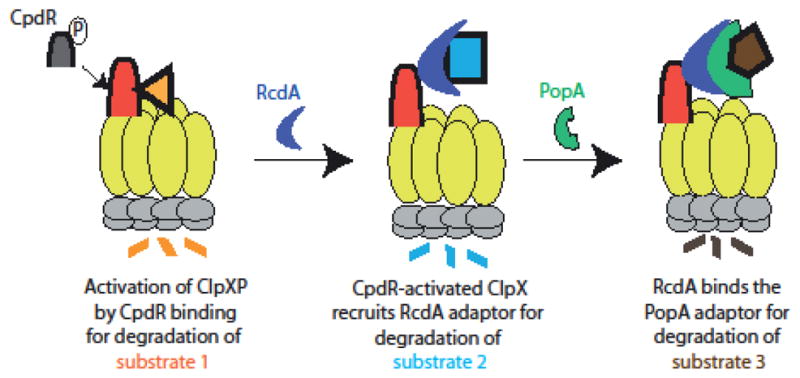
Figure 4. Selective substrate degradation from a hierarchical assembly of adaptors
In Caulobacter crescentus, the degree of assembly of adaptors dictates which substrates are degraded. Substrate 1 is degraded by an active ClpXP following binding of a dephosphorylated CpdR adaptor, which primes ClpXP for selective substrate recognition. Substrate 2 is bound by the RcdA adaptor, which delivers cargos to a CpdR-activated protease and restricts degradation of substrate 1. Finally, the PopA adaptor can bind RcdA to form a complex that delivers Substrate 3. The hierarchical assembly of these adaptors during the Caulobacter cell cycle leads to ordered, progressive degradation of key regulators.

References

    1. Joshi KK, Chien P. Regulated Proteolysis in Bacteria: Caulobacter. Annu Rev Genet. 2016;50:423–445. - PMC - PubMed
    1. Flynn JM, Neher SB, Kim YI, Sauer RT, Baker TA. Proteomic discovery of cellular substrates of the ClpXP protease reveals five classes of ClpX-recognition signals. Molecular Cell. 2003;11:671–683. - PubMed
    1. Gerth U, Kock H, Kusters I, Michalik S, Switzer RL, Hecker M. Clp-dependent proteolysis down-regulates central metabolic pathways in glucose-starved Bacillus subtilis. J Bacteriol. 2008;190:321–331. - PMC - PubMed
    1. Olivares AO, Baker TA, Sauer RT. Mechanistic insights into bacterial AAA+ proteases and protein-remodelling machines. Nat Rev Microbiol. 2016;14:33–44. - PMC - PubMed
    1. Barkow SR, Levchenko I, Baker TA, Sauer RT. Polypeptide translocation by the AAA+ ClpXP protease machine. Chem Biol. 2009;16:605–612. - PMC - PubMed

MeSH terms