


Pediatric Melanoma: A 35-year Population-based Review
- PMID: 28458966
- PMCID: PMC5404437
- DOI: 10.1097/GOX.0000000000001252
Pediatric Melanoma: A 35-year Population-based Review
Abstract
Background: Melanoma is a rare neoplasm in the pediatric population. Recent publications suggest a possible increase in incidence over the past few decades. The purpose of this study was to analyze trends in pediatric patients diagnosed with malignant melanoma in British Columbia (BC) in the past 35 years.
Methods: A retrospective review was performed. All patients in BC diagnosed with melanoma before 18 years of age from 1979 to 2014 were included. Patient demographics, melanoma description, treatment details, and survival data were collected.
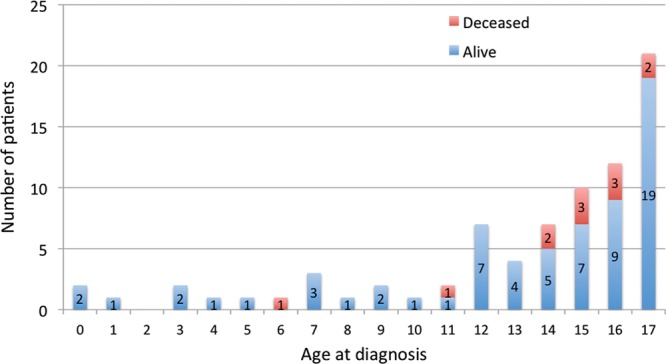
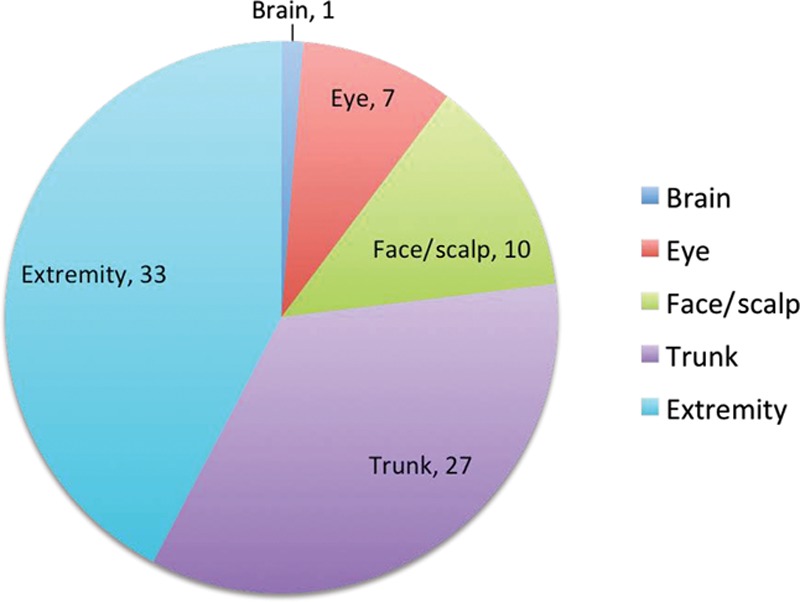
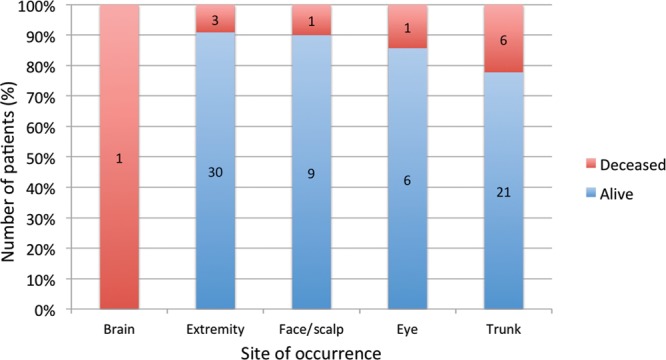
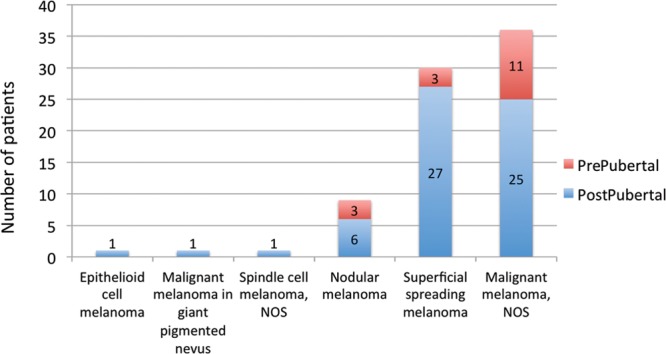
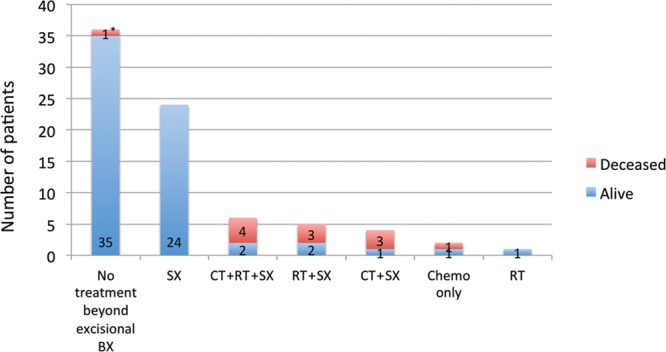
Results: Seventy-eight subjects were identified for the study. Patients were equally distributed by sex. Sixty-one (78%) of the subjects were diagnosed in the postpubertal age (≥12 years old). The most common sites of occurrence were the extremities (n = 33) and the trunk (n = 27), with the location on the trunk showing the highest mortality rate (22%). All patients were surgically treated and some had additional chemotherapy (12) and/or radiotherapy (12). Fatal outcome was recorded in 12 of the 78 subjects, 10 of whom had postpubertal diagnosis. The average time from date of diagnosis to date of death was 9.3 years.
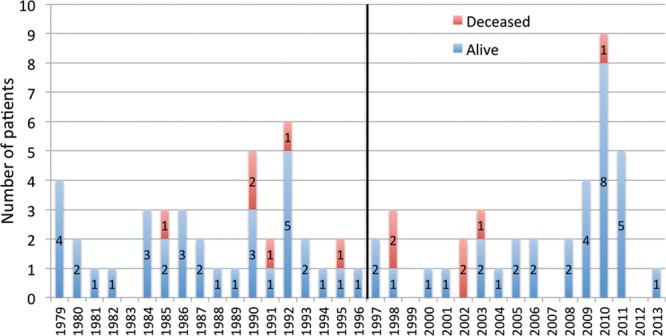
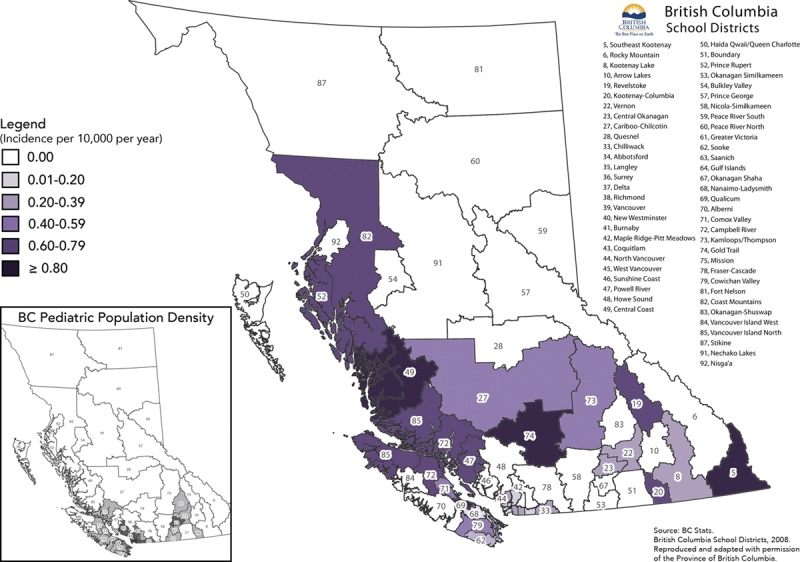
Conclusions: The incidence of melanoma in the pediatric population remains exceedingly rare: less than 2.5 per million children younger than 18 years. The diagnosis is rarely made before puberty; the incidence is equal in males and females and has not changed over a 35-year time period in BC. Our study shows 85% survival with the majority of patients having had surgical excision only.
Figures
References
-
- Ferrari A, Bono A, Baldi M, et al. Does melanoma behave differently in younger children than in adults? A retrospective study of 33 cases of childhood melanoma from a single institution. Pediatrics. 2005;115:649–654.. - PubMed
-
- Strouse JJ, Fears TR, Tucker MA, et al. Pediatric melanoma: risk factor and survival analysis of the surveillance, epidemiology and end results database. J Clin Oncol. 2005;23:4735–4741.. - PubMed
-
- Mones JM, Ackerman AB. Melanomas in prepubescent children: review comprehensively, critique historically, criteria diagnostically, and course biologically. Am J Dermatopathol. 2003;25:223–238.. - PubMed
-
- Cordoro KM, Gupta D, Frieden IJ, et al. Pediatric melanoma: results of a large cohort study and proposal for modified ABCD detection criteria for children. J Am Acad Dermatol. 2013;68:913–925.. - PubMed
LinkOut - more resources
Full Text Sources
Other Literature Sources
Miscellaneous