


Follistatin and the Breast Implant Capsule
- PMID: 28458972
- PMCID: PMC5404443
- DOI: 10.1097/GOX.0000000000001258
Follistatin and the Breast Implant Capsule
Abstract
Background: Breast capsular contracture remains an elusive problem faced by plastic surgeons and is the leading long-term complication after breast implantation. Follistatin (Fst) is a protein with known anti-inflammatory and antifibrotic properties and has the potential to limit the severity of diseases associated with inflammation and fibrosis such as capsular contracture. The aim of this study was to examine the effect of Fst288 on capsular fibrosis around silicone implants in a mouse model.
Methods: BALB/c mice were implanted subcutaneously with untreated silicone implants (baseline control). In the experimental group, immediately after silicone implant insertion, the implant pocket received either a single injection of 1 µg Fst288 or normal saline (internal control). The animals were killed at 3, 5, 7, 14, 28, and 90 days after surgery, and serum, implants, and the surrounding tissue were removed for histological and immunohistochemical analyses.
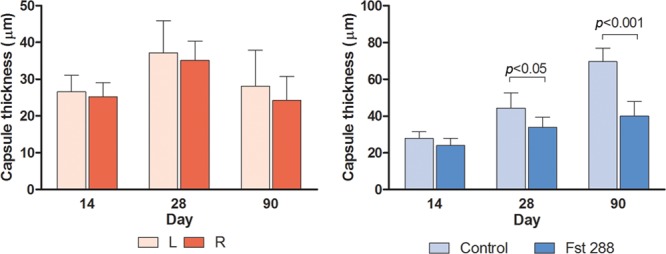
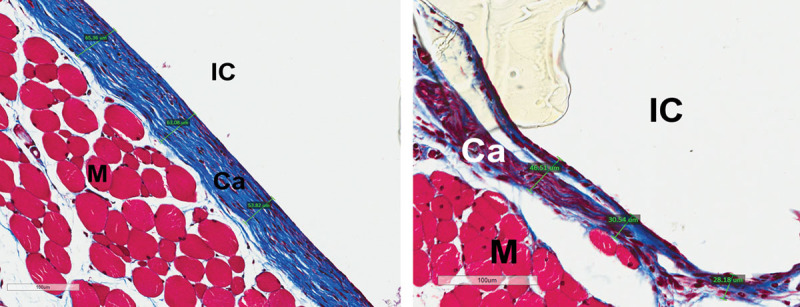
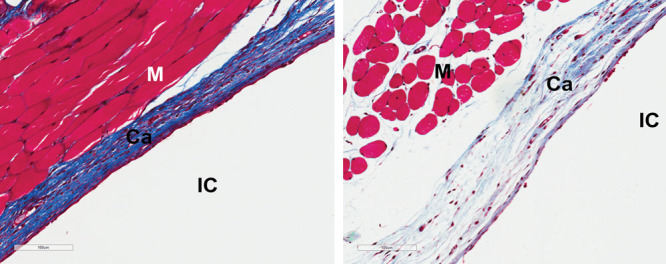
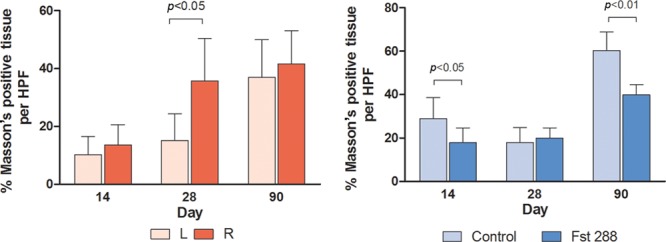
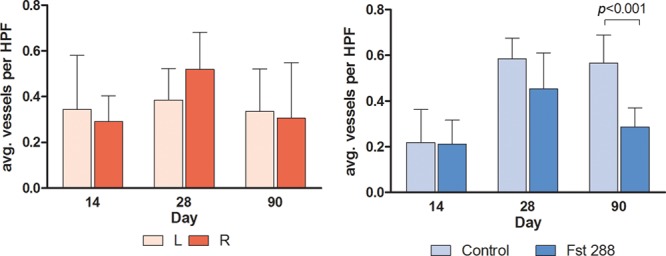
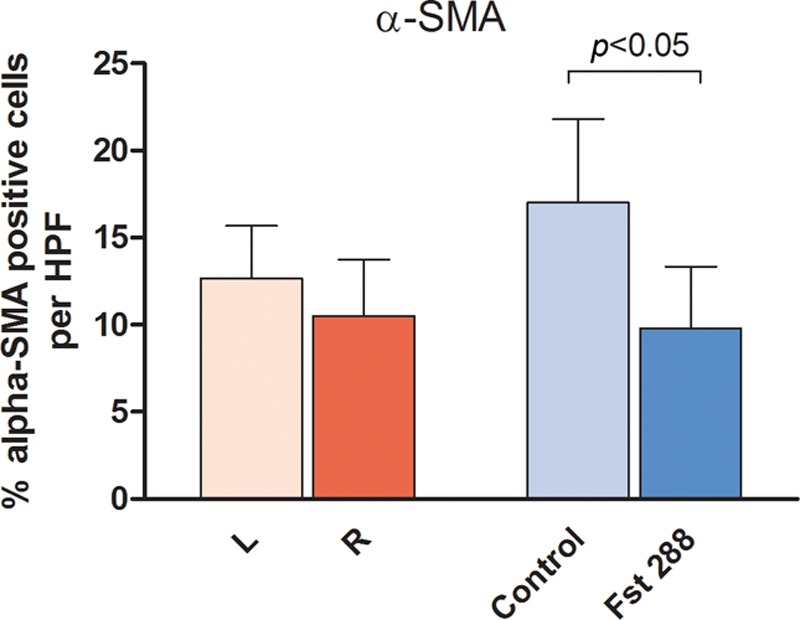
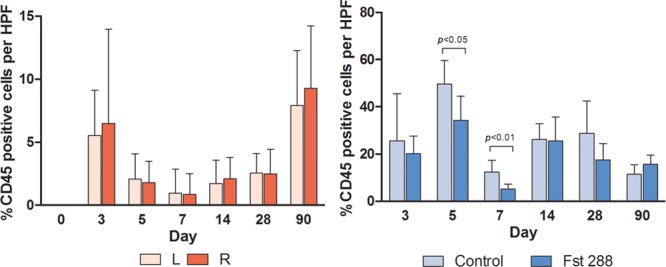
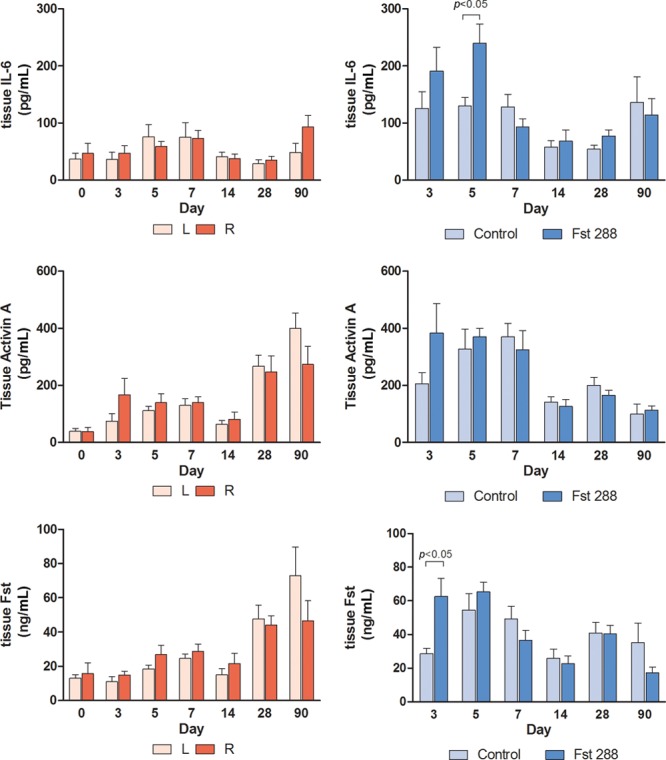
Results: Fst288 treatment resulted in significant decreases in capsule thickness at 28 days (P < 0.05) and 3 months (P < 0.001), decreased collagen production at 14 days (P < 0.05) and 3 months (P < 0.01), decreased angiogenesis at 3 months (P < 0.001), decreased α-smooth muscle actin levels at 3 months (P < 0.05), and a decrease in the number of CD45+ cells at days 5 (P < 0.05) and 7 (P < 0.01), respectively, when compared with control implants.
Conclusions: A single injection of Fst288 at the time of silicone implant insertion into the mice results in a significant reduction in pericapsular inflammation and capsular fibrosis.
Figures
References
-
- Barr S, Bayat A. Breast surgery review article: breast implant surface development: Perspectives on development and manufacture. Aesthet Surg J. 2011;31:56–67.. - PubMed
-
- Gabriel SE, Woods JE, O’Fallon WM, et al. Complications leading to surgery after breast implantation. N Engl J Med. 1997;336:677–682.. - PubMed
-
- Siggelkow W, Klosterhalfen B, Klinge U, et al. Analysis of local complications following explantation of silicone breast implants. Breast. 2004;13:122–128.. - PubMed
-
- Kjoller K, Holmich LR, Jacobsen PH, et al. Capsular contracture after cosmetic breast implant surgery in Denmark. Ann Plast Surg. 2001;47:359–366.. - PubMed
-
- Kjoller K, Holmich LR, Jacobsen PH, et al. Epidemiological investigation of local complications after cosmetic breast implant surgery in Denmark. Ann Plast Surg. 2002;48:229–237.. - PubMed
LinkOut - more resources
Full Text Sources
Other Literature Sources
Research Materials
Miscellaneous