Detection of Cryptosporidium in stool samples of immunocompromised patients
- PMID: 28459014
- PMCID: PMC5369273
- DOI: 10.4103/tp.TP_66_16
Detection of Cryptosporidium in stool samples of immunocompromised patients
Abstract
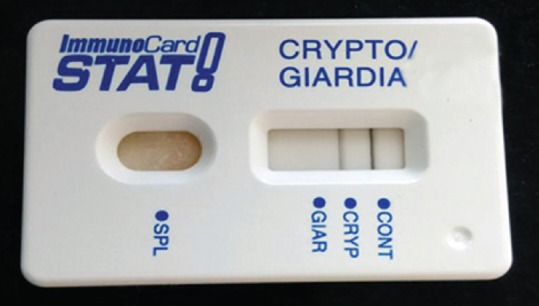
Introduction: Cryptosporidium species is the most common opportunistic enteric parasite encountered in the immunocompromised patients. Considering the need to diagnose them early relies mostly on rapid tests such as antigen detection by immunochromatographic test (ICT), ELISA, and microscopy. However, the sensitivity and specificity varies with different methods and different kits used. This study was conducted to determine the intestinal parasitic profile in immunocompromised patients and to assess the diagnostic accuracy of the ICT using ImmunoCard STAT kit in detecting Cryptosporidium spp.
Materials and methods: The patients in this study were divided into two groups: one group was immunocompromised patients (n = 73) and the other was nonimmunocompromised individuals (n = 73). Stool microscopy, ICT, and polymerase chain reaction (PCR) were carried out for all stool samples.
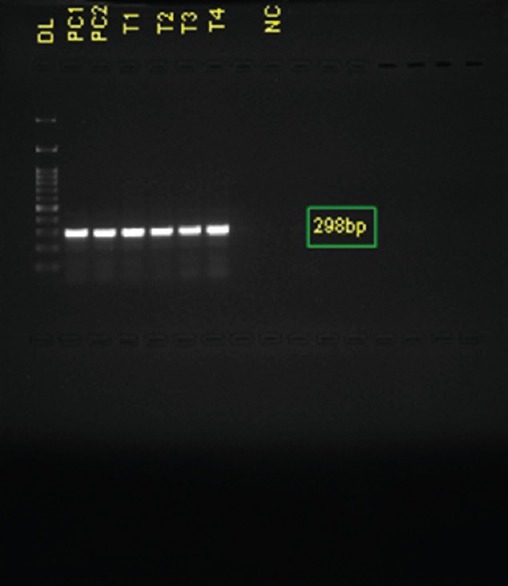
Results: Totally, 4 (5.4%) of 73 patients of the study group were positive for Cryptosporidium. The species detected were Cryptosporidium parvum and Cryptosporidium hominis. PCR was taken as gold standard in the current study. PCR detected Cryptosporidium in four samples while ICT in two samples and microscopy in one sample.
Conclusion: Cryptosporidium was found to be the most common enteric parasite in the immunocompromised patients studied, followed by Cystoisospora, Entamoeba histolytica, and Strongyloides stercoralis. Although the ICT is a rapid test, it was less sensitive and more expensive in comparison to the PCR; hence, its utility appears to be limited in our setting.
Keywords: Cryptosporidium; immunochromatographic test; immunocompromised; polymerase chain reaction.
Conflict of interest statement
There are no conflicts of interest.
Figures

References
-
- Kashyap A, Singh MP, Madhu, Ghoshal U. Occurrence of gastrointestinal opportunistic parasites in immunocompromised patients in Northern India. J Biol. 2013;1:77–80.
-
- Iqbal A, Lim YA, Mahdy MA, Dixon BR, Surin J. Epidemiology of cryptosporidiosis in HIV-infected individuals: A global perspective. Open Access Sci Rep. 2012;1:431.
-
- Fayer R. Cryptosporidium: A water-borne zoonotic parasite. Vet Parasitol. 2004;126:37–56. - PubMed
LinkOut - more resources
Full Text Sources
Miscellaneous