


DNA sequence homology induces cytosine-to-thymine mutation by a heterochromatin-related pathway in Neurospora
- PMID: 28459455
- PMCID: PMC5474309
- DOI: 10.1038/ng.3857
DNA sequence homology induces cytosine-to-thymine mutation by a heterochromatin-related pathway in Neurospora
Abstract
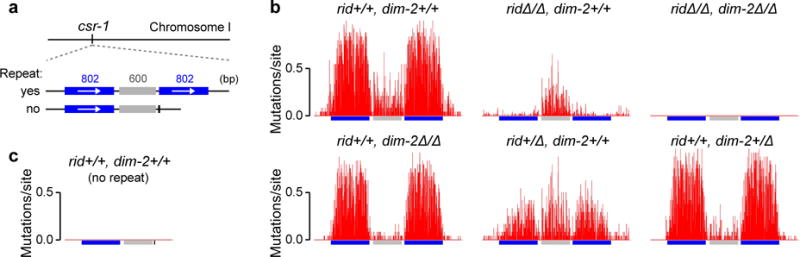
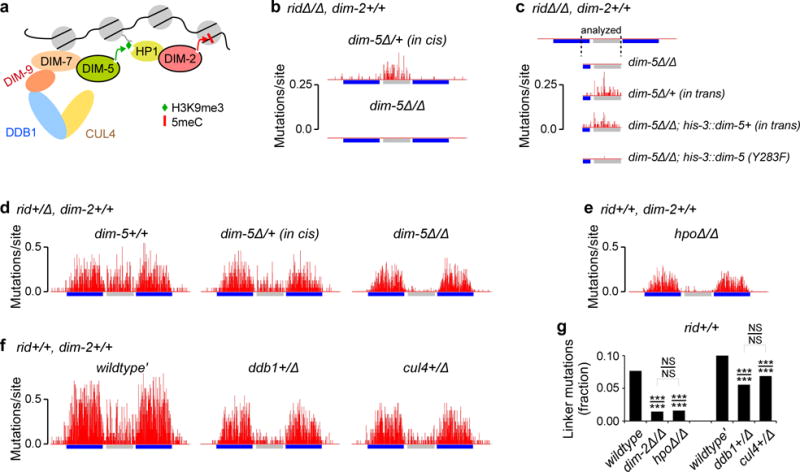
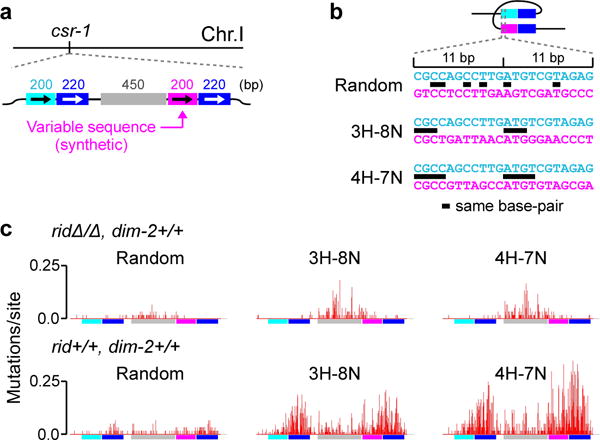
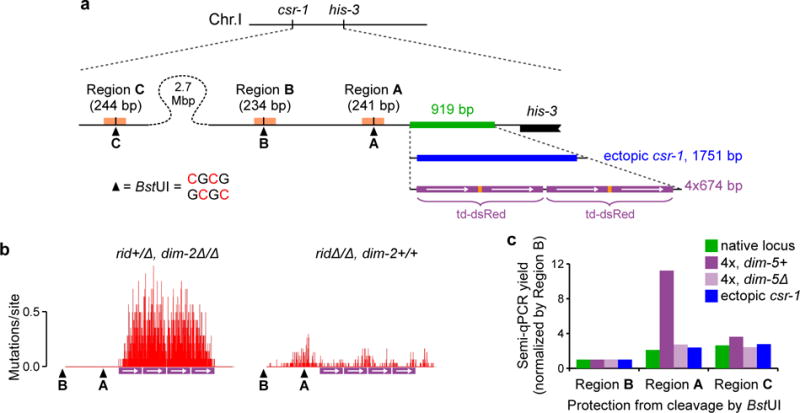
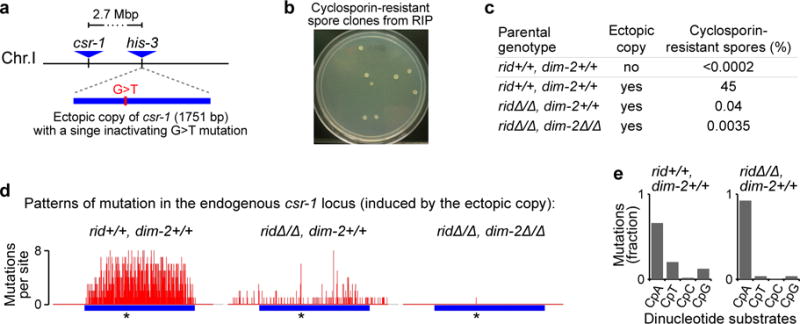
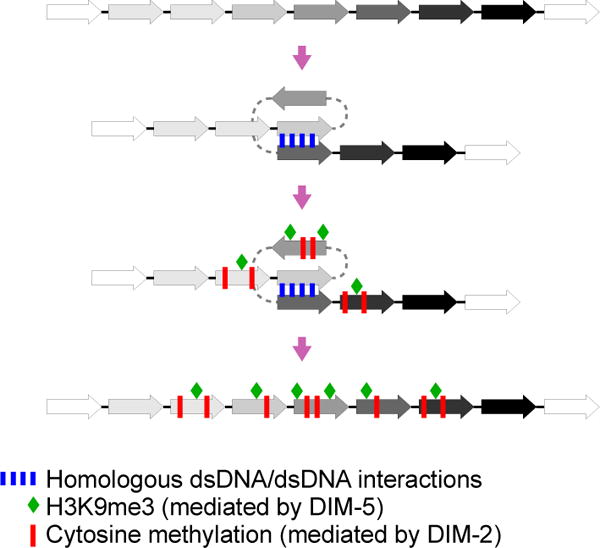
Most eukaryotic genomes contain substantial amounts of repetitive DNA organized in the form of constitutive heterochromatin and associated with repressive epigenetic modifications, such as H3K9me3 and C5 cytosine methylation (5mC). In the fungus Neurospora crassa, H3K9me3 and 5mC are catalyzed, respectively, by a conserved SUV39 histone methyltransferase, DIM-5, and a DNMT1-like cytosine methyltransferase, DIM-2. Here we show that DIM-2 can also mediate repeat-induced point mutation (RIP) of repetitive DNA in N. crassa. We further show that DIM-2-dependent RIP requires DIM-5, HP1, and other known heterochromatin factors, implying a role for a repeat-induced heterochromatin-related process. Our previous findings suggest that the mechanism of repeat recognition for RIP involves direct interactions between homologous double-stranded DNA (dsDNA) segments. We thus now propose that, in somatic cells, homologous dsDNA-dsDNA interactions between a small number of repeat copies can nucleate a transient heterochromatic state, which, on longer repeat arrays, may lead to the formation of constitutive heterochromatin.
Conflict of interest statement
The authors declare no competing financial interests.
Figures
References
MeSH terms
Substances
Grants and funding
LinkOut - more resources
Full Text Sources
Other Literature Sources
Miscellaneous
