


Insulin resistance in vascular endothelial cells promotes intestinal tumour formation
- PMID: 28459466
- PMCID: PMC5578899
- DOI: 10.1038/onc.2017.107
Insulin resistance in vascular endothelial cells promotes intestinal tumour formation
Abstract
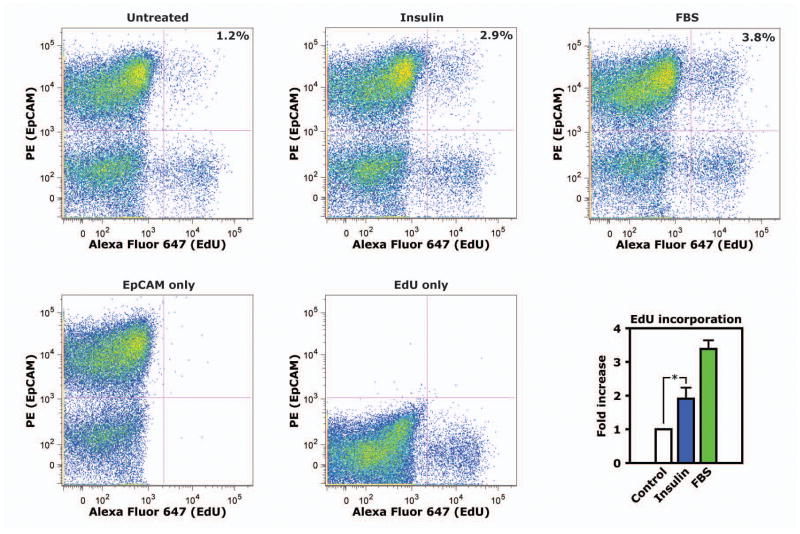
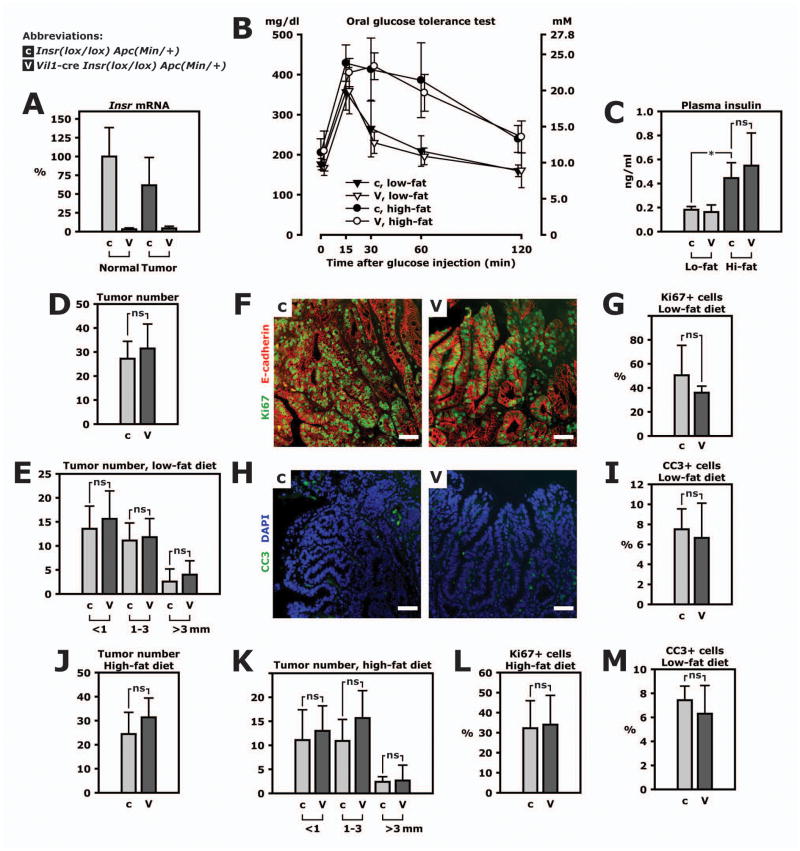
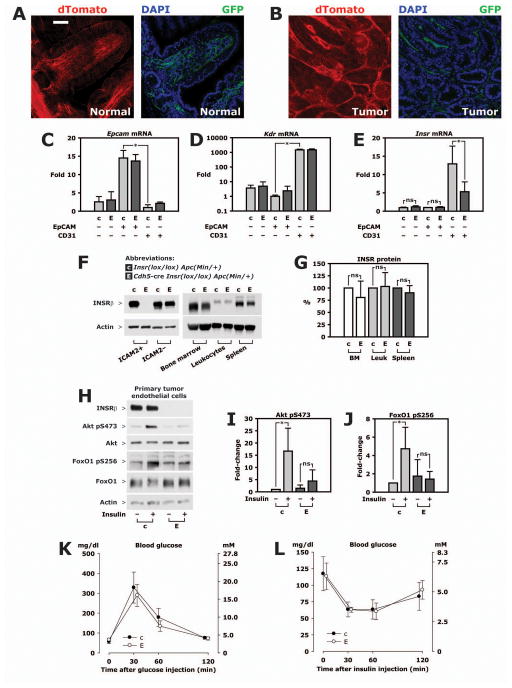
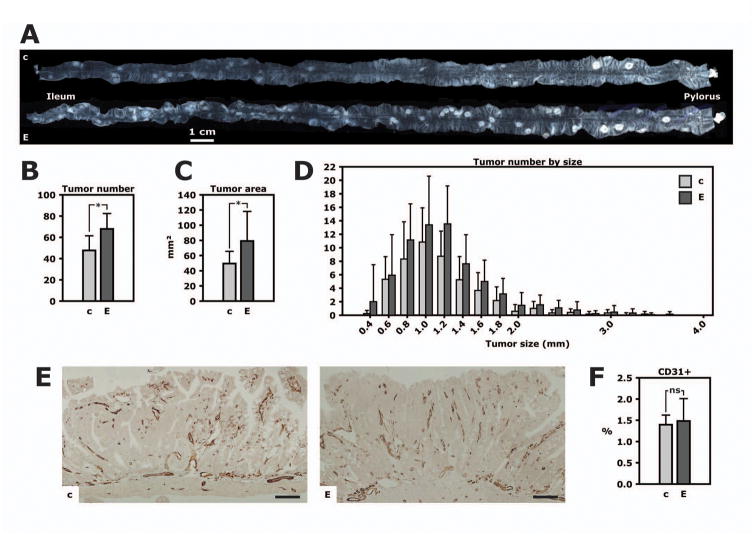
The risk of several cancers, including colorectal cancer, is increased in patients with obesity and type 2 diabetes, conditions characterised by hyperinsulinaemia and insulin resistance. Because hyperinsulinaemia itself is an independent risk factor for cancer development, we examined tissue-specific insulin action in intestinal tumour formation. In vitro, insulin increased proliferation of intestinal tumour epithelial cells by almost two-fold in primary culture of tumour cells from ApcMin/+ mice. Surprisingly, targeted deletion of insulin receptors in intestinal epithelial cells in ApcMin/+ mice did not change intestinal tumour number or size distribution on either a low or high-fat diet. We therefore asked whether cells in the tumour stroma might explain the association between tumour formation and insulin resistance. To this end, we generated ApcMin/+ mice with loss of insulin receptors in vascular endothelial cells. Strikingly, these mice had 42% more intestinal tumours than controls, no change in tumour angiogenesis, but increased expression of vascular cell adhesion molecule-1 (VCAM-1) in primary culture of tumour endothelial cells. Insulin decreased VCAM-1 expression and leukocyte adhesion in quiescent tumour endothelial cells with intact insulin receptors and partly prevented increases in VCAM-1 and leukocyte adhesion after treatment with tumour necrosis factor-α. Knockout of insulin receptors in endothelial cells also increased leukocyte adhesion in mesenteric venules and increased the frequency of neutrophils in tumours. We conclude that although insulin is mitogenic for intestinal tumour cells in vitro, impaired insulin action in the tumour microenvironment may be more important in conditions where hyperinsulinaemia is secondary to insulin resistance. Insulin resistance in tumour endothelial cells produces an activated, proinflammatory state that promotes tumorigenesis. Improvement of endothelial dysfunction may reduce colorectal cancer risk in patients with obesity and type 2 diabetes.
Conflict of interest statement
Thomas Rathjen is an employee of Novo Nordisk A/S as a participant in the company’s “STAR Programme” for postdoc training. Christian Rask-Madsen receives research support from Novo Nordisk as part of this program. The company had no role in the design of this study, collection and analysis of data or decision to publish. The remaining authors disclose no financial, professional, or personal conflict of interest.
Figures

References
-
- Renehan AG, Tyson M, Egger M, Heller RF, Zwahlen M. Body-mass index and incidence of cancer: a systematic review and meta-analysis of prospective observational studies. Lancet. 2008;371:569–78. - PubMed
-
- Pollak M. The insulin and insulin-like growth factor receptor family in neoplasia: an update. Nat Rev Cancer. 2012;12:159–69. - PubMed
-
- Sandhu MS, Dunger DB, Giovannucci EL. Insulin, insulin-like growth factor-I (IGF-I), IGF binding proteins, their biologic interactions, and colorectal cancer. Journal of the National Cancer Institute. 2002;94:972–80. - PubMed
Publication types
MeSH terms
Substances
Grants and funding
LinkOut - more resources
Full Text Sources
Other Literature Sources
Medical
Molecular Biology Databases
Miscellaneous
