Factors Affecting Resilience and Development of Posttraumatic Stress Disorder in Critical Care Nurses
- PMID: 28461539
- PMCID: PMC5685839
- DOI: 10.4037/ajcc2017798
Factors Affecting Resilience and Development of Posttraumatic Stress Disorder in Critical Care Nurses
Abstract
Background: Job stress and cumulative exposure to traumatic events experienced by critical care nurses can lead to psychological distress and the development of burnout syndrome and posttraumatic stress disorder. Resilience can mitigate symptoms associated with these conditions.
Objective: To identify factors that affect resilience and to determine if the factors have direct or indirect effects on resilience in development of posttraumatic stress disorder.
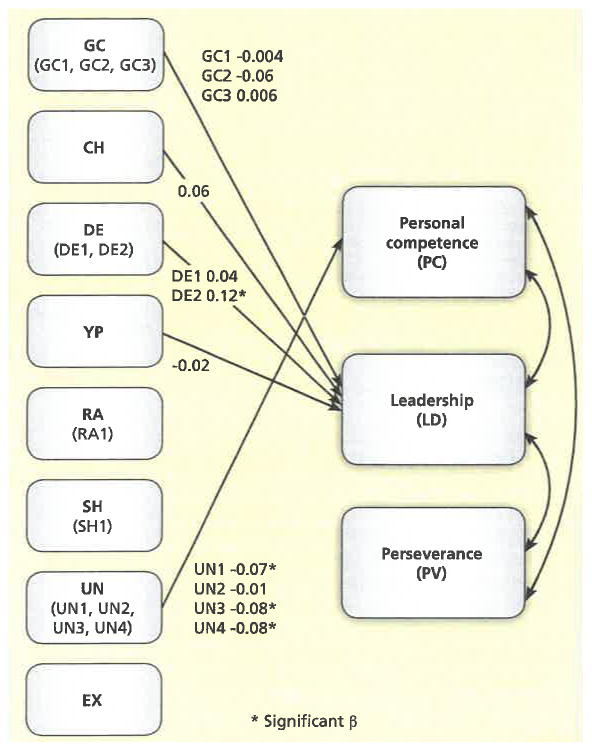
Methods: Data from 744 respondents to a survey mailed to 3500 critical care nurses who were members of the American Association of Critical-Care Nurses were analyzed. Mplus was used to analyze a mediation model.
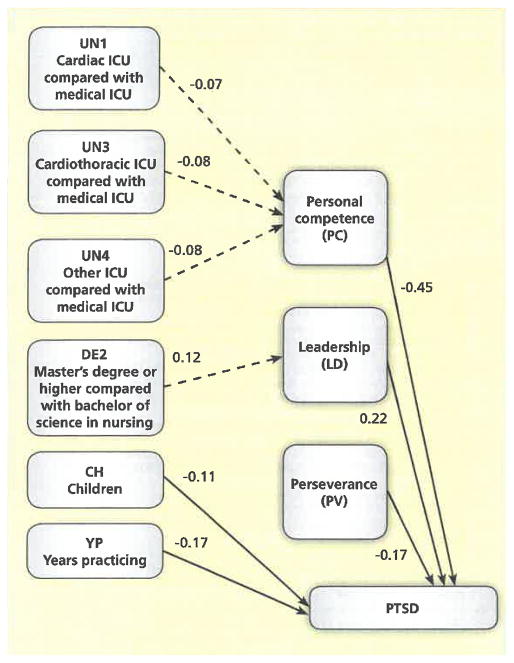
Results: Nurses who worked in any type of intensive care unit other than the medical unit and had high scores for resilience were 18% to 50% less likely to experience post-traumatic stress disorder than were nurses with low scores. Nurses with a graduate degree in nursing were 18% more likely to experience posttraumatic stress disorder than were nurses with a bachelor's degree.
Conclusion: Because of their effects on resilience, working in a medical intensive care unit and having a graduate degree may influence the development of posttraumatic stress disorder. Future research is needed to better understand the impact of resilience on health care organizations, development of preventive therapies and treatment of posttraumatic stress disorder for critical care nurses, and the most appropriate mechanism to disseminate and implement strategies to address posttraumatic stress disorder.
©2017 American Association of Critical-Care Nurses.
Figures
References
-
- Chan ZC, Tam WS, Lung MK, Wong WY, Chau CW. A systematic literature review of nurse shortage and the intention to leave. J Nurs Manag. 2013;21(4):605–613. - PubMed
-
- Hauck A, Quinn Griffin MT, Fitzpatrick JJ. Structural empowerment and anticipated turnover among critical care nurses. J Nurs Manag. 2011;19(2):269–276. - PubMed
-
- Barlow KM, Zangaro GA. Meta-analysis of the reliability and validity of the Anticipated Turnover Scale across studies of registered nurses in the United States. J Nurs Manag. 2010;18:862–873. - PubMed
-
- Jones CB. Revisiting nurse turnover costs: adjusting for inflation. J Nurs Adm. 2008;38(1):11–18. - PubMed
-
- Waldman JD, Kelly F, Arora S, Smith HL. The shocking cost of turnover in health care. Health Care Manage Rev. 2004;29(1):2–7. - PubMed
MeSH terms
Grants and funding
LinkOut - more resources
Full Text Sources
Other Literature Sources
Medical