


Notch as a Driver of Gastric Epithelial Cell Proliferation
- PMID: 28462374
- PMCID: PMC5404025
- DOI: 10.1016/j.jcmgh.2017.01.012
Notch as a Driver of Gastric Epithelial Cell Proliferation
Abstract
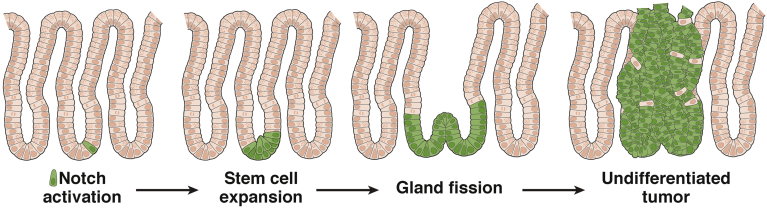
The gastric epithelium is sustained by a population of stem cells that replenish the various mature epithelial lineages throughout adulthood. Regulation of stem and progenitor cell proliferation occurs via basic developmental signaling pathways, including the Notch pathway, which recently was described to promote gastric stem cell proliferation in both mice and human beings. Current cancer theory proposes that adult stem cells that maintain gastrointestinal tissues accumulate mutations that promote cancerous growth, and that basic signaling pathways, such as Notch, which stimulate stem cell proliferation, can promote tumorigenesis. Accordingly, constitutive Notch activation leads to unchecked cellular proliferation and gastric tumors in genetic mouse models. Furthermore, there is emerging evidence suggesting that the Notch pathway may be activated in some human gastric cancers, supporting a potential role for Notch in gastric tumorigenesis. In this review, we first summarize the current understanding of gastric stem cells defined by genetic mouse studies, followed by discussion of the literature regarding Notch pathway regulation of gastric stem cell function in the mouse and human beings. Notch action to maintain gastric epithelial cell homeostasis and the cellular consequences of dysregulated signaling to promote tumorigenesis are discussed, including studies associating Notch activation with human gastric cancer. Finally, we compare and contrast Notch function in the stomach with other gastrointestinal tissues, including the intestine, to highlight the sensitivity of the stomach to Notch-induced tumors.
Keywords: ADAM10, a disintegrin and metalloproteinase 10; GC, gastric cancer; GI, gastrointestinal; GSI, γ-secretase inhibitor; Gastric Cancer; Gastric Stem Cells; Homeostasis; NICD, Notch receptor intracellular domain; Stomach; TX, tamoxifen.
Figures
References
-
- Torre L.A., Bray F., Siegel R.L. Global cancer statistics, 2012. CA Cancer J Clin. 2015;65:87–108. - PubMed
Publication types
Grants and funding
LinkOut - more resources
Full Text Sources
Other Literature Sources
Miscellaneous
