Review
. 2017 Jul;24(4):345-352.
doi: 10.1097/MOH.0000000000000352.

Transcriptional circuits in B cell transformation

Affiliations
Review

Transcriptional circuits in B cell transformation

Yeguang Hu et al. Curr Opin Hematol. 2017 Jul.

Abstract

Purpose of review: Loss of IKAROS in committed B cell precursors causes a block in differentiation while at the same time augments aberrant cellular properties, such as bone marrow stromal adhesion, self-renewal and resistance to glucocorticoid-mediated cell death. B cell acute lymphoblastic leukaemias originating from these early stages of B cell differentiation and associated with IKAROS mutations share a high-risk cellular phenotype suggesting that deregulation of IKAROS-based mechanisms cause a highly malignant disease process.

Recent studies: Recent studies show that IKAROS is critical for the activity of super-enhancers at genes required for pre-B cell receptor (BCR) signalling and differentiation, working either downstream of or in parallel with B cell master regulators such as EBF1 and PAX5. IKAROS also directly represses a cryptic regulatory network of transcription factors prevalent in mesenchymal and epithelial precursors that includes YAP1, TEAD1/2, LHX2 and LMO2, and their targets, which are not normally expressed in lymphocytes. IKAROS prevents not only expression of these 'extra-lineage' transcription factors but also their cooperation with endogenous B cell master regulators, such as EBF1 and PAX5, leading to the formation of a de novo for lymphocytes super-enhancer network. IKAROS coordinates with the Polycomb repression complex (PRC2) to provide stable repression of associated genes during B cell development. However, induction of regulatory factors normally repressed by IKAROS starts a feed-forward loop that activates de-novo enhancers and elevates them to super-enhancer status, thereby diminishing PRC2 repression and awakening aberrant epithelial-like cell properties in B cell precursors.

Summary: Insight into IKAROS-based transcriptional circuits not only sets new paradigms for cell differentiation but also provides new approaches for classifying and treating high-risk human B-ALL that originates from these early stages of B cell differentiation.


Conflict of interest statement

Conflicts of interest

We declare no conflict of interest.

Figures
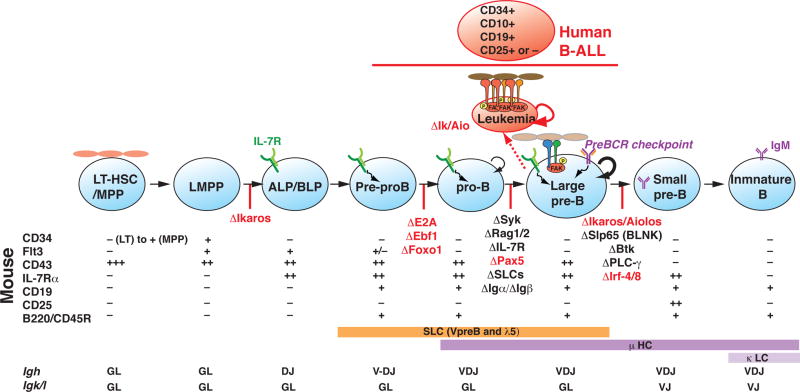
Figure 1
Figure 1. Developmental progression from HSC to immature B cell
Expression of cell surface markers that define discrete stages of B cell differentiation in mouse and human are shown together with Igh and Igk gene rearrangements. The stage-specific arrest in differentiation caused by mouse genetic mutations in transcription and signaling factors is shown as red perpendicular lines on the developmental progression. Germ-line deletion of Ikzf1 arrest lymphocyte differentiation at the LMPP stage, whereas, conditional inactivation of Ikzf1 downstream of the LMPP arrests at the large pre-B stage. IKAROS deficient large pre-B cells exhibit leukemic potential upon transplantation into a NOD/SCID host. Surface phenotype of human B-ALL and its origins from the early stages of B cell differentiation are shown. Loss of IKAROS augments integrin signaling, weak stromal adhesion properties and self-renewal normally displayed by wild type large pre-B cells.
Figure 2
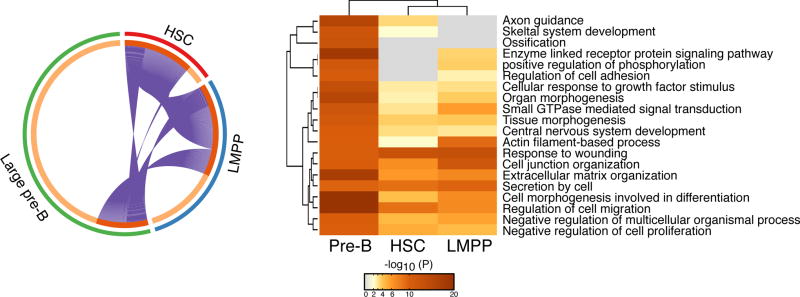
Figure 2. Repression of niche-interactions from the HSC to the large pre-B cell
Comparative analysis of genes that were previously shown to be up-regulated upon loss of IKAROS in the HSC, LMPP and large pre-B cell [23,24]. A circos diagram depicting overlap between up-regulated genes (purple connecting lines) in IKAROS deficient HSC, LMPP and large pre-B cells is shown on the left side. A heatmap of functional pathways supported by the IKAROS-repressed genes in these cell types is shown on the right side. The color intensity of the heatmap is a measure of the p-value that indicates the enrichment for a given pathway in the corresponding list of up-regulated genes provided by a given experimental condition (e.g. in HSC, LMPP or large pre-B cell)
Figure 3
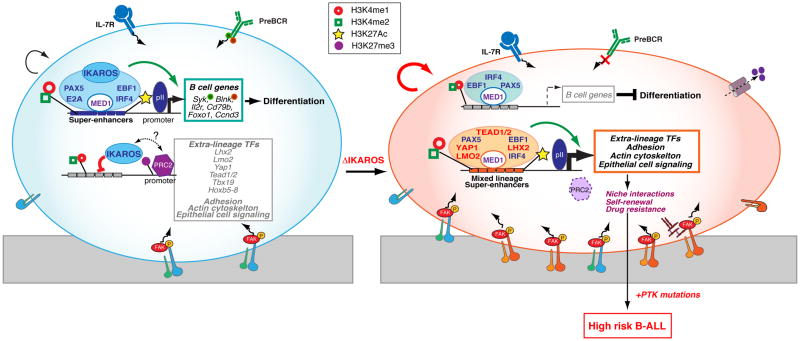
Figure 3. Reciprocal regulation of enhancers and B cell lineage fidelity
IKAROS sets a highly permissive chromatin environment that defines super-enhancers at genes involved in pre-BCR signaling and differentiation. IKAROS also associates with the inactive enhancers of genes that support pathways such as cell adhesion, self-renewal and drug resistance normally affiliated with a non-lymphoid cell identity. Among the repressed IKAROS gene targets are master transcription regulators prevalent in non-lymphoid cells that upon IKAROS loss become induced and co-operate with B cell transcription factors to activate a de novo super-enhancer repertoire that supports the aberrant cellular properties of the mutant B cell precursors. Notably, these aberrant properties manifested in primary IKAROS pre-B cells are likely responsible for the high-risk status of leukemias caused by activating mutations in tyrosine kinases (e.g. BCR-ABL, JAK2-PDGFR).
Figure 4
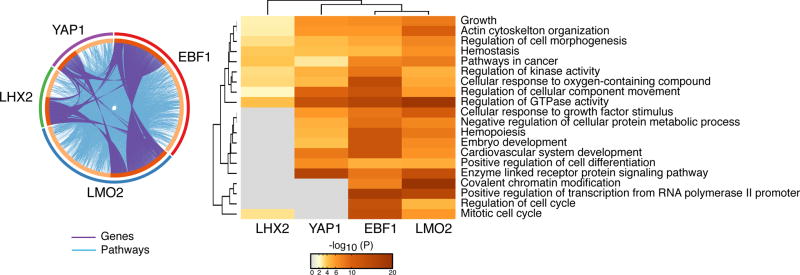
Figure 4. A hybrid “extra-lineage-B cell” transcription factor network is responsible for the IKAROS loss-of-function genetic effects
The knockdown effect of individual “extra-lineage” and B cell transcription factors on genes up-regulated in IKAROS deficient large pre-B cells is shown. A circos diagram depicting the overlap of YAP1, EBF1, LMO2 and LHX2 on inducing the genes up-regulated (connected purple lines) in IKAROS deficient pre-B cells is shown. The effect on up-regulated functional pathways associated with these genes is also shown (connected light blue lines) in the same diagram. A heatmap of functional pathways supported by the normally IKAROS-repressed genes and their dependency on YAP1, EBF1, LMO2 and LHX2 for expression is shown on the right side (as described in Figure 2).

References

    1. Herzog S, Reth M, Jumaa H. Regulation of B-cell proliferation and differentiation by pre-B-cell receptor signalling. Nat Rev Immunol. 2009;9:195–205. - PubMed
    1. Nutt SL, Kee BL. The transcriptional regulation of B cell lineage commitment. Immunity. 2007;26:715–725. - PubMed
    1. Bryder D, Sigvardsson M. Shaping up a lineage--lessons from B lymphopoesis. Curr Opin Immunol. 2010;22:148–153. - PubMed
    1. Mandel EM, Grosschedl R. Transcription control of early B cell differentiation. Curr Opin Immunol. 2010;22:161–167. - PubMed
    1. Mullighan CG, Goorha S, Radtke I, Miller CB, Coustan-Smith E, Dalton JD, Girtman K, Mathew S, Ma J, Pounds SB, et al. Genome-wide analysis of genetic alterations in acute lymphoblastic leukaemia. Nature. 2007;446:758–764. - PubMed

MeSH terms

Substances