


Simulating the spread of selection-driven genotypes using landscape resistance models for desert bighorn sheep
- PMID: 28464013
- PMCID: PMC5413035
- DOI: 10.1371/journal.pone.0176960
Simulating the spread of selection-driven genotypes using landscape resistance models for desert bighorn sheep
Abstract
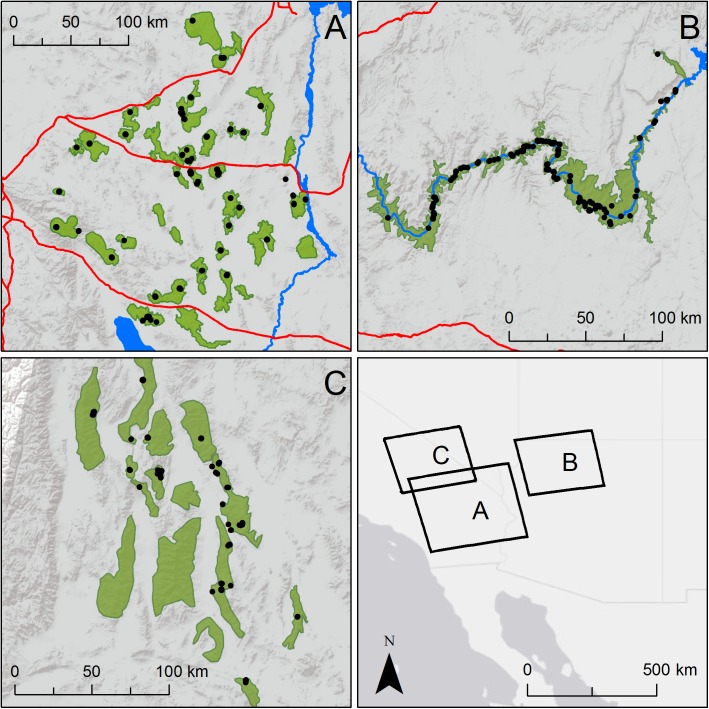
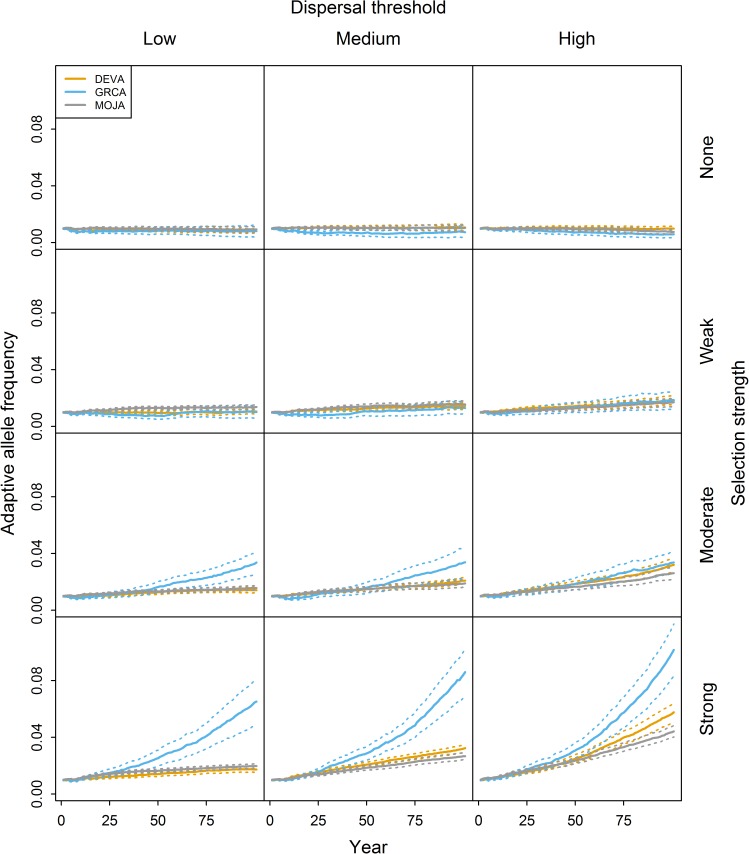
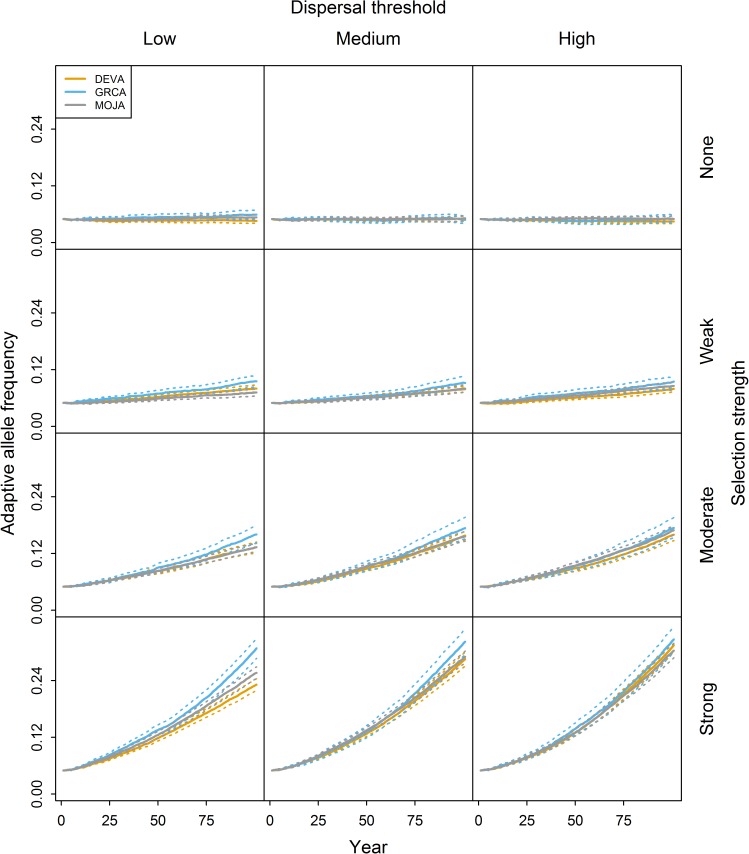
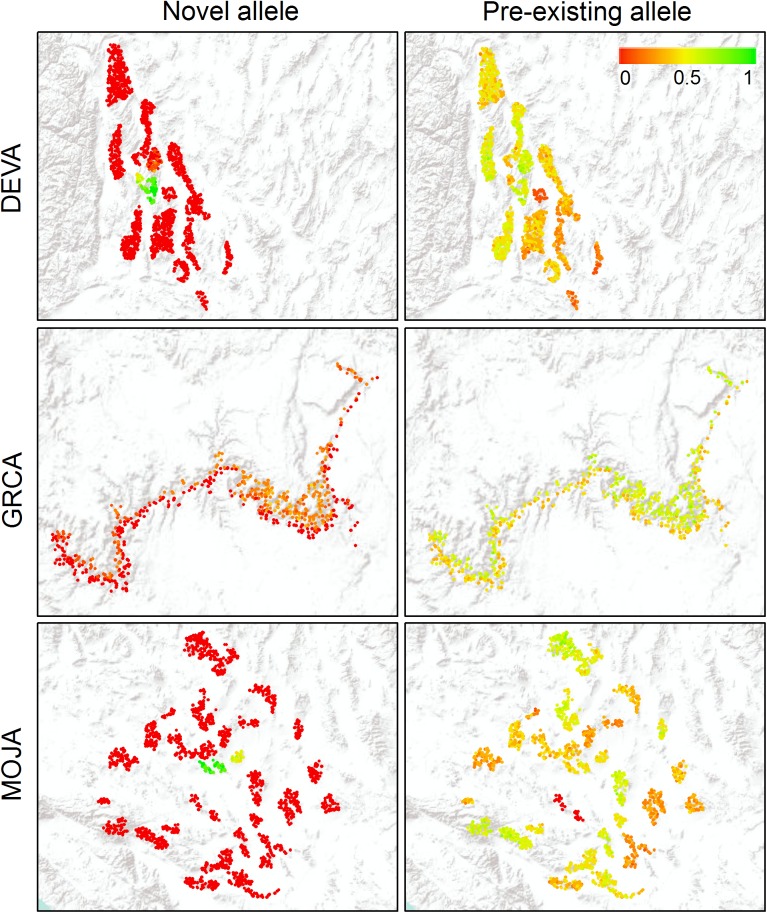
Landscape genetic studies based on neutral genetic markers have contributed to our understanding of the influence of landscape composition and configuration on gene flow and genetic variation. However, the potential for species to adapt to changing landscapes will depend on how natural selection influences adaptive genetic variation. We demonstrate how landscape resistance models can be combined with genetic simulations incorporating natural selection to explore how the spread of adaptive variation is affected by landscape characteristics, using desert bighorn sheep (Ovis canadensis nelsoni) in three differing regions of the southwestern United States as an example. We conducted genetic sampling and least-cost path modeling to optimize landscape resistance models independently for each region, and then simulated the spread of an adaptive allele favored by selection across each region. Optimized landscape resistance models differed between regions with respect to landscape variables included and their relationships to resistance, but the slope of terrain and the presence of water barriers and major roads had the greatest impacts on gene flow. Genetic simulations showed that differences among landscapes strongly influenced spread of adaptive genetic variation, with faster spread (1) in landscapes with more continuously distributed habitat and (2) when a pre-existing allele (i.e., standing genetic variation) rather than a novel allele (i.e., mutation) served as the source of adaptive genetic variation. The combination of landscape resistance models and genetic simulations has broad conservation applications and can facilitate comparisons of adaptive potential within and between landscapes.
Conflict of interest statement
Figures
References
-
- Sork VL, Waits L. Contributions of landscape genetics–approaches, insights, and future potential. Molecular Ecology. 2010;19(17):3489–95. doi: 10.1111/j.1365-294X.2010.04786.x - DOI - PubMed
-
- Zeller K, McGarigal K, Whiteley A. Estimating landscape resistance to movement: a review. Landscape Ecology. 2012;27(6):777–97.
-
- Holderegger R, Kamm U, Gugerli F. Adaptive vs. neutral genetic diversity: implications for landscape genetics. Landscape Ecology. 2006;21(6):797–807.
-
- Holderegger R, Wagner HH. Landscape genetics. BioScience. 2008;58(3):199–207.
-
- Manel S, Holderegger R. Ten years of landscape genetics. Trends in Ecology & Evolution. 2013;28(10):614–21. - PubMed
MeSH terms
LinkOut - more resources
Full Text Sources
Other Literature Sources
