


doi: 10.1111/jmp.12271.
Epub 2017 May 2.
Fatty acid supplements improve hair coat condition in rhesus macaques
Affiliations
- PMID: 28464359
- PMCID: PMC5597456
- DOI: 10.1111/jmp.12271
Item in Clipboard
Fatty acid supplements improve hair coat condition in rhesus macaques
J Med Primatol.
2017 Oct.
Abstract
As captive rhesus macaques often exhibit hair loss, alopecia was quantified and behavior was recorded before, during, and after fatty acid supplementation in six macaques. Fatty acid treatment was associated with a decrease in alopecia and in self-grooming behavior. Therefore, fatty acids may be a viable treatment for alopecia in some captive primates.
Keywords: alopecia; hair loss; polyunsaturated fatty acids.
© 2017 John Wiley & Sons A/S. Published by John Wiley & Sons Ltd.
Figures
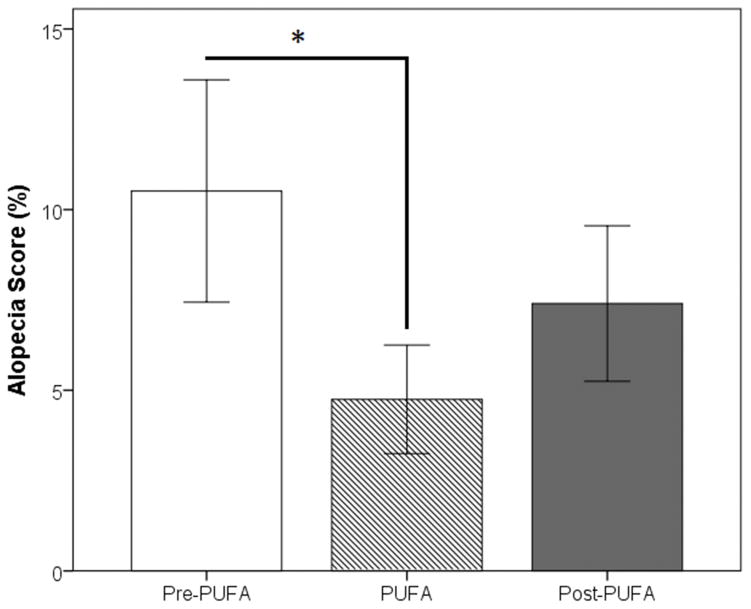
The percent alopecia score before, during, and after treatment with PUFAs (* p-value < 0.05).
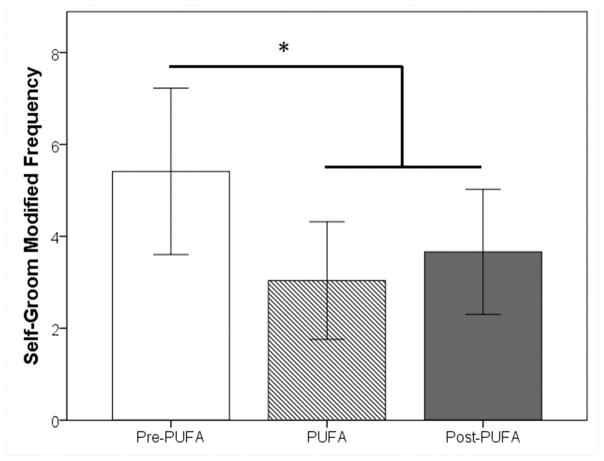
The amount of self-grooming behavior observed before, during, and after treatment with PUFAs (*p-value < 0.05).
References
Publication types
MeSH terms
Substances
Grants and funding
LinkOut - more resources
Full Text Sources
Other Literature Sources
Research Materials
