


Avoiding inappropriate urinary catheter use and catheter-associated urinary tract infection (CAUTI): a pre-post control intervention study
- PMID: 28464815
- PMCID: PMC5414128
- DOI: 10.1186/s12913-017-2268-2
Avoiding inappropriate urinary catheter use and catheter-associated urinary tract infection (CAUTI): a pre-post control intervention study
Abstract
Background: Urinary tract infection (UTI) as the most common healthcare-associated infection accounts for up to 36% of all healthcare-associated infections. Catheter-associated urinary tract infection (CAUTI) accounts for up to 80% of these. In many instances indwelling urinary catheter (IDC) insertions may be unjustified or inappropriate, creating potentially avoidable and significant patient distress, embarrassment, discomfort, pain and activity restrictions, together with substantial care burden, costs and hospitalisation. Multifaceted interventions combining best practice guidelines with staff engagement, education and monitoring have been shown to be more effective in bringing about practice change than those that focus on a single intervention. This study builds on a nurse-led initiative that identified that significant benefits could be achieved through a systematic approach to implementation of evidence-based practice.
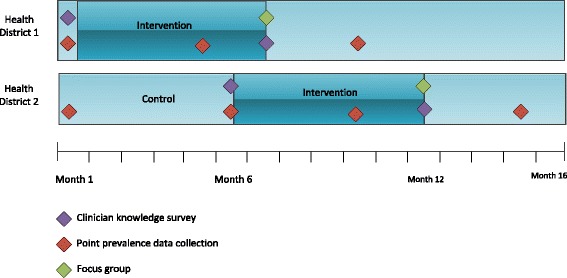
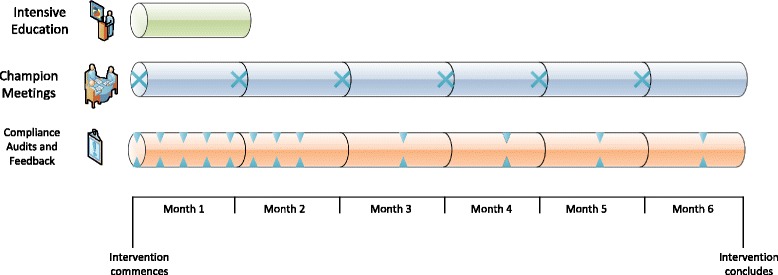
Methods: The primary aim of the study is to reduce IDC usage rates by reducing inappropriate urinary catheterisation and duration of catheterisation. The study will employ a multiple pre-post control intervention design using a phased mixed method approach. A multifaceted intervention will be implemented and evaluated in four acute care hospitals in NSW, Australia. The study design is novel and strengthened by a phased approach across sites which allows for a built-in control mechanism and also reduces secular effects. Feedback of point prevalence data will be utilised to engage staff and improve compliance. Ward-based champions will help to steward the change and maintain focus.
Discussion: This study will improve patient safety through implementation and robust evaluation of clinical practice and practice change. It is anticipated that it will contribute to a significant improvement in patient experiences and health care outcomes. The provision of baseline data will provide a platform from which to ensure ongoing improvement and normalisation of best practice. This study will add to the evidence base through enhancing understanding of interventions to reduce CAUTI and provides a prototype for other studies focussed on reduction of hospital acquired harms. Study findings will inform undergraduate and continuing education for health professionals.
Trial registration: ACTRN12617000090314 . Registered 17 January 2017. Retrospectively registered.
Keywords: Catheter-associated urinary tract infection; Evidence-based practice; Healthcare-associated infection; Multifaceted intervention.
Figures
References
-
- Allegranzi B, Bagheri Nejad S, Garcia Castillejos G, Kilpatrick C, Kelley E, Mathai E. Report on the burden of endemic health care-associated infection worldwide: A systematic review of the literature. World Health Organization. 2011. http://apps.who.int/iris/bitstream/10665/80135/1/9789241501507_eng.pdf. Accessed 25 Oct 2016.
-
- Magill SS, Edwards JR, Bamberg W, Beldavs ZG, Dumyati G, Kainer MA, Lynfield R, Maloney M, McAllister-Hollod L, Nadle J, Ray S, Thompson D, Wilson L, Fridkin S. Multistate Point-Prevalence Survey of Health Care–Associated Infections. N Engl J Med. 2014;370(13):1198–1208. doi: 10.1056/NEJMoa1306801. - DOI - PMC - PubMed
-
- Association for Professionals in Infection Control and Epidemiology (APIC) Guide to preventing catheter-associated urinary tract infections. 2014.
Publication types
MeSH terms
Associated data
LinkOut - more resources
Full Text Sources
Other Literature Sources
Medical
