. 2017 Jun 23;292(25):10328-10346.
doi: 10.1074/jbc.M116.764076. Epub 2017 May 2.

Cystinosin, the small GTPase Rab11, and the Rab7 effector RILP regulate intracellular trafficking of the chaperone-mediated autophagy receptor LAMP2A

Affiliations

Cystinosin, the small GTPase Rab11, and the Rab7 effector RILP regulate intracellular trafficking of the chaperone-mediated autophagy receptor LAMP2A

Jinzhong Zhang et al. J Biol Chem. .

Abstract

The lysosomal storage disease cystinosis, caused by cystinosin deficiency, is characterized by cell malfunction, tissue failure, and progressive renal injury despite cystine-depletion therapies. Cystinosis is associated with defects in chaperone-mediated autophagy (CMA), but the molecular mechanisms are incompletely understood. Here, we show CMA substrate accumulation in cystinotic kidney proximal tubule cells. We also found mislocalization of the CMA lysosomal receptor LAMP2A and impaired substrate translocation into the lysosome caused by defective CMA in cystinosis. The impaired LAMP2A trafficking and localization were rescued either by the expression of wild-type cystinosin or by the disease-associated point mutant CTNS-K280R, which has no cystine transporter activity. Defective LAMP2A trafficking in cystinosis was found to associate with decreased expression of the small GTPase Rab11 and the Rab7 effector RILP. Defective Rab11 trafficking in cystinosis was rescued by treatment with small-molecule CMA activators. RILP expression was restored by up-regulation of the transcription factor EB (TFEB), which was down-regulated in cystinosis. Although LAMP2A expression is independent of TFEB, TFEB up-regulation corrected lysosome distribution and lysosomal LAMP2A localization in Ctns-/- cells but not Rab11 defects. The up-regulation of Rab11, Rab7, or RILP, but not its truncated form RILP-C33, rescued LAMP2A-defective trafficking in cystinosis, whereas dominant-negative Rab11 or Rab7 impaired LAMP2A trafficking. Treatment of cystinotic cells with a CMA activator increased LAMP2A localization at the lysosome and increased cell survival. Altogether, we show that LAMP2A trafficking is regulated by cystinosin, Rab11, and RILP and that CMA up-regulation is a potential clinically relevant mechanism to increase cell survival in cystinosis.

Keywords: autophagy; cell biology; lysosomal storage disease; lysosome; membrane trafficking.


Conflict of interest statement

The authors declare that they have no conflicts of interest with the contents of this article

Figures
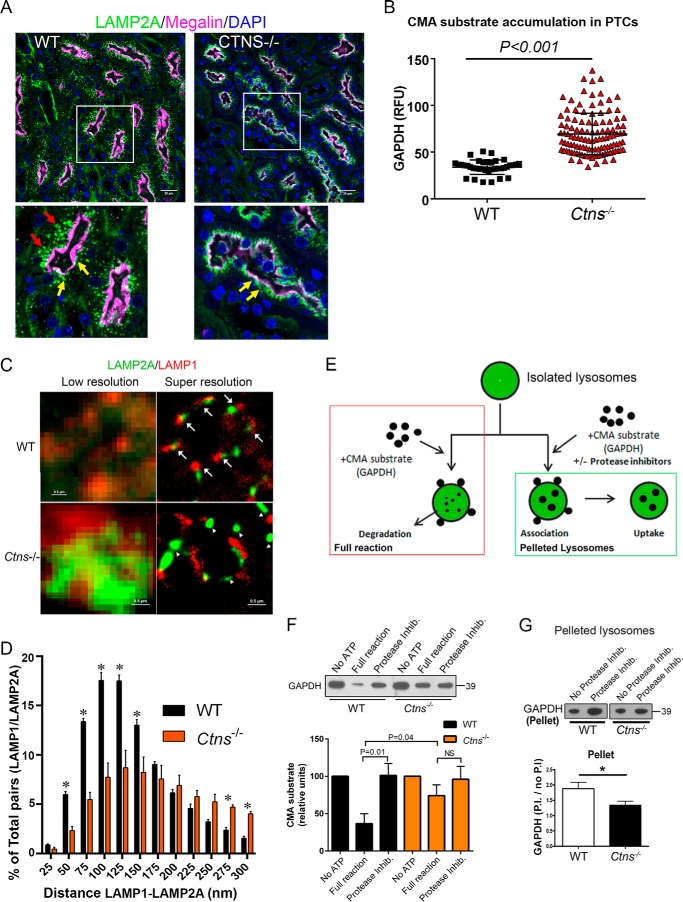
Figure 1.
Figure 1.
LAMP2A mislocalization is associated with in vivo accumulation and impaired CMA substrate lysosomal internalization in cystinosis. A and B, in vivo mislocalized LAMP2A and increased CMA substrate accumulation in Ctns−/− mouse PTCs. A, immunofluorescence analysis of mouse PTCs, identified by the expression of the apical receptor megalin (pink), shows that in contrast to WT PTCs (left panels), Ctns−/− PTCs (right panels) have apical (yellow arrows) but not basal (red arrows) localization of LAMP2A. Representative images from 45 and 37 fields analyzed from two wild-type and three Ctns−/− mice, respectively. B, LAMP2A mislocalization is associated with increased accumulation of the CMA substrate GAPDH in Ctns−/− PTCs. Quantification of fluorescence intensity from 39 and 47 fields analyzed from two wild-type and three Ctns−/− mice. All fields were randomly selected by “tiling and stitching.” C, super-resolution microscopy analysis of LAMP1 (red) and LAMP2A (green) distribution in wild-type and Ctns−/− lysosomes. The arrows show LAMP2A localization adjacent to LAMP1 molecules in wild-type cells. Arrowheads show LAMP2A molecules at micro-domains distant from LAMP1 molecules. D, quantitative analysis of the distribution of LAMP2A relative to LAMP1 molecules as determined by STORM. Quantification of the distance between LAMP1 and LAMP2A centroids was performed as described under “Materials and methods.” A total of 30,486 and 13,985 LAMP1-LAMP2A pairs were analyzed for WT and Ctns−/− cells, respectively. Results are expressed by binning the distance between pairs in 25-nm increments and plotted as a percentage of total pairs at the given distance for each cell. A total of three cells for each condition were analyzed. dSTORM images were processed using Nikon software to correct for drift during acquisition as described under “Materials and methods.” Mean ± S.E. *, p < 0.05. E, schematic representation of lysosomal isolation and in vitro CMA assay. The scheme represents the analysis of CMA activity (red box) and CMA substrate translocation into the lysosomal lumen (green box). F, lysosomes were isolated from livers of starved wild-type (WT) and Ctns−/− mice, and CMA activity was measured by incubation for 30 min with the CMA substrate GAPDH. GAPDH degradation was analyzed by Western blotting. CMA activity was measured by analysis of the remaining levels of GAPDH in the full reaction (maximal degradation, red box in E). Controls consisting of reactions performed in the absence of ATP (which is necessary for CMA activity) or in the presence of protease inhibitors (Protease Inhib.) were run in parallel. Quantitative densitometry results are shown. Mean ± S.E. (n = 7). NS, not significant (unpaired t test). G, CMA reactions were carried out in the presence or absence of protein inhibitors; then lysosomes were pelleted (green box in E); and the amount of GAPDH bound to the lysosomal membrane and/or internalized into the lysosomal lumen were assessed by Western blotting. Quantitative densitometry analysis shows the ratio between the amounts of GAPDH in the presence of protease inhibitors (P.I.) (bound and internalized GAPDH) versus in the absence of protease inhibitors (no P.I.) (bound GAPDH). Results are mean ± S.E. (n = 4). *, p < 0.05 (unpaired t test).
Figure 2.
Figure 2.
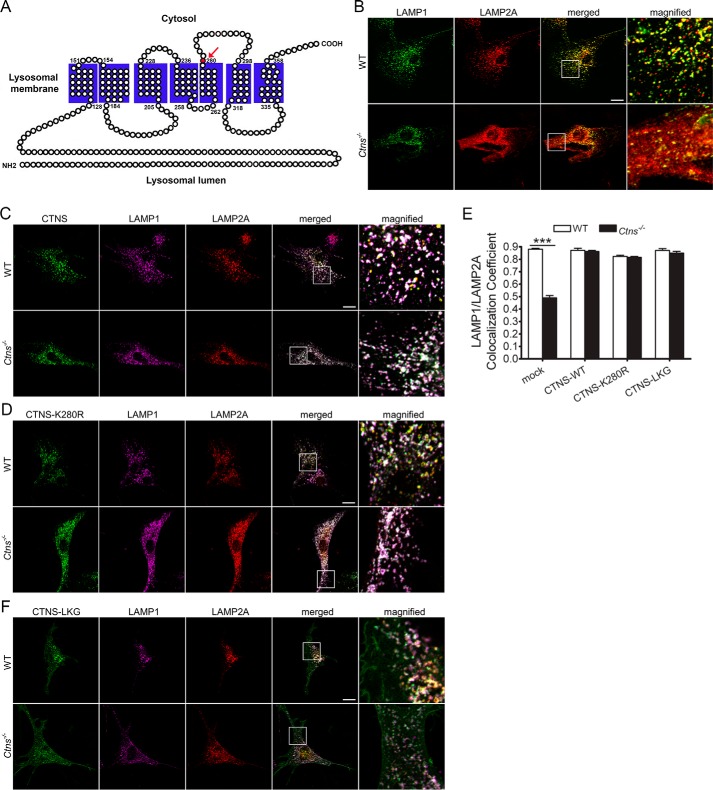
Cystine transporter-inactive CTNS mutant CTNSK280R rescues the localization of the CMA receptor, LAMP2A, at the lysosomal membrane of cystinotic cells. A, schematic representation of the human CTNS protein. The mutant residue Lys-280, which is mutated to an arginine in the disease-associated mutant CTNSK280R, is indicated with an arrow. The K280R abolishes the cystine transporter activity of CTNS. This mutation is manifested in patients with cystinosis and produces a protein that, although incapable of reducing lysosomal overload, retains lysosomal localization. B–D, immunofluorescence analysis of the localization of LAMP1 and LAMP2A in cells expressing either GFP-CTNS or GFP-CTNSK280R mutant in wild-type (WT) or Ctns−/− cells. Triple colocalization between LAMP1, LAMP2A, and CTNS (white) can be observed in merged and magnified images. Scale bars, 20 μm. E, quantitative analysis of the colocalization of LAMP2A and LAMP1 in wild-type cells (WT, white columns) or Ctns−/− cells (black columns) expressing either GFP-CTNS (CTNS-WT), GFP-CTNSK280R, or GFP-CTNS-LKG. F, immunofluorescence analysis of the localization of LAMP1 and LAMP2A in cells expressing GFP-CTNS-LKG variant in wild-type (WT) or Ctns−/− cells. B–F, triple colocalization between LAMP1, LAMP2A, and CTNS (white) can be observed in merged and magnified images. Scale bars, 20 μm. The data represent the mean ± S.E. of three independent experiments.
Figure 3.
Figure 3.
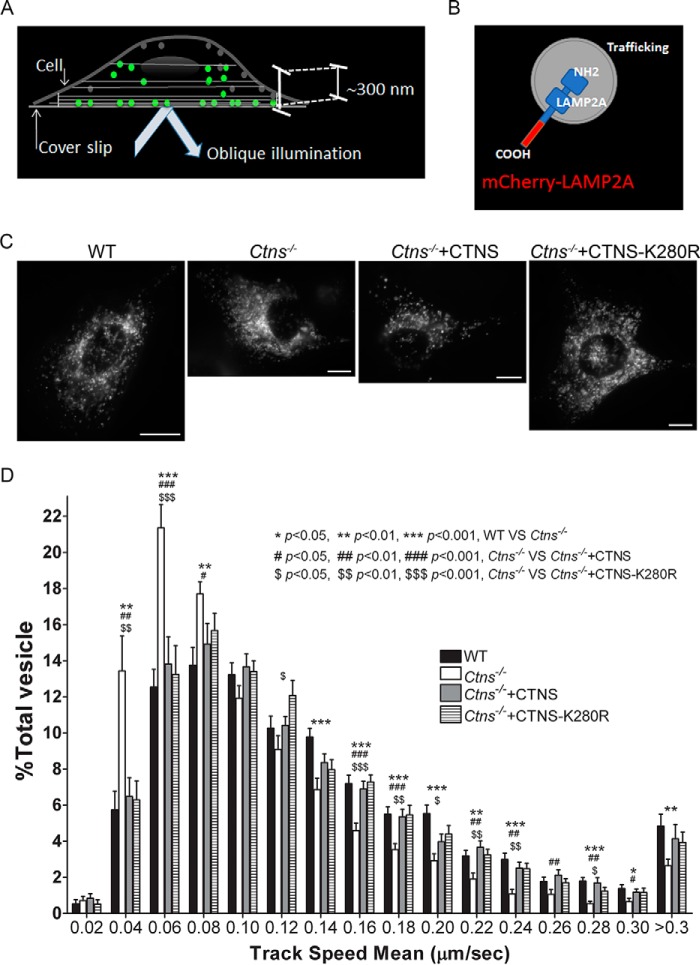
CTNS regulates LAMP2A trafficking. A, schematic representation of pseudo-TIRFM, a technique widely used to study vesicular trafficking (24, 25). Different from conventional TIRFM, pseudo-TIRFM facilitates the analysis of organelles that may not necessarily be in areas adjacent to the plasma membrane (beyond 100 nm), while maintaining an excellent signal to background ratio (26). B, schematic representation of the LAMP2A protein used in trafficking studies. The C terminus of LAMP2A was tagged with mCherry. The mCherry tag in this position does not affect LAMP2A localization (27). C, representative images of cells used in trafficking studies. Scale bar, 10 μm. D, quantitative analysis of the trafficking of LAMP2A in wild-type (WT), Ctns−/−, or Ctns−/− cells reconstituted with either wild-type GFP-CTNS or with its mutant GFP-CTNSK280R. Histograms represent the speeds of mCherry-LAMP2A-containing organelles in wild-type cells and cystinotic cells expressing either wild-type CTNS or the mutant CTNSK280R. The speeds for the independent vesicles were binned in 0.02-μm/s increments and plotted as a percentage of total vesicles for a given cell. Results are represented as mean ± S.E. from 20 WT cells, 20 Ctns−/− cells, or 20 and 20 Ctns−/− cells expressing either wild-type CTNS or CTNSK280R, respectively. The statistically significant differences between the groups are indicated in the figure.
Figure 4.
Figure 4.
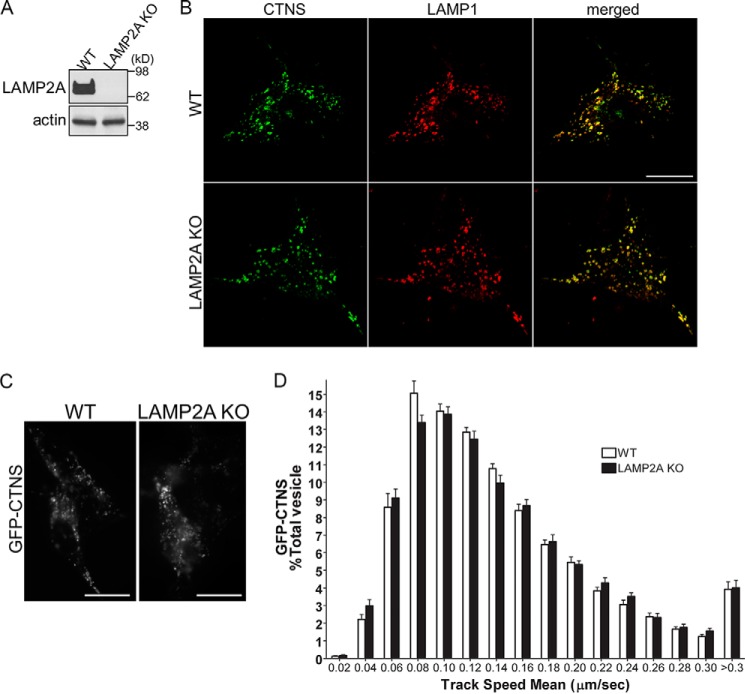
CTNS localization and trafficking is not affected in LAMP2A-deficient cells. A, Western blot analysis of LAMP2A in WT and LAMP2A KO MEFs. B, representative images of wild-type (WT) or LAMP2A-KO MEFs expressing GFP-CTNS. Immunofluorescence analysis of endogenous LAMP1 confirmed that CTNS localization at LAMP1-positive organelles is not affected by LAMP2A down-regulation. Scale bars, 20 μm. C and D, vesicular trafficking of GFP-CTNS-positive organelles was performed by pseudo-TIRFM as described in Fig. 3 legend and under “Materials and methods.” C, representative images of analyzed cells. D, histograms representing the speeds of GFP-CTNS-containing organelles in wild-type cells and LAMP2A-KO cells are shown. The speeds for the independent vesicles were binned in 0.02-μm/s increments and plotted as a percentage of total vesicles for a given cell. Results are represented as mean ± S.E. from 21 WT cells and 21 LAMP2A−/− cells expressing GFP-CTNS. The statistical analysis established no significant differences between groups.
Figure 5.
Figure 5.
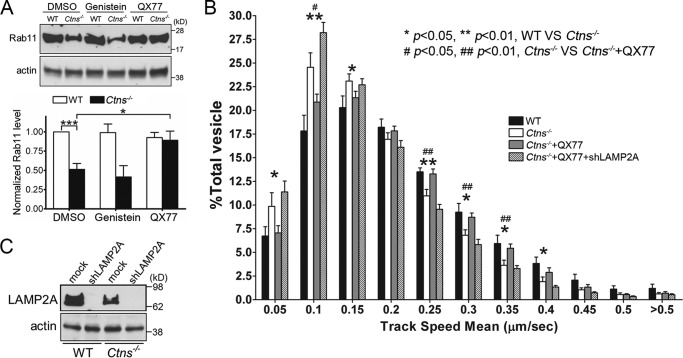
Rab11 is down-regulated in cystinosis and its trafficking is enhanced by CMA activation. A, WT and Ctns−/− MEFs were treated with DMSO, genistein, or QX77 for 48 h, and Rab11 expression levels were analyzed by Western blotting. Quantitation of Rab11 expression levels is from three independent experiments. Error bars represent S.E. *, p < 0.05, and ***, p < 0.001, Student's t test. B, vesicular trafficking of GFP-Rab11-positive organelles was performed by pseudo-TIRFM. Histograms represent the speeds of GFP-Rab11-containing organelles in WT and Ctns−/− MEFs. Where indicated, Ctns−/− cells and Ctns−/− cells that were down-regulated for LAMP2A expression were treated with the CMA activator QX77 before analysis. The speeds for the independent vesicles were binned in 0.05-μm/s increments and plotted as a percentage of total vesicles for a given cell. Results are represented as mean ± S.E. from at least 12 cells. The statistically significant differences between the groups are indicated in the figure. C, immunoblotting control of LAMP2A expression after down-regulation. WT and Ctns−/− MEFs were infected with lentiviral mouse shRNA against LAMP2A for 7 days. Expression levels of LAMP2A were evaluated by Western blotting.
Figure 6.
Figure 6.
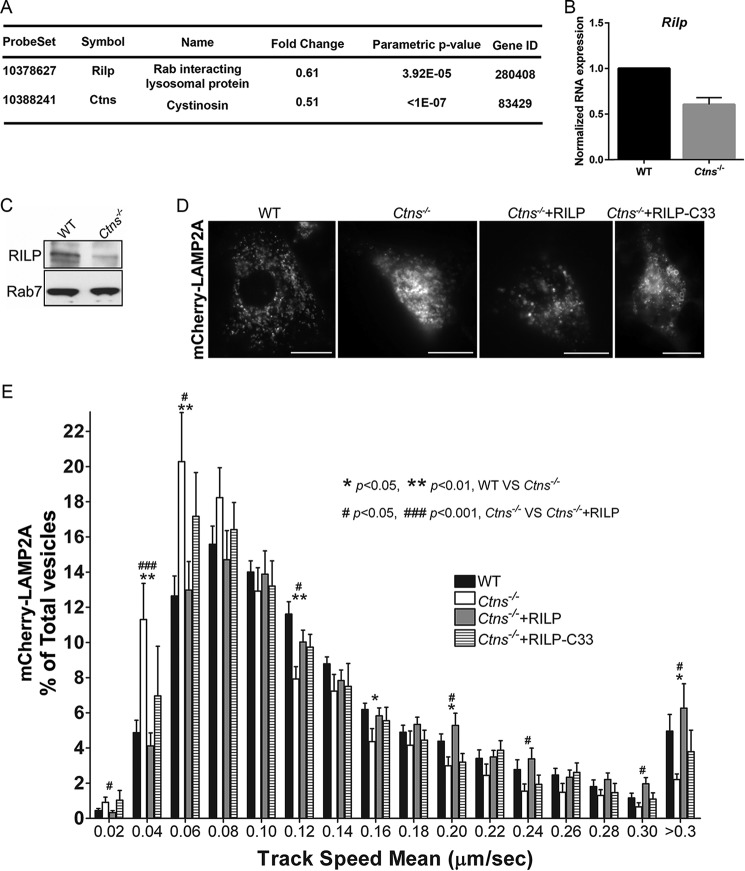
RILP is down-regulated in cystinosis and its expression rescues LAMP2A trafficking. A, differential gene expression between wild-type and Ctns−/− kidneys from six independent mice was analyzed using a mRNA array as described under “Materials and methods.” From the 28,853 genes used for random variance estimation 3,260 were found to be significantly different between classes at the nominal 0.001 level of the univariate test. One of these genes, Rilp, a Rab7-binding protein involved in lysosomal trafficking, was significantly down-regulated (fold change indicates gene expression in Ctns−/− kidneys versus wild-type controls). The values observed for the Ctns gene are included as control. B, qRT-PCR analysis confirmation of Rilp down-regulation in Ctns−/− mouse fibroblasts. Mean ± S.D. C, Western blot analysis confirmed that RILP, but not its binding partner Rab7, is down-regulated, at the protein level, in cystinotic MEFs. D and E, RILP expression rescues LAMP2A trafficking in cystinotic cells. Wild-type (WT) or Ctns−/− MEFs were transfected with mCherry-LAMP2A. Where indicated, the cells were co-transfected for the expression of RILP or RILP-C33 (a truncated form of the protein lacking the N-terminal half). LAMP2A vesicular trafficking was performed by pseudo-TIRFM as described in Fig. 3 legend and under “Materials and methods.” D, representative images of analyzed cells. Scale bars, 20 μm. E, histograms representing the speeds of mCherry-LAMP2A-containing organelles in wild-type cells and cystinotic cells expressing either wild-type RILP or RILP-C33 are shown. The speeds for the independent vesicles were binned in 0.02-μm/s increments and plotted as a percentage of total vesicles for a given cell. Results are represented as mean ± S.E. from 20 WT cells, 11 Ctns−/− cells, or 17 and 16 Ctns−/− cells expressing either wild-type RILP or RILP-C33, respectively. The statistically significant differences between the groups are indicated in the figure.
Figure 7.
Figure 7.
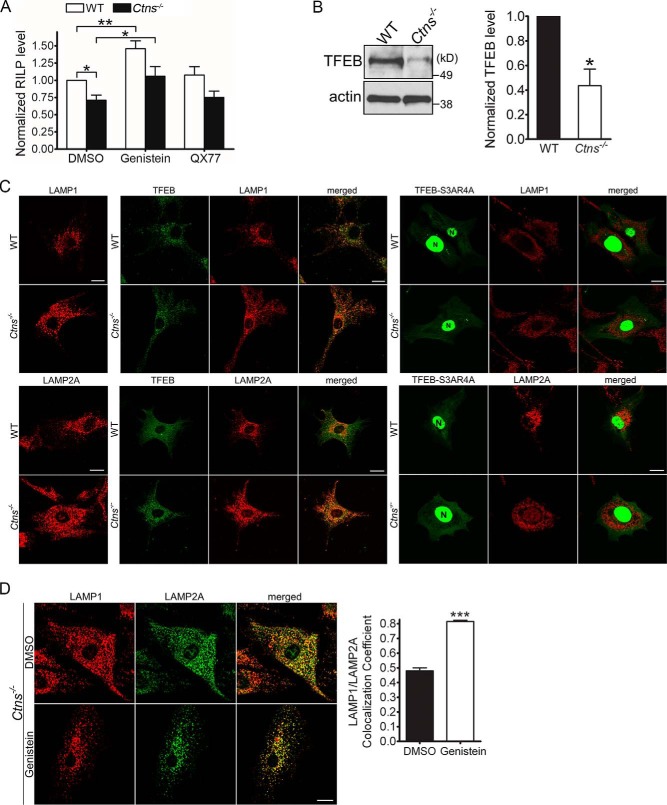
TFEB activation improves lysosomal trafficking and corrects the localization of LAMP2A in cystinotic cells. A, WT and CTNS KO MEFs were treated with DMSO, genistein, or QX77 for 48 h, and RILP expression levels were analyzed by qPCR. Quantitation of RILP levels are from three independent experiments. Error bars represent S.E. *, p < 0.05, and **, p < 0.01, Student's t test. B, TFEB expression is down-regulated in cystinotic cells. Western blot analysis and quantification of the expression of endogenous TFEB in cystinotic cells are shown. Mean ± S.E. (n = 3). *, p < 0.05. C, exogenous expression of TFEB or TFEB-S3AR4A with constitutive nuclear localization (N) increases the perinuclear distribution of LAMP1- (upper panels) and LAMP2A (bottom panels)-positive organelles in cystinotic cells. Immunofluorescence of endogenous LAMP1 or LAMP2A (red) and the cellular distribution of GFP-TFEB or GFP-TFEB-S3AR4A in wild-type (WT) or Ctns−/− cells was analyzed as described under “Materials and methods.” Scale bars, 20 μm. N, denotes nucleus. D, immunofluorescence analysis of endogenous LAMP1 and LAMP2A localization in Ctns−/− cells either treated with genistein to activate TFEB or with vehicle (DMSO). Similar to that observed for TFEB overexpression, genistein treatment induces perinuclear localization of LAMP1 in cystinosis. Quantitative analysis indicates that genistein treatment improves the localization of LAMP2A at LAMP1-positive organelles. Mean ± S.E. (n = 3). ***, p < 0.001.
Figure 8.
Figure 8.
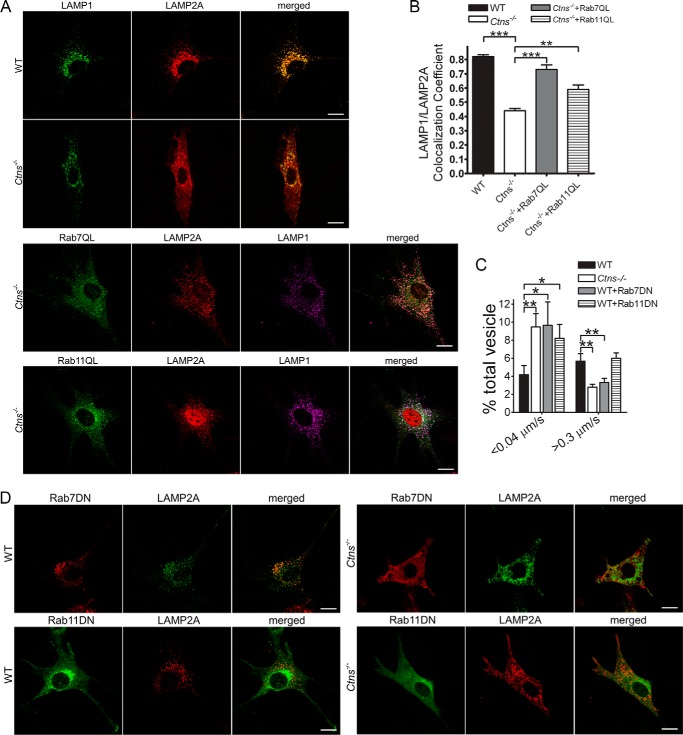
Rab7 and Rab11 independently regulate LAMP2A trafficking. A, confocal microscopy analysis of the localization of LAMP1 and LAMP2A in WT and Ctns−/− MEFs. WT and Ctns−/− MEFs were transfected with Rab7QL or Rab11QL expression vector and immunostained for endogenous LAMP1 and LAMP2A. Scale bar, 20 μm. B, quantification of the colocalization of LAMP1- and LAMP2A-positive organelles using ImageJ. At least 14 cells from two independent experiments were quantified. Mean ± S.E. **, p < 0.01, and ***, p < 0.001, Student's t test. C, effect of Rab11 and Rab7 dominant-negative GTPases on the vesicular trafficking of LAMP2A. WT and Ctns−/− MEFs were transfected with GFP- or mCherry-LAMP2A. Where indicated, the WT cells were cotransfected for the expression of DsRed-Rab7-DN or GFP-Rab11-DN. LAMP2A vesicular trafficking was performed by pseudo-TIRFM. Histograms representing the speeds of LAMP2A-containing organelles are shown. Results are represented as mean ± S.E. from at least 20 cells. *, p < 0.05, Student's t test. D, representative images showing the localization of endogenous LAMP2A in WT or Ctns−/− MEFs expressing DsRed-Rab7-DN or GFP-Rab11-DN and analyzed by confocal microscopy. Scale bar, 20 μm.
Figure 9.
Figure 9.
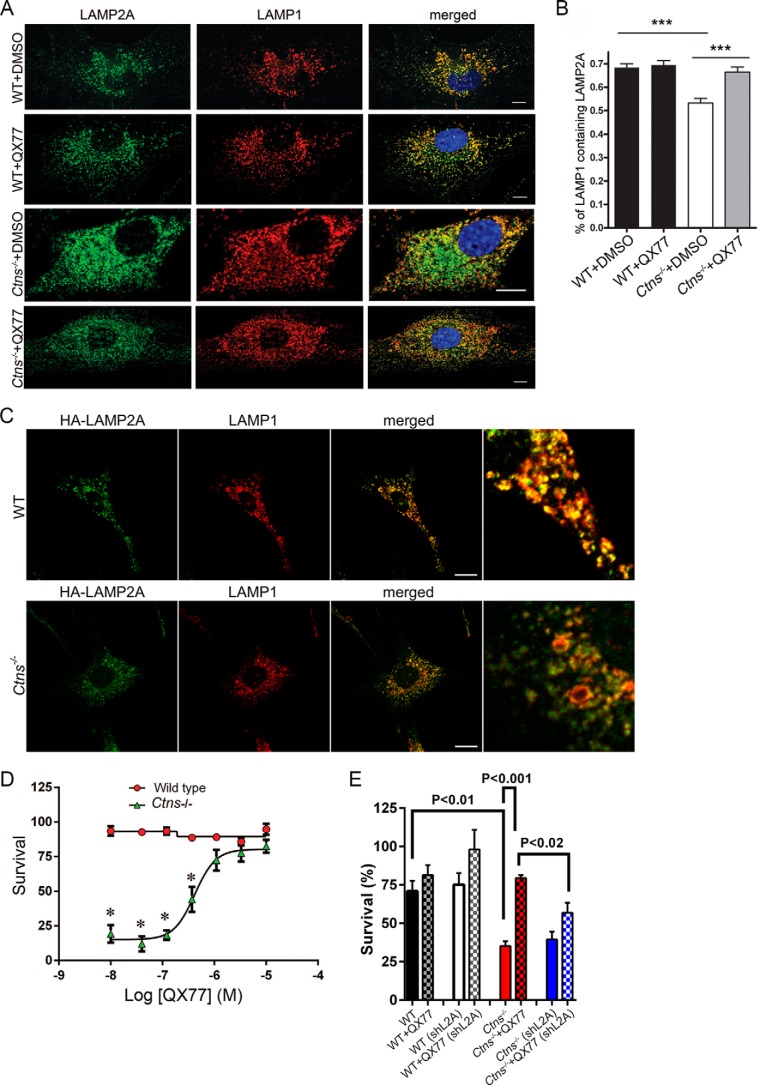
Small-molecule CMA activators increase LAMP2A relocalization at the lysosomal membrane and survival to oxidative stress-induced cell death in cystinosis. A and B, confocal microscopy analysis of the colocalization of LAMP2A and LAMP1. A, representative images of wild-type (WT) or Ctns−/− cells treated with the CMA activator (QX77) or vehicle (DMSO). Scale bar, 10 μm. B, quantitative analysis of protein colocalization showing that QX77 significantly increases the re-localization of LAMP2A at LAMP1-positive lysosomes in cystinotic cells. ***, p < 0.001. C, localization of a CMA-competent LAMP2A, with an internal HA-tagged but free C terminus, in wild-type and cystinotic cells. D, effect of CMA activator (QX77) on cell survival (MTT assay) to 100 μm tert-butyl-hydroperoxide-induced oxidative stress. Results are mean ± S.E. from three biological replicates. Representative of three independent experiments with similar results. *, p < 0.0015. E, WT and Ctns−/− MEFs were infected with lentiviral shRNA against mouse LAMP2A for 7 days. MTT assay was performed as described under “Materials and methods.”
Figure 10.
Figure 10.
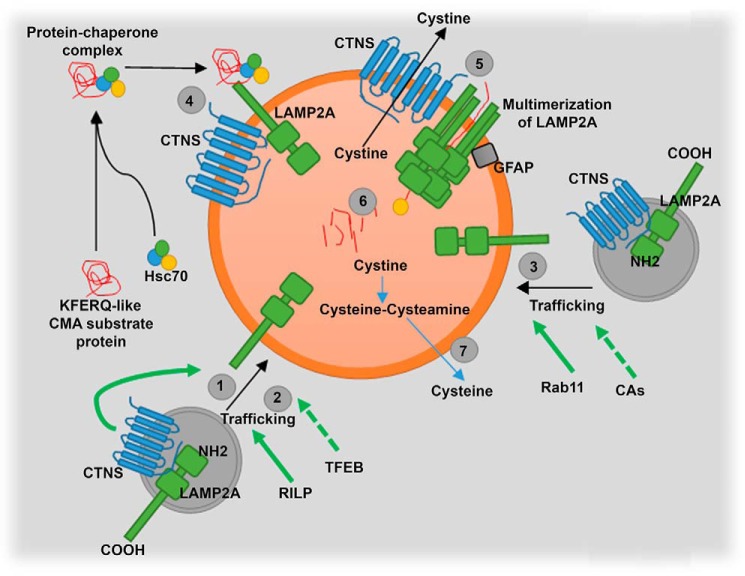
Schematic representation of CTNS regulation of LAMP2A trafficking. CTNS regulates LAMP2A trafficking to lysosomes, and its deficiency causes LAMP2A mislocalization, but the cystine-transporter activity of CTNS is not necessary for LAMP2A trafficking (1–3). RILP is down-regulated in cystinosis, and its rescue also up-regulates LAMP2A trafficking (2). In addition, TFEB up-regulation increases LAMP2A localization at the lysosomal membrane despite LAMP2A expression being independent of TFEB (2). Rab11 is also down-regulated in cystinosis, and this GTPase controls the trafficking of a subpopulation of LAMP2A molecules to the lysosomal membrane (3). Treatment with CMA activator (CA, QX77) rescues Rab11 down-regulation and trafficking deficiency in cystinotic cells (3). QX77 treatment also increases LAMP2A localization at the lysosomal membrane (4). As a consequence of LAMP2A mislocalization, the internalization of CMA substrates into lysosomes is defective in CTNS deficiency (5). In the absence of CTNS, degradation of CMA substrate is defective (6). The mechanism of CMA is not repaired by decreased lysosomal overload induced by cysteamine treatment (7).

References

    1. Town M., Jean G., Cherqui S., Attard M., Forestier L., Whitmore S. A., Callen D. F., Gribouval O., Broyer M., Bates G. P., van't Hoff W., and Antignac C. (1998) A novel gene encoding an integral membrane protein is mutated in nephropathic cystinosis. Nat. Genet. 18, 319–324 - PubMed
    1. Gahl W. A., Thoene J. G., and Schneider J. A. (2002) Cystinosis. N. Engl. J. Med. 347, 111–121 - PubMed
    1. Cherqui S. (2012) Cysteamine therapy: a treatment for cystinosis, not a cure. Kidney Int. 81, 127–129 - PMC - PubMed
    1. Vaisbich M. H., Pache de Faria Guimaraes L., Shimizu M. H., and Seguro A. C. (2011) Oxidative stress in cystinosis patients. Nephron Extra 1, 73–77 - PMC - PubMed
    1. Kalatzis V., Nevo N., Cherqui S., Gasnier B., and Antignac C. (2004) Molecular pathogenesis of cystinosis: effect of CTNS mutations on the transport activity and subcellular localization of cystinosin. Hum. Mol. Genet. 13, 1361–1371 - PubMed

MeSH terms

Substances