


Response of Blood Perfusion at ST 36 Acupoint after Drinking Cold Glucose or Saline Injection
- PMID: 28465703
- PMCID: PMC5390596
- DOI: 10.1155/2017/4212534
Response of Blood Perfusion at ST 36 Acupoint after Drinking Cold Glucose or Saline Injection
Abstract
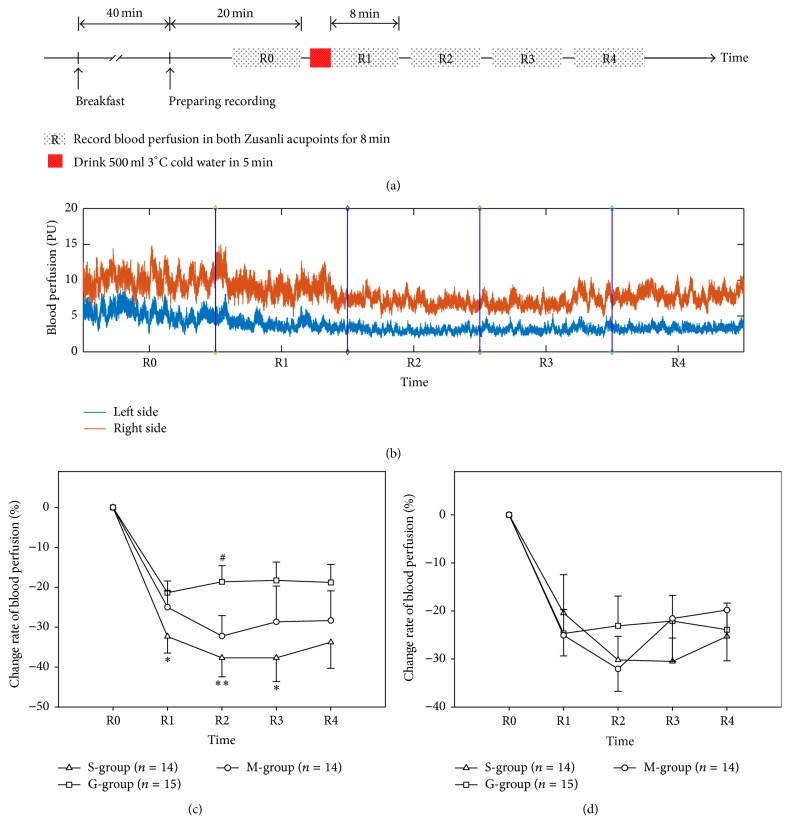
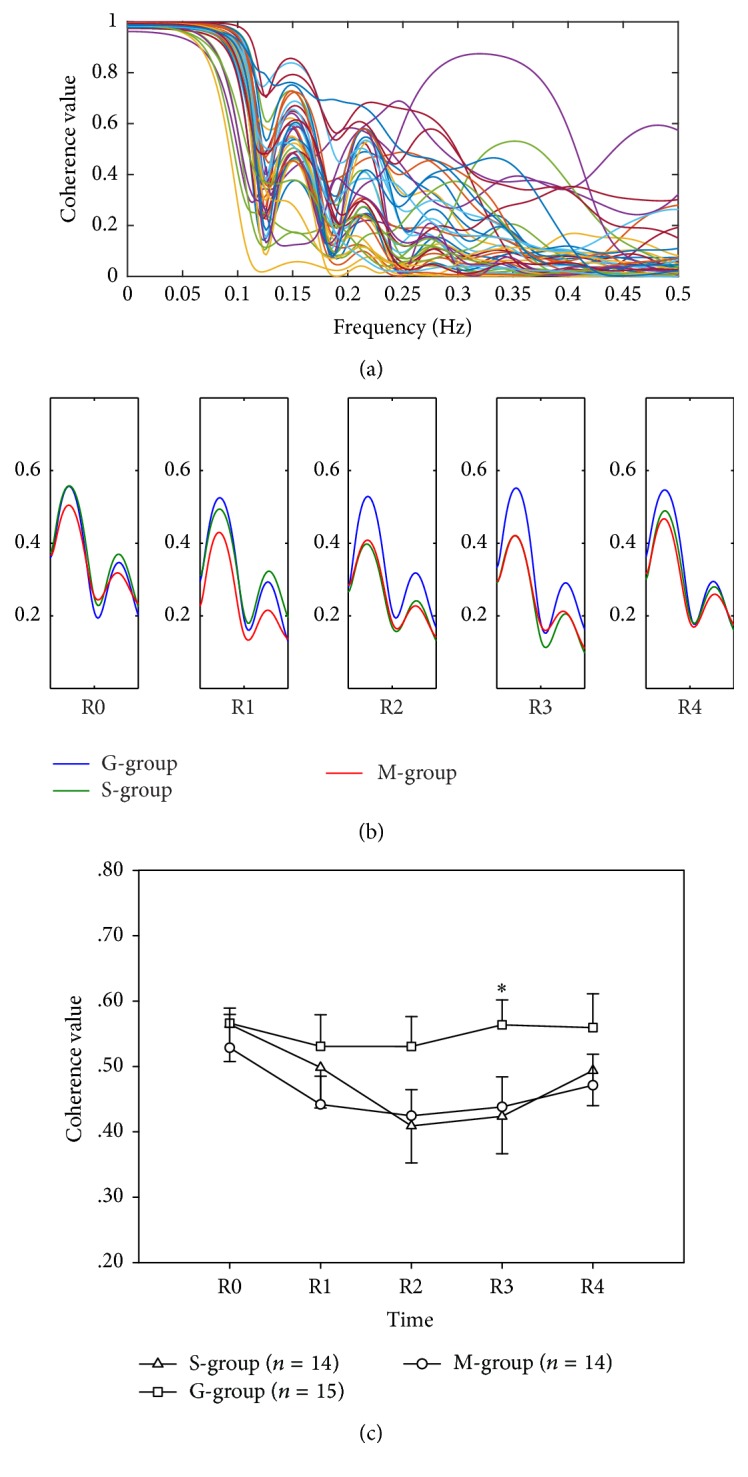
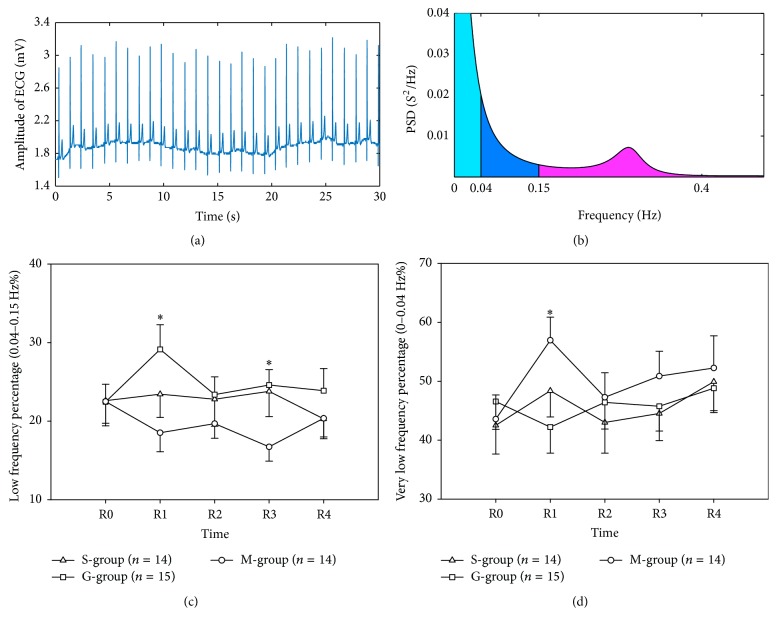
Skin blood flux (SkBF) changes caused by drinking cold water are generally associated with vagal tone and osmotic factors in digestive system. According to acupuncture theory, change of SkBF at ST 36 might reflect the functional changes of digestive system. The aim of this study is to analyze the changes of SkBF after drinking 3°C 0.9% saline or 5% glucose injection by monitor blood flux at bilateral ST 36. The results indicated that, after drinking different cold water, the change ratio of SkBF at right side ST 36 has been different. Because all solutions have the same temperature (3°C) and both saline and glucose solution have the same osmolality, suggesting that the SkBF changes resulting from drinking cold water are not regulated just by the vagal tone and osmolality, there must have been other factors. These results have not been consistent with the frequency domain results of heart rate variability (HRV) analysis. Coherence analysis of blood flux signals at bilateral ST 36 indicated that there have been different coherence-frequency curves among different groups in special frequency bands, which suggested that coherence analysis might provide a potential tool to evaluate different status.
Figures
Similar articles
-
Laterality of blood perfusion in the lower extremities after drinking saline at different temperatures.Sci Rep. 2023 Jan 28;13(1):1586. doi: 10.1038/s41598-023-28758-y. Sci Rep. 2023. PMID: 36709364 Free PMC article.
-
Cardiovascular and metabolic responses to tap water ingestion in young humans: does the water temperature matter?Acta Physiol (Oxf). 2014 Jun;211(2):358-70. doi: 10.1111/apha.12290. Epub 2014 Apr 15. Acta Physiol (Oxf). 2014. PMID: 24684853 Clinical Trial.
-
Observations on a new non-invasive monitor of skin blood flow.Clin Exp Pharmacol Physiol. 1989 May;16(5):403-15. doi: 10.1111/j.1440-1681.1989.tb01578.x. Clin Exp Pharmacol Physiol. 1989. PMID: 2527655
-
Cold and hyperosmolar fluids in canine trachea: vascular and smooth muscle tone and albumin flux.J Appl Physiol (1985). 1989 Mar;66(3):1309-15. doi: 10.1152/jappl.1989.66.3.1309. J Appl Physiol (1985). 1989. PMID: 2708251
-
Nonthermoregulatory control of human skin blood flow.J Appl Physiol (1985). 1986 Nov;61(5):1613-22. doi: 10.1152/jappl.1986.61.5.1613. J Appl Physiol (1985). 1986. PMID: 3536836 Review.
Cited by
-
Exploring the relationship between the speed-resolved perfusion of blood flux and HRV following different thermal stimulations using MSE and MFE analyses.PLoS One. 2019 Jun 5;14(6):e0217973. doi: 10.1371/journal.pone.0217973. eCollection 2019. PLoS One. 2019. PMID: 31167001 Free PMC article. Clinical Trial.
-
Laterality of blood perfusion in the lower extremities after drinking saline at different temperatures.Sci Rep. 2023 Jan 28;13(1):1586. doi: 10.1038/s41598-023-28758-y. Sci Rep. 2023. PMID: 36709364 Free PMC article.
-
The Relationship Between Blood Perfusion in the Lower Extremities and Heart Rate Variability at Different Positions.Front Physiol. 2021 Aug 13;12:656527. doi: 10.3389/fphys.2021.656527. eCollection 2021. Front Physiol. 2021. PMID: 34483950 Free PMC article.
-
Exploring the Relationship between Blood Flux Signals and HRV following Different Thermal Stimulations using Complexity Analysis.Sci Rep. 2018 Jun 12;8(1):8982. doi: 10.1038/s41598-018-27374-5. Sci Rep. 2018. PMID: 29895975 Free PMC article. Clinical Trial.
-
Changes of Blood Flux at BL21 and Points along BL Meridian Resulted from Acupuncture or Moxibustion: Case Cross Design Study.Evid Based Complement Alternat Med. 2017;2017:8237580. doi: 10.1155/2017/8237580. Epub 2017 Jul 24. Evid Based Complement Alternat Med. 2017. PMID: 28811830 Free PMC article.
References
-
- Xu L. Twenty-seven cases of spleen-qi deficiency syndrome treated by heat-producing needling at zusanli. Journal of Traditional Chinese Medicine. 2000;20(1):40–41. - PubMed
LinkOut - more resources
Full Text Sources
Other Literature Sources
