


Prevalence of Hepatitis B Virus Infection among Pregnant Women Attending Antenatal Clinics in Vientiane, Laos, 2008-2014
- PMID: 28465839
- PMCID: PMC5390595
- DOI: 10.1155/2017/1284273
Prevalence of Hepatitis B Virus Infection among Pregnant Women Attending Antenatal Clinics in Vientiane, Laos, 2008-2014
Abstract
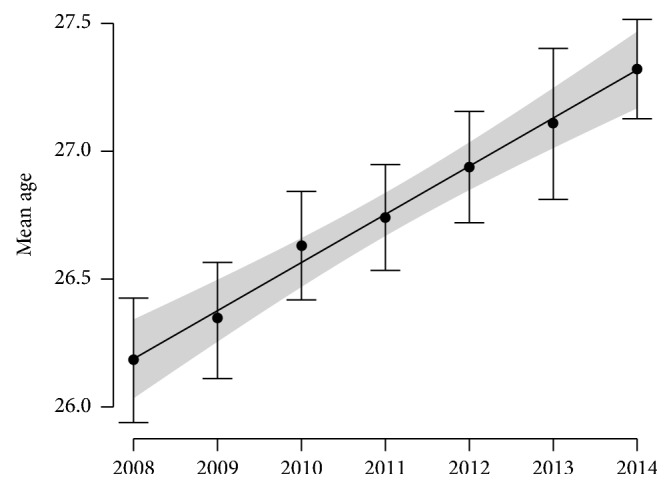
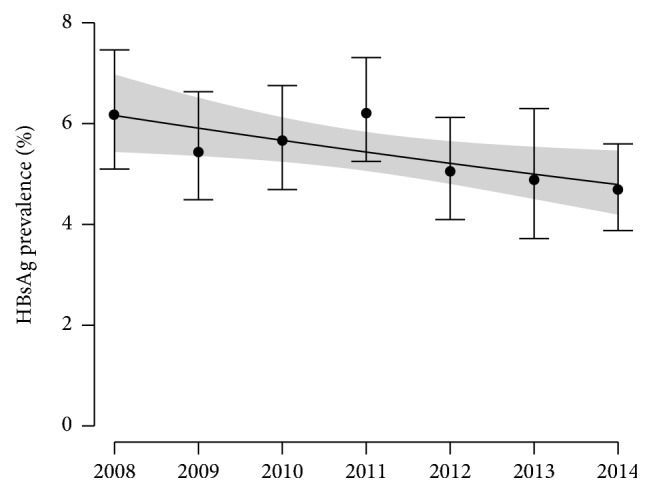
The Lao People's Democratic Republic (PDR) is still considered a highly endemic country for hepatitis B, mainly due to perinatal transmission of hepatitis B virus (HBV), despite efforts made since 2004 for universal immunization of newborns. The prevalence of HBV surface antigen (HBsAg) carriage in pregnant women is a relevant marker for the risk of mother-to-child HBV transmission. This study aimed to assess the changes in prevalence of HBV infection among pregnant women attending the Mahosot Prenatal Clinic (Vientiane Capital). Methods. A retrospective study was performed in the Mahosot Hospital Laboratory to collect and analyze all the results of HBsAg testing in pregnant women from 2008 to 2014. Results. Of a total of 13,238 tested women of mean age of 26 years, 720 women (5,44% [95 CI: 5.1-5.8%]) were found HBsAg positive, the annual prevalence ranging from 4.6% to 6.2%. A slight but steady and significant decrease in prevalence over the 7 years of the study could be documented. Conclusion. Although below the 8% hyperendemic threshold, the HBsAg prevalence observed in pregnant women in Vientiane reflects a high risk of HBV perinatal transmission and call for a widespread infant immunization with an HBV vaccine birth dose.
Figures
References
-
- Jutavijittum P., Yousukh A., Samountry B., et al. Seroprevalence of hepatitis B and C virus infections among Lao blood donors. Southeast Asian Journal of Tropical Medicine and Public Health. 2007;38(4):674–679. - PubMed
Grants and funding
LinkOut - more resources
Full Text Sources
Other Literature Sources
Miscellaneous
