. 2017 May 2;19(5):1008-1021.
doi: 10.1016/j.celrep.2017.04.019.

Aspergillus fumigatus Copper Export Machinery and Reactive Oxygen Intermediate Defense Counter Host Copper-Mediated Oxidative Antimicrobial Offense

Affiliations

Aspergillus fumigatus Copper Export Machinery and Reactive Oxygen Intermediate Defense Counter Host Copper-Mediated Oxidative Antimicrobial Offense

Philipp Wiemann et al. Cell Rep. .

Erratum in

Abstract

The Fenton-chemistry-generating properties of copper ions are considered a potent phagolysosome defense against pathogenic microbes, yet our understanding of underlying host/microbe dynamics remains unclear. We address this issue in invasive aspergillosis and demonstrate that host and fungal responses inextricably connect copper and reactive oxygen intermediate (ROI) mechanisms. Loss of the copper-binding transcription factor AceA yields an Aspergillus fumigatus strain displaying increased sensitivity to copper and ROI in vitro, increased intracellular copper concentrations, decreased survival in challenge with murine alveolar macrophages (AMΦs), and reduced virulence in a non-neutropenic murine model. ΔaceA survival is remediated by dampening of host ROI (chemically or genetically) or enhancement of copper-exporting activity (CrpA) in A. fumigatus. Our study exposes a complex host/microbe multifactorial interplay that highlights the importance of host immune status and reveals key targetable A. fumigatus counter-defenses.

Keywords: ATP7A; Aspergillus fumigatus; AtfA; CGD; CTR1; CrpA; PHOX; ROI; ROS; copper.


Figures

Fig. 1
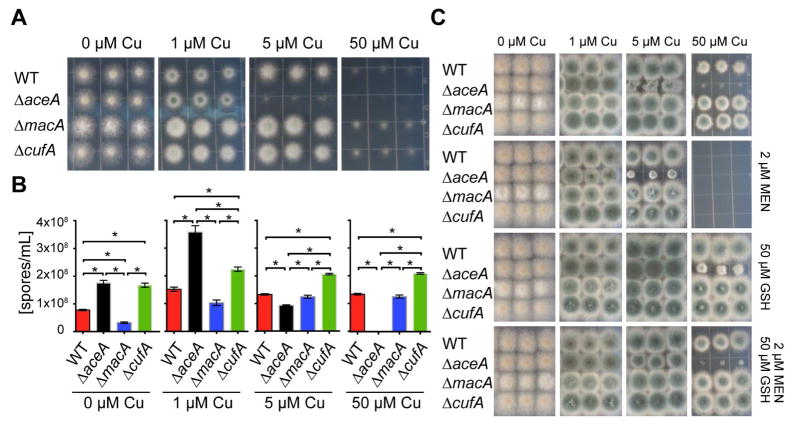
Fig. 1. Growth and g phenotypes of copper-binding transcription factor encoding gene mutants of A. fumigatus on extreme copper concentrations
(A) 2000 spores of indicated strains grown on solidified glucose minimal medium (GMM) with indicated concentration of CuSO4 for 48 h at 37°C. (B) Spores were enumerated from cores taken from overlay cultures of copper-binding transcription factor deletion strains grown on the same media indicated incubated at 37°C for 5 days. Experiments were perf ormed in triplicates, error bars represent standard deviations and asterisks indicate statistical significance, p < 0.01. (C) Growth assay on solidified GMM for 72 h at 37 °C under indicated copper concentrations plus supplements.
Fig. 2
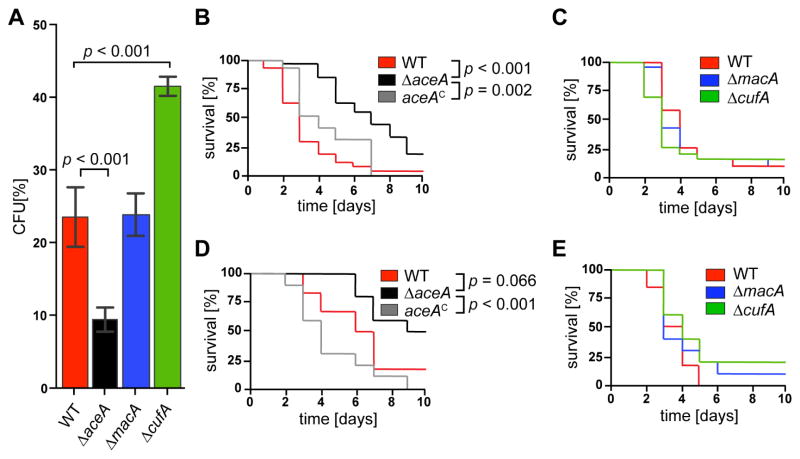
Fig. 2. Deletion of aceA reduces fungal survival and virulence in immunocompromised mice
(A) Colony forming units (CFU) of fungal strains after incubation with murine alveolar macrophages for 2h. Experiments were carried out in triplicates; error bars represent standard deviations and statistical significance is indicated by p values. (B) Survival rates of mice immunocompromised with cortisone acetate and infected with the A. fumigatus wild type, ΔaceA and the reconstituted strain aceAC, respectively. Statistical significance is indicated by p values. 10 mice were in each group. (C) Survival rates of mice immunocompromised with cortisone acetate and infected with the A. fumigatus wild type, ΔmacA and ΔcufA strains, respectively. 10 mice were in each group. (D) Survival rates of mice immunocompromised with cyclophosphamide and infected with the A. fumigatus wild type, ΔaceA and the reconstituted strain aceAC, respectively. Statistical significance is indicated by p values. (E) Survival rates of mice immunocompromised with cyclophosphamide and infected with the A. fumigatus wild type, ΔmacA and ΔcufA strains, respectively.
Fig. 3
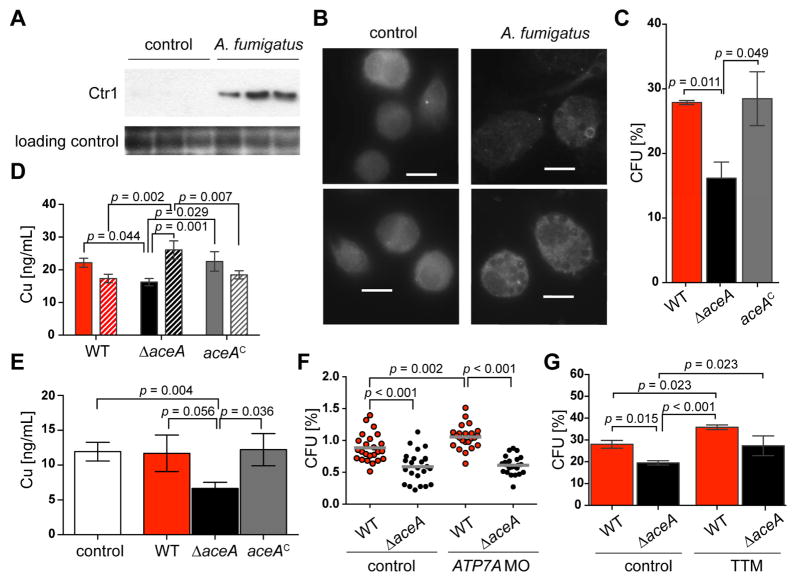
Fig. 3. ΔaceA strains accumulate more copper during macrophage encounters
(A) Western blot against mouse Ctr1 and GAPDH of murine bone marrow derived macrophages activated with GM-CSF that were unchallenged or challenged with A. fumigatus spores for 2h. (B) Immuno-staining against mouse ATP7A of murine bone marrow derived macrophages activated with GM-CSF that were unchallenged or challenged with A. fumigatus spores for 2h. Scale bars are 10 μM. (C) Colony forming units (CFU) of fungal strains after incubation with murine bone marrow derived macrophages activated with GM-CSF for 2h. Experiments were carried out in triplicates; error bars represent standard deviations and statistical significance is indicated by p values. (D) Total copper concentration of unchallenged 3 × 10⁷ spores (solid) and 3 × 10⁷ spores incubated with 1 × 10⁷ GM-CSF activated bone marrow derived murine macrophages for 2h. Experiments were carried out in triplicates; error bars represent standard deviations and statistical significance is indicated by p values. (E) Total copper concentration of 1 × 10⁷ GM-CSF activated bone marrow derived murine macrophages incubated with 3 × 10⁷ spores of the indicated A. fumigatus strains for 2h. Experiments were carried out in triplicates; error bars represent standard deviations and statistical significance is indicated by p values. (F) Colony forming units (CFU) of fungal strains from whole zebrafish larvae at 24 hours post microinjection. Genetic inhibition of ATP7A was obtained with morpholino-mediated knockdown (ATP7AMO). Data shown are pooled from four independent experimental replicates where significance is indicated by p values as determined by a least squares means analysis. (G) Colony forming units (CFU) of fungal strains after incubation with murine alveolar macrophages supplemented with or without 50 μM tetrathiomolybdate (TTM) for 2 h. Experiments were carried out in triplicates; error bars represent standard deviations and statistical significance is indicated by p values.
Fig. 4
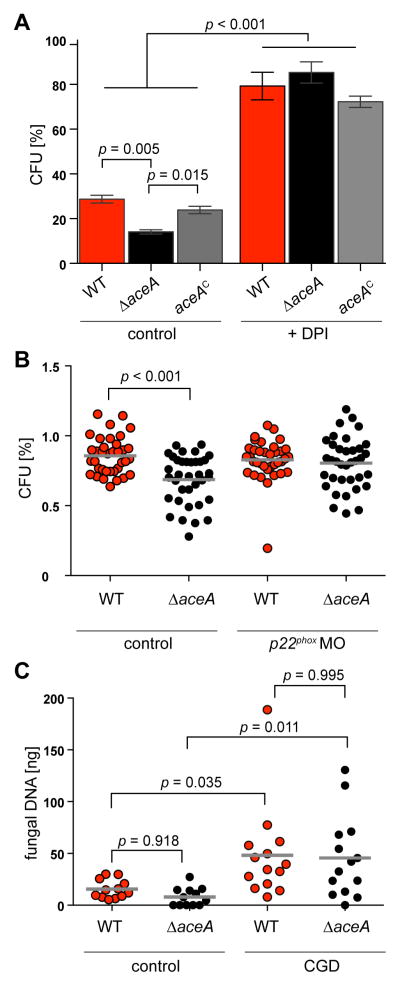
Fig. 4. Inhibition of the Nox complex restores ΔaceA survival
(A) Colony forming units (CFU) of fungal strains after incubation with murine alveolar macrophages supplemented with or without 25 μM diphenyleneiodonium (DPI) for 2h. Experiments were carried out in triplicates; error bars represent standard deviations and statistical significance is indicated by p values. (B) Colony forming units (CFU) of fungal strains from whole zebrafish larvae at 24 h post microinjection. Genetic inhibition of p22phox was obtained with morpholino-mediated knockdown (p22MO). Data shown are pooled from four independent experimental replicates where significance is indicated by p values as determined by a least squares means analysis. (C) Fungal burden from immunocompetent control mice and CGD mice infected with indicated fungal strains. Fungal DNA concentration was determined by qRT-PCR after 24 h post infection (see Material and Methods for details). Data shown are pooled from three independent experimental replicates where significance is indicated by p values as determined by a least squares means analysis.
Fig. 5
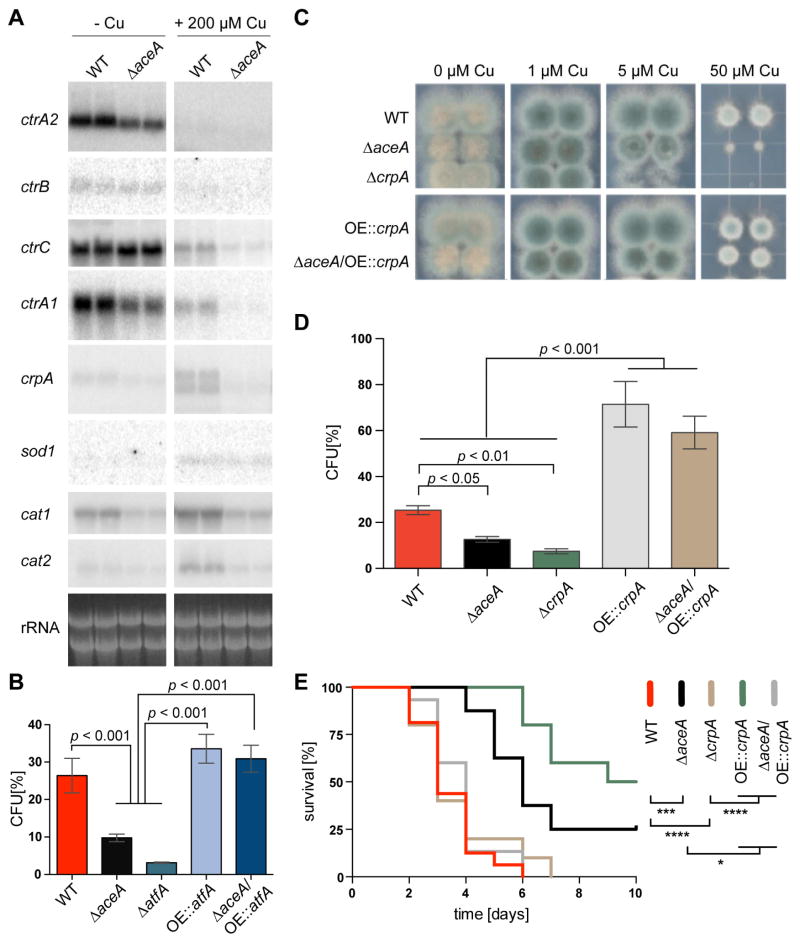
Fig. 5. CrpA is a putative copper-exporting ATPase essential for virulence of A. fumigatus
(A) Northern blot analysis of indicated strains grown for 24 h in liquid GMM-copper at 37°C. To half of the cultures copper was added t o a final concentration of 200 μM for 1 h before harvesting. Indicated genes were hybridized. rRNA visualization as loading as control. Original image is shown in Fig. S9. (B) Colony forming units (CFU) of indicated strains from infected mice lungs. Experiments were carried out in triplicate; error bars represent standard deviations and statistical significance is indicated as p value (C) Growth assay on solidified GMM for 72 h at 37 °C under indicated copper concentrations plus supplements. (D) Colony forming units (CFU) of fungal strains after incubation with murine alveolar macrophages for 2h. Experiments were carried out in triplicate; error bars represent standard deviations and statistical significance is indicated by p values. (E) Survival rates of mice immunocompromised with cortisone acetate and infected with the A. fumigatus wild type, ΔaceA, ΔcrpA and the crpA over expressing strain ΔaceA/OE::crpA, respectively. Statistical significance is indicated by asterisks; ****: p < 0.0001, ***: p < 0.0005, *: p < 0.05. 10 mice were in each group.
Fig. 6
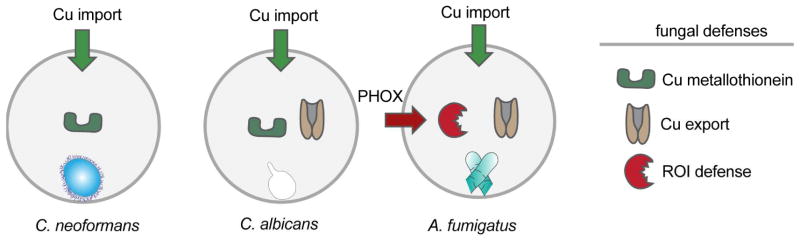
Fig. 6. Copper-defense strategies of the three fungal pathogens C. neoformans, C. albicans and A. fumigatus
Upon infection, all depicted pathogens activate host copper importers (Ctr1 and ATP7A). Known fungal defense strategies include metallothioneins in C. neoformans and metallothioneins and a copper-exporter in C. albicans. Our results demonstrate that in A. fumigatus the copper-exporter and not the copper-metallothionein is involved in copper-defense. Furthermore, we demonstrate that host PHOX generated ROI is potentiated in strains unable to export copper and that copper-export and ROI-detoxification can remediate virulence of the A. fumigatus ΔaceA mutant. We hypothesize that the existing ROI-detoxification mechanisms of C. neoformans and C. albicans may also be important in copper-regulon interactions of these yeast with host phagocytes in a manner similar to A. fumigatus.

References

    1. Achard ME, Stafford SL, Bokil NJ, Chartres J, Bernhardt PV, Schembri MA, Sweet MJ, McEwan AG. Copper redistribution in murine macrophages in response to Salmonella infection. Biochem J. 2012;444:51–57. - PubMed
    1. Babu U, Failla ML. Respiratory burst and candidacidal activity of peritoneal macrophages are impaired in copper-deficient rats. J Nutr. 1990;120:1692–1699. - PubMed
    1. Benov L. How superoxide radical damages the cell. Protoplasma. 2001;217:33–36. - PubMed
    1. Borghouts C, Osiewacz HD. GRISEA, a copper-modulated transcription factor from Podospora anserina involved in senescence and morphogenesis, is an ortholog of MAC1 in Saccharomyces cerevisiae. Mol Gen Genet. 1998;260:492–502. - PubMed
    1. Brewer GJ. Copper lowering therapy with tetrathiomolybdate as an antiangiogenic strategy in cancer. Curr Cancer Drug Targets. 2005;5:195–202. - PubMed

Publication types

MeSH terms

LinkOut - more resources