


Epidemic Use of Benzodiazepines among Older Adults in Israel: Epidemiology and Leverage Points for Improvement
- PMID: 28470549
- PMCID: PMC5515792
- DOI: 10.1007/s11606-017-4059-1
Epidemic Use of Benzodiazepines among Older Adults in Israel: Epidemiology and Leverage Points for Improvement
Abstract
Background: Benzodiazepines and benzodiazepine-receptor agonists (BDZRAs, often known as "Z-drugs") are commonly used in older adults despite well-documented harms.
Objective: To evaluate patterns of benzodiazepine and BDZRA use in Israel, focusing on potential leverage points where quality improvement initiatives might effectively curtail new use or the transition from intermittent to chronic use.
Design and participants: We used national electronic medical data to assess a 10% random sample of adults receiving care in Clalit Health Services, which serves half of Israel's population. The sample included 267,221 adults, of whom 56,808 (21%) were age 65 and older.
Main measures: Medication use from 2013 to 2015 was ascertained using pharmacy dispensing data.
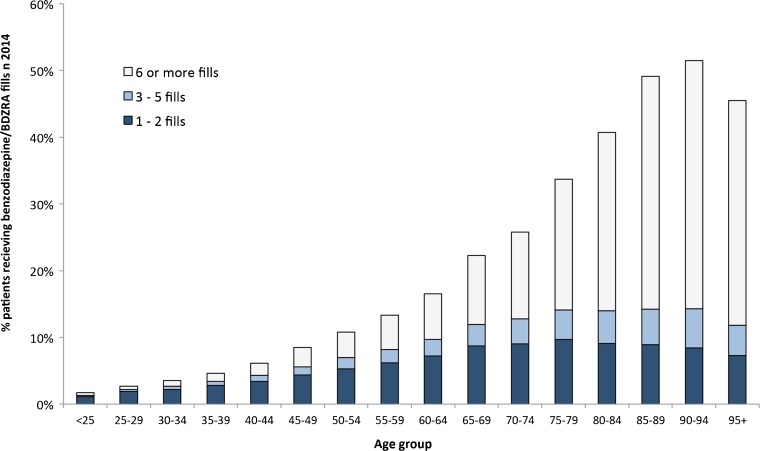
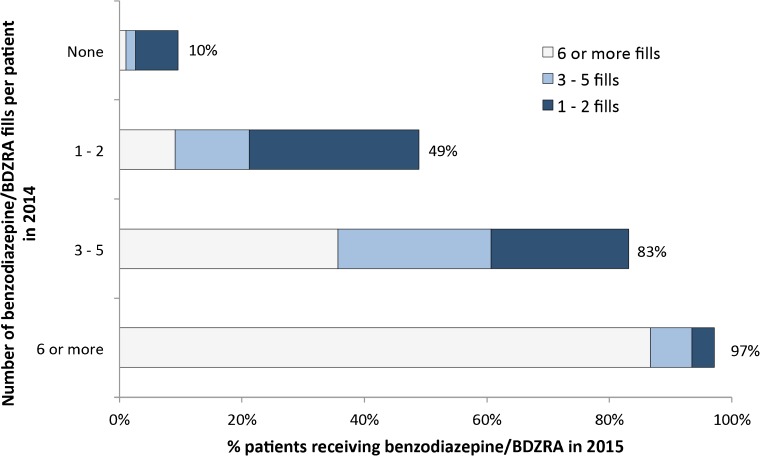
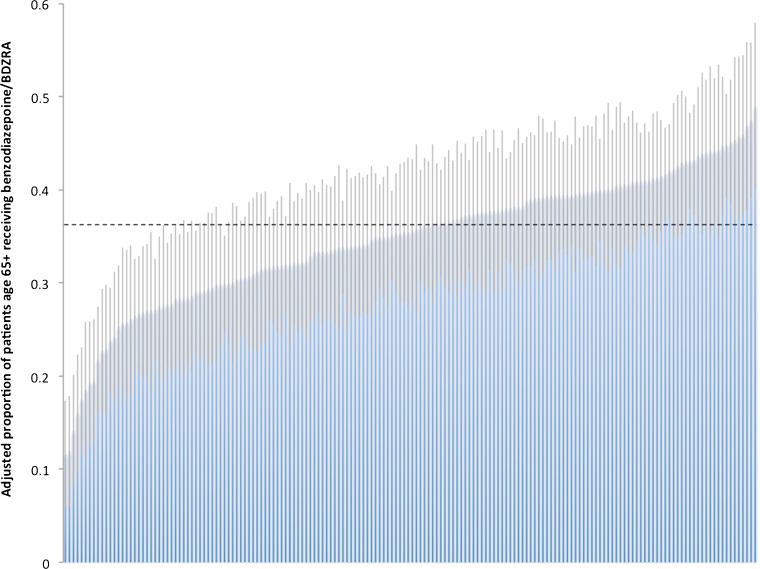
Results: In 2014, 7% of adults age 21-64 and 32% of adults age 65 and older received at least one benzodiazepine/BDZRA, including 49% of adults age 85 and older (P < 0.001). The majority of older users (59%) were long-term users of the drugs, and 21% of older adults who were short-term users in 2014 transitioned to medium- or long-term use in 2015. Older Arab Israelis were much less likely to receive benzodiazepine/BDZRAs than older Jewish Israelis (adjusted OR 0.28, 95% 0.25-0.31), but within each community there was no major variation in prescribing rates across clinics. Depression diagnosis was associated with particularly high rates of benzodiazepine/BDZRA use: 17% of older adults with depression received a benzodiazepine/BDZRA but no antidepressant, and 42% received both. Recent hospitalization increased the risk of new benzodiazepine/BDZRA use (adjusted OR 1.41, 95% CI 1.01-1.96), but the absolute risk increase was only 3%.
Conclusions: Benzodiazepines/BDZRAs are used at exceptionally high rates by older Israeli adults, especially the oldest old. Important leverage points for quality improvement efforts include curtailing the transition from short-term to long-term use, reducing use in older adults with depression, and identifying reasons that explain large differences in benzodiazepine/BDZRA prescribing between different ethnic groups.
Keywords: aging; ambulatory care; health services research; pharmaceutical care; pharmacoepidemiology.
Conflict of interest statement
Conflict of Interest
Dr. Steinman is a paid consultant for
Prior Presentations
None.
Figures
Comment in
-
Capsule Commentary on Steinman et al., Epidemic Use of Benzodiazepines among Older Adults in Israel: Epidemiology and Leverage Points for Improvement.J Gen Intern Med. 2017 Aug;32(8):919. doi: 10.1007/s11606-017-4075-1. J Gen Intern Med. 2017. PMID: 28516326 Free PMC article. No abstract available.
References
-
- Blumstein T, Benyamini Y, Chetrit A, Mizrahi EH, Lerner-Geva L. Prevalence and correlates of psychotropic medication use among older adults in Israel: cross-sectional and longitudinal findings from two cohorts a decade apart. Aging Ment Health. 2012;16(5):636–647. doi: 10.1080/13607863.2011.644262. - DOI - PMC - PubMed
-
- Huerta C, Abbing-Karahagopian V, Requena G, et al. Exposure to benzodiazepines (anxiolytics, hypnotics and related drugs) in seven European electronic healthcare databases: a cross-national descriptive study from the PROTECT-EU Project. Pharmacoepidemiol Drug Saf. 2016;25(Suppl 1):56–65. doi: 10.1002/pds.3825. - DOI - PubMed
Publication types
MeSH terms
Substances
LinkOut - more resources
Full Text Sources
Other Literature Sources
Medical
