


Associations Among Work and Family Health Climate, Health Behaviors, Work Schedule, and Body Weight
- PMID: 28471768
- PMCID: PMC5477673
- DOI: 10.1097/JOM.0000000000001049
Associations Among Work and Family Health Climate, Health Behaviors, Work Schedule, and Body Weight
Abstract
Objectives: Correctional employees exhibit elevated obesity rates. This study examines interrelations among health behaviors, health climate, body mass index (BMI), and work schedule.
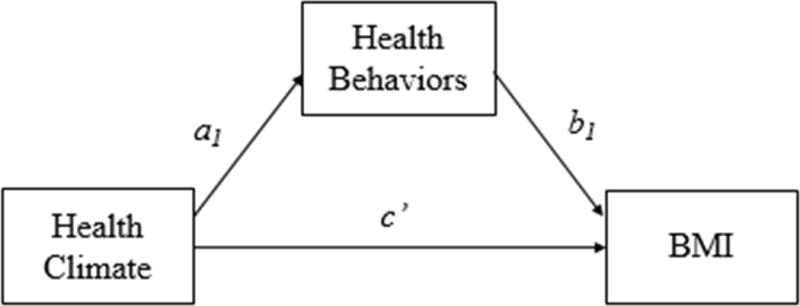
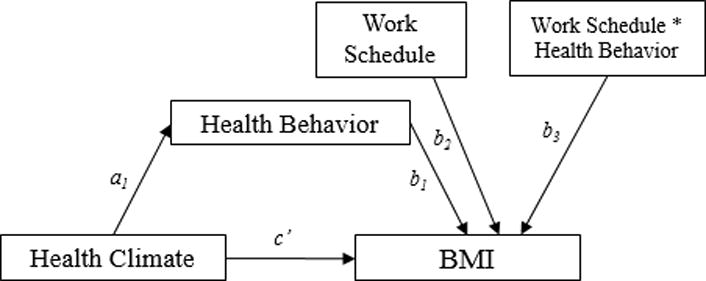
Methods: Using survey results from correctional supervisors (n = 157), mediation and moderated-mediation analyses were performed to examine how health behaviors explain relationships between obesity, work health climate (WHC) and family health climate (FHC), and work schedule.
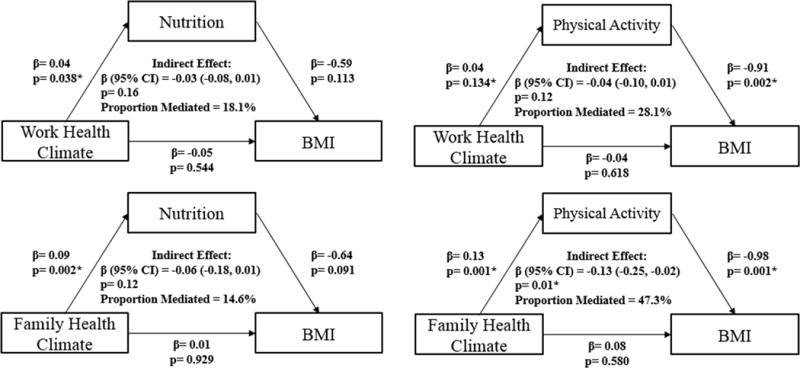
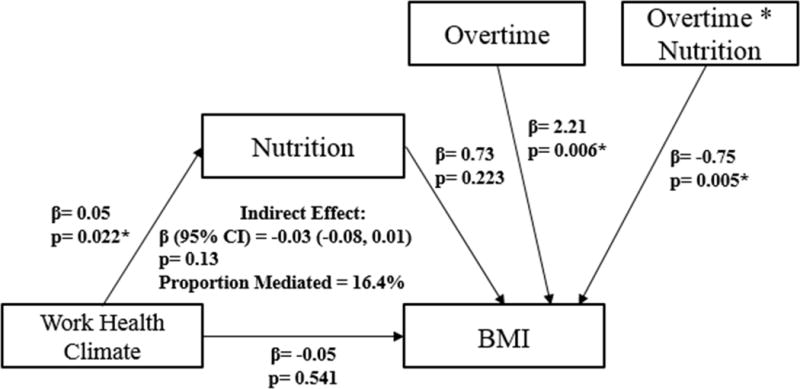
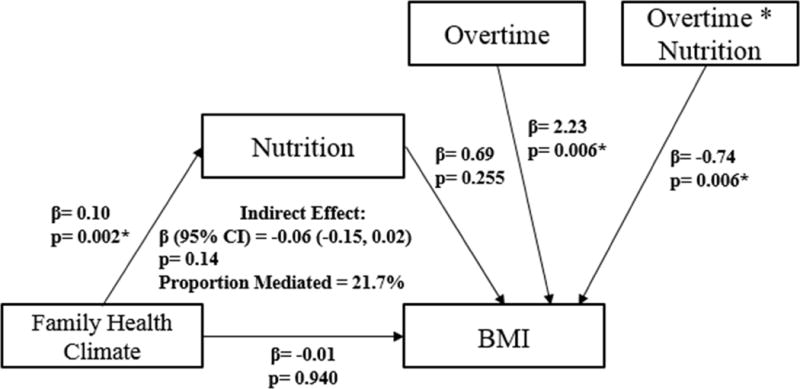
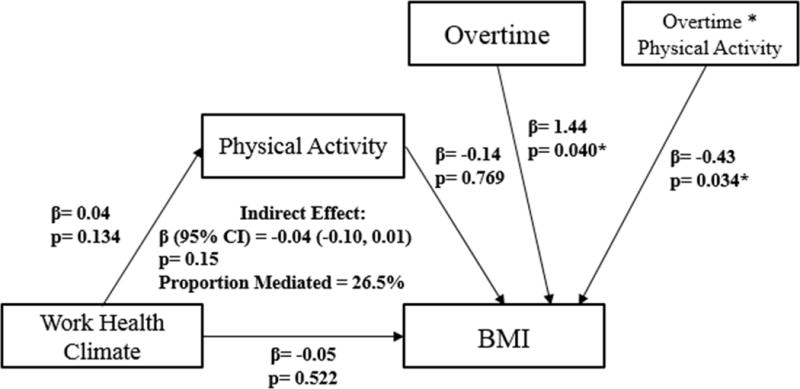
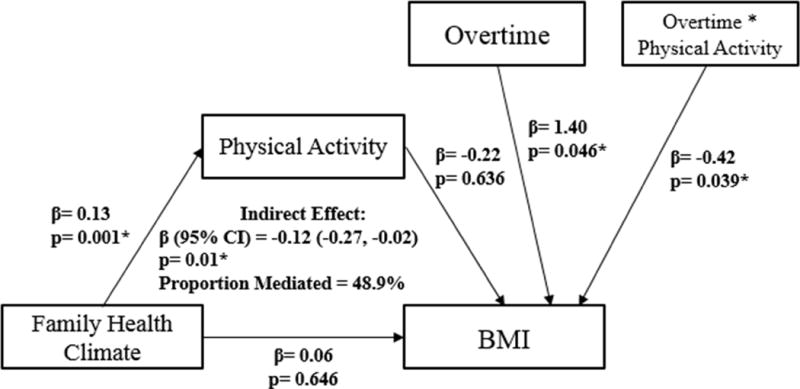
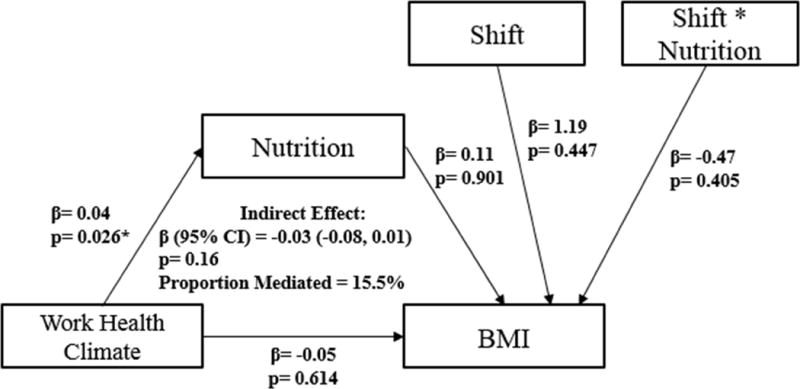
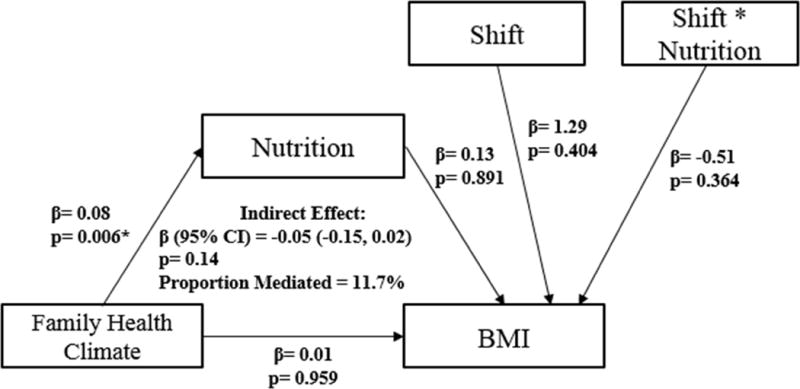
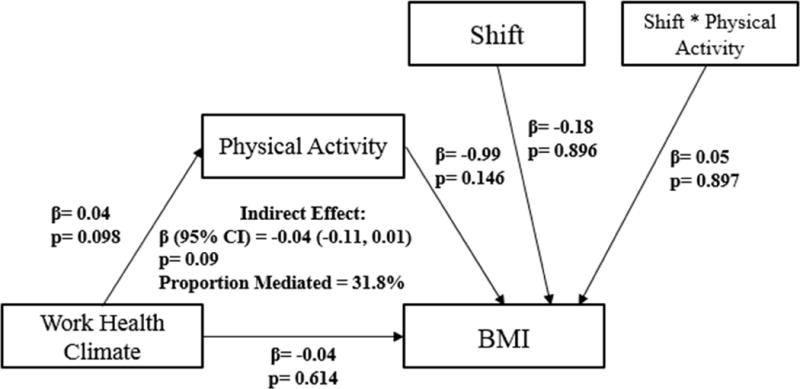
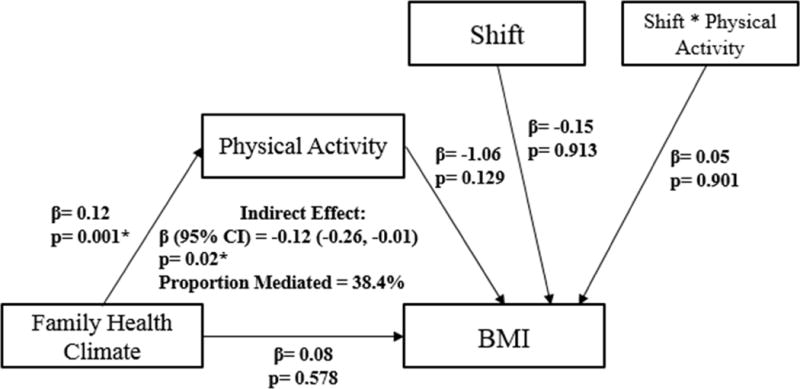
Results: Over 85% of the sample was overweight/obese (mean BMI = 30.20). Higher WHC and FHC were associated with lower BMI, mediated by nutrition, and physical activity. The interaction effect between health behavior and work schedule revealed a protective effect on BMI. Overtime shift work may share a relationship with BMI.
Conclusions: Findings may have implications for reexamining organizational policies on maximum weekly overtime in corrections. They provide direction for targeted obesity interventions that encourage a supportive FHC and promote healthy behaviors among supervisors working overtime.
Conflict of interest statement
None declared.
Figures
References
-
- Borak J. Obesity and the workplace. Occup Med (Lond) 2011;61(4):220–222. - PubMed
-
- Finkelstein E, Ruhm C, Kosa K. Economic causes and consequences of obesity. Annu Rev Public Health. 2005;26:239–257. - PubMed
-
- Anderson L, Quinn T, Glanz K, et al. The effectiveness of worksite nutrition and physical activity interventions for controlling employee overweight and obesity: A systematic review. Am J Prev Med. 2009;37(4):340–357. - PubMed
-
- Pelletier K. A review and analysis of the clinical and cost-effectiveness studies of comprehensive health promotion and disease management programs at the worksite: Update VIII 2008 to 2010. J Occup Environ Med. 2011;53(11):1310–1331. - PubMed
Publication types
MeSH terms
Grants and funding
LinkOut - more resources
Full Text Sources
Other Literature Sources
Medical
