


Effect of dietary supplementation with Lactobacillus acidophilus D2/CSL (CECT 4529) on caecum microbioma and productive performance in broiler chickens
- PMID: 28472118
- PMCID: PMC5417446
- DOI: 10.1371/journal.pone.0176309
Effect of dietary supplementation with Lactobacillus acidophilus D2/CSL (CECT 4529) on caecum microbioma and productive performance in broiler chickens
Abstract
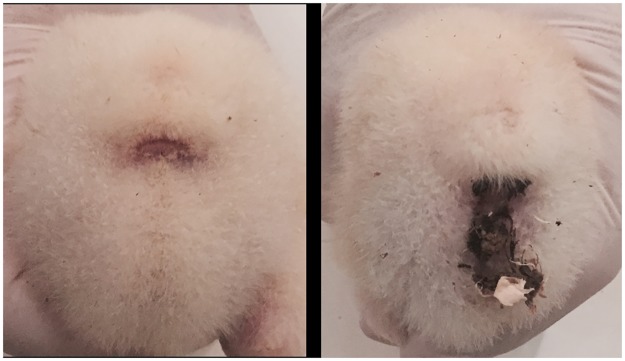
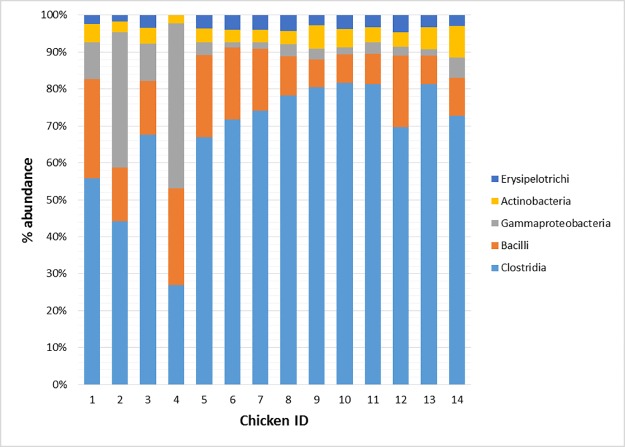
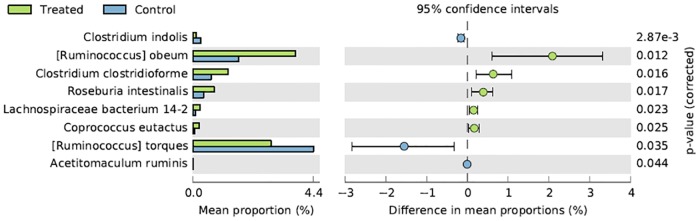
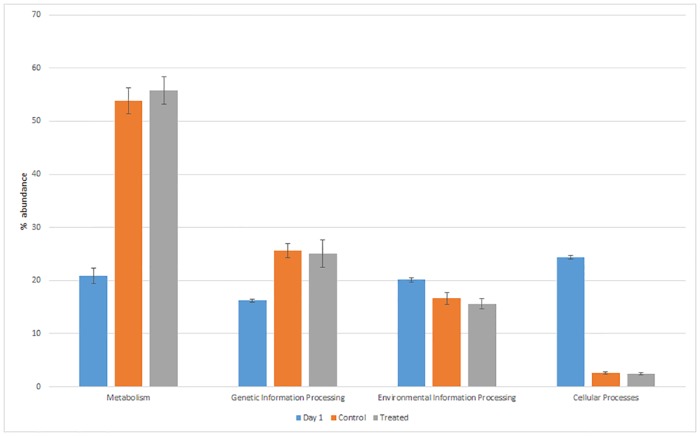
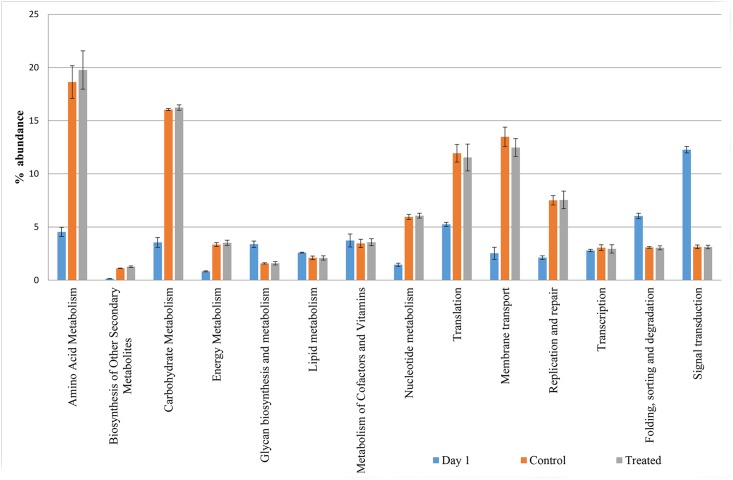
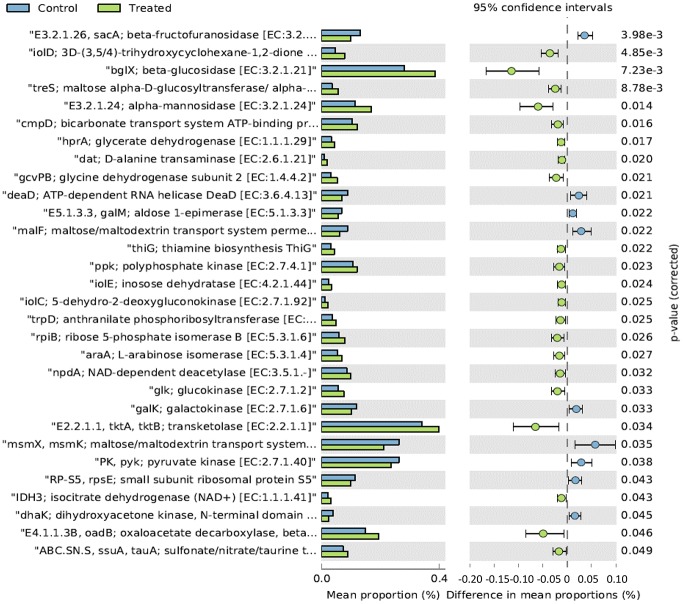
This study examines the effects of the dietary supplementation with Lactobacillus acidophilus D2/CSL (CECT 4529) (LA) on productive performances, incidence of foot pad dermatitis and caecum microbioma in broiler chickens. A total of 1,100 one-day old male Ross 308 chicks were divided into 2 groups of 16 replicates with 25 birds each and reared from 1-41 d. One group was fed a basal diet (CON) and the other group the same diet supplemented with LA. Caecum contents were collected from 4 selected birds at day one and 5 selected birds at the end of the rearing period. Then, they were submitted to DNA extraction and whole DNA shotgun metagenomic sequencing. Overall, the LA supplementation produced a significant beneficial effect on body weight gain between 15-28 d and improved feed conversion rate in the overall period. On the contrary, litter moisture, pH and incidence of the foot pad lesions were not affected by LA. Birds treated with LA showed a lower occurrence of pasty vent at both 14 and 28 d. At the end of the rearing period, Lachanospiraceae were significantly higher in LA birds in comparison to CON (17.07 vs 14.39%; P = 0.036). Moreover, Ruminococcus obeum, Clostridium clostridioforme, Roseburia intestinalis, Lachnospiraceae bacterium 14-2T and Coprococcus eutactus were significantly higher in LA birds in comparison to CON. The relative abundance of Lactobacillus acidophilus was comparable between LA and CON groups. However, a positive effect was observed in relation to the metabolic functions in the treated group, with particular reference to the higher abundance of β-glucosidase. In conclusion, the LA supplementation improved broiler productive performances and metabolic functions promoting animal health.
Conflict of interest statement
Figures
References
-
- Zhao R, Sun J, Mo H, Zhu Y. Analysis of functional properties of Lactobacillus acidophilus. World Journal of Microbiology and Biotechnology. 2007;23(2):195–200.
MeSH terms
LinkOut - more resources
Full Text Sources
Other Literature Sources
Medical
