


Relationship between Resilience and Self-regulation: A Study of Spanish Youth at Risk of Social Exclusion
- PMID: 28473792
- PMCID: PMC5397523
- DOI: 10.3389/fpsyg.2017.00612
Relationship between Resilience and Self-regulation: A Study of Spanish Youth at Risk of Social Exclusion
Abstract
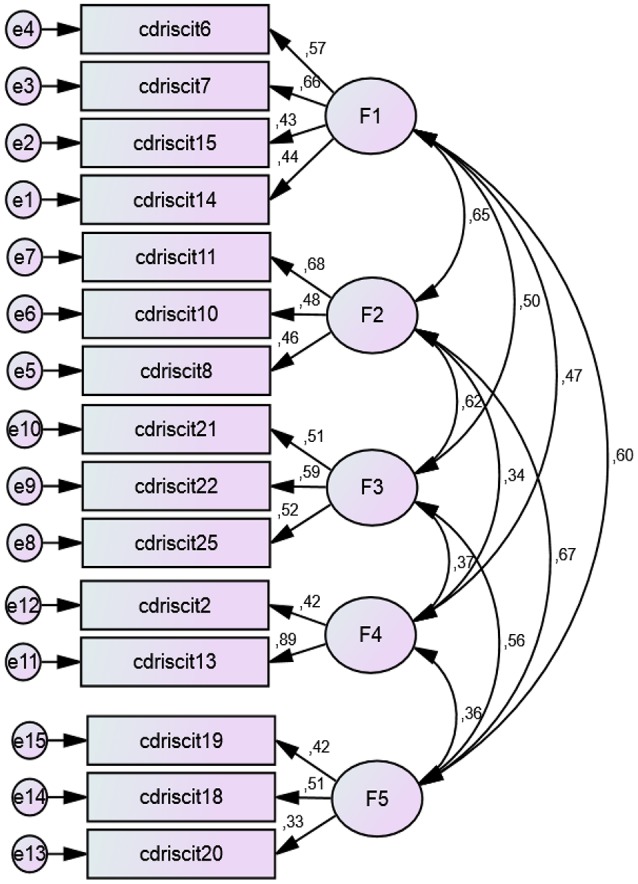
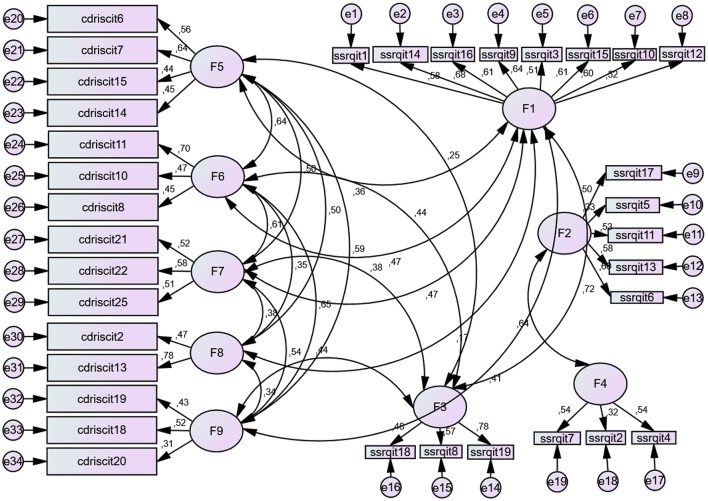
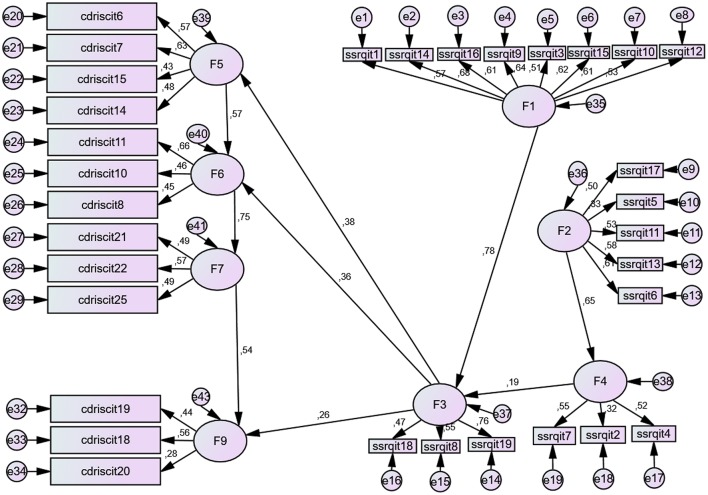
The ability to self-regulate behavior is one of the most important protective factors in relation with resilience and should be fostered especially in at-risk youth. Previous research has characterized these students as having behaviors indicating lack of foresight. The aim of the present study was to test the hypothetical relationship between these personal variables. It was hypothesized that self-regulation would be associated with and would be a good predictor of resilience, and that low-medium-high levels of self-regulation would lead to similar levels of resilience. The participants were 365 students -aged 15 and 21- from Navarre (Spain) who were enrolled in Initial Vocational Qualification Programs (IVQP). For the assessment, the Connor Davidson Resilience Scale (CD-RISC) and the Short Self-Regulation Questionnaire (SSRQ) were applied. We carried out linear association analyses (correlational and structural) and non-linear interdependence analyses (MANOVA) between the two constructs. Relationships between them were significant and positive. Learning from mistakes (self-regulation) was a significant predictor of coping and confidence, tenacity and adaptation, and tolerance to negative situations (resilience). Likewise, low-medium-high levels of self-regulation correlated with scores on resilience factors. Implications of these results for educational practice and for future research are discussed.
Keywords: at-risk youth; positive youth development; resilience; self-regulation; structural methodology.
Figures

References
-
- American Psychological Association (2015). Coalition for Psychology in Schools and Education, Top 20 Principles from Psychology for preK–12 Teaching and Learning. Available online at: http://www.apa.org/ed/schools/cpse/top-twenty-principles.pdf (Accessed May 5, 2015).
-
- Anderman E. M. (2011). The teaching and learning of twenty-first century skills, in Paper Presented for the National Research Council Board on Testing and Assessment's Workshop on Assessment of 21st Century Skills (Irvine, CA: ).
-
- Artuch R. (2014). Resiliencia y Autorregulación en Jóvenes Navarros, en Riesgo de Exclusion Social, que Acuden a Programas de Cualificación Inicial Formal [Resilience and Self-Regulation in Young Navarre, at Risk of Social Exclusion, Who Attend Formal Initial Qualification Programs]. Dissertation thesis. Available online at: http://dadun.unav.edu/bitstream/10171/36188/4/TesisRaquelArtuch.pdf (Accessed December 15, 2016).
-
- Bandura A. (1991). Social cognitive theory of self-regulation. Org. Behav. Hum. Dec. Process. 50, 248–281. 10.1016/0749-5978(91)90022-L - DOI
-
- Bassett M., Walsh K. (2011). 2010 European Year for Combating Poverty and Social Exclusion. Dublín: Social Inclusion Division.
LinkOut - more resources
Full Text Sources
Other Literature Sources
