


Salivary Diagnostics in Pediatrics: Applicability, Translatability, and Limitations
- PMID: 28473973
- PMCID: PMC5397421
- DOI: 10.3389/fpubh.2017.00083
Salivary Diagnostics in Pediatrics: Applicability, Translatability, and Limitations
Abstract
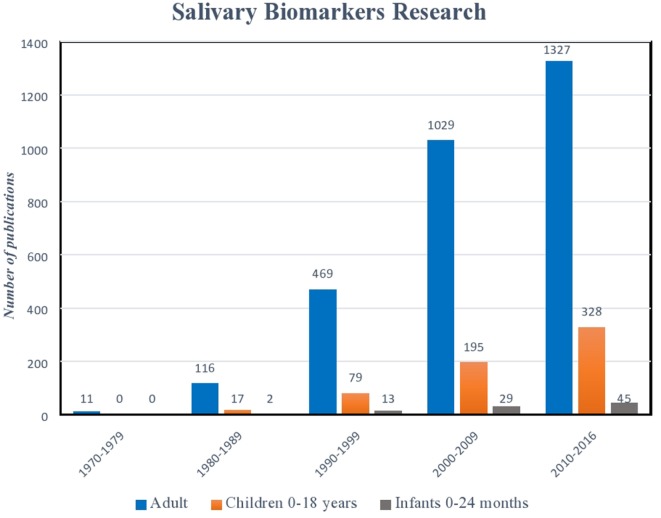
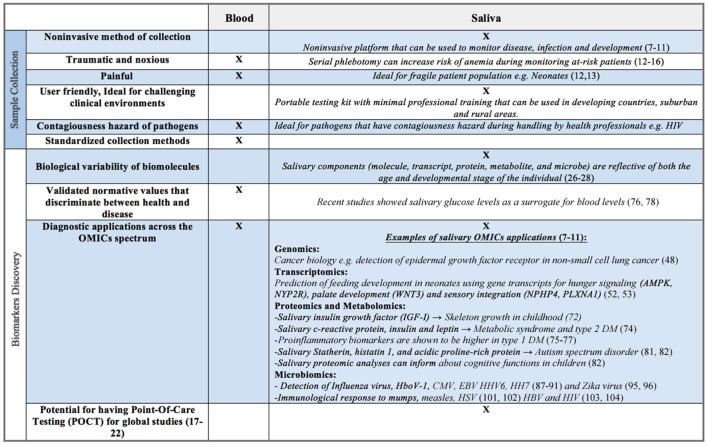
In the last decade, technological advances, combined with an improved appreciation of the ability of saliva to inform caregivers about both oral health and systemic disease, have led to the emergence of salivary diagnostic platforms. However, the majority of these assays have targeted diseases that more commonly affect the adult population, largely neglecting infants and children who arguably could benefit the most from non-invasive assessment tools for health monitoring. Gaining access into development, infection, and disease through comprehensive "omic" analyses of saliva could significantly improve care and enhance health access. In this review, we will highlight novel applications of salivary diagnostics in pediatrics across the "omic" spectrum, including at the genomic, transcriptomic, proteomic, microbiomic, and metabolomic level. The challenges to implementing salivary platforms into care, including the effects of age, diet, and developmental stage on salivary components, will be reviewed. Ultimately, large-scale, multicenter trials must be performed to establish normative biomarker values across the age spectrum to accurately discriminate between health and disease. Only then can salivary diagnostics truly translate into pediatric care.
Keywords: diagnostics; genetics; newborns; pediatrics; saliva.
Figures
References
Publication types
LinkOut - more resources
Full Text Sources
Other Literature Sources
