


Evaluating well-mixed room and near-field-far-field model performance under highly controlled conditions
- PMID: 28475481
- PMCID: PMC11249608
- DOI: 10.1080/15459624.2017.1285492
Evaluating well-mixed room and near-field-far-field model performance under highly controlled conditions
Abstract
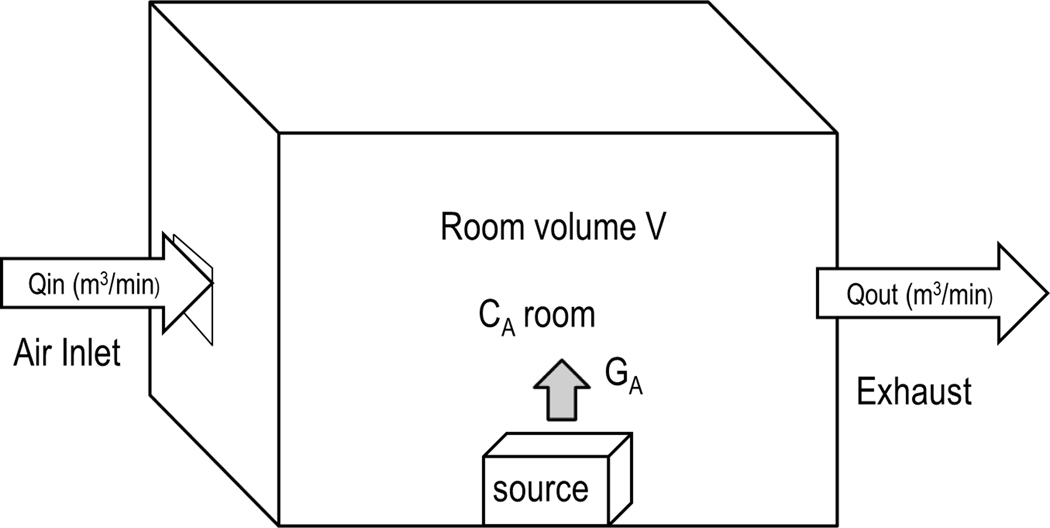
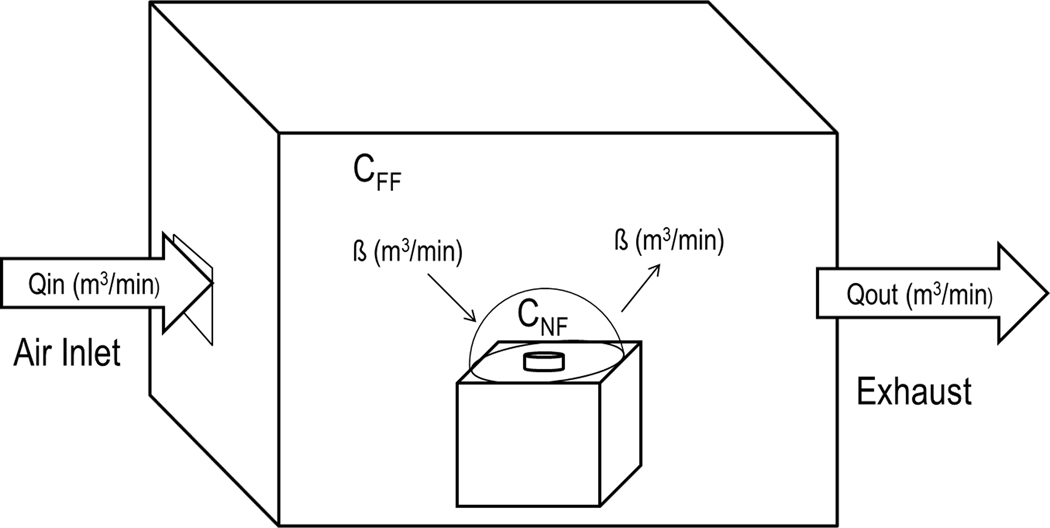
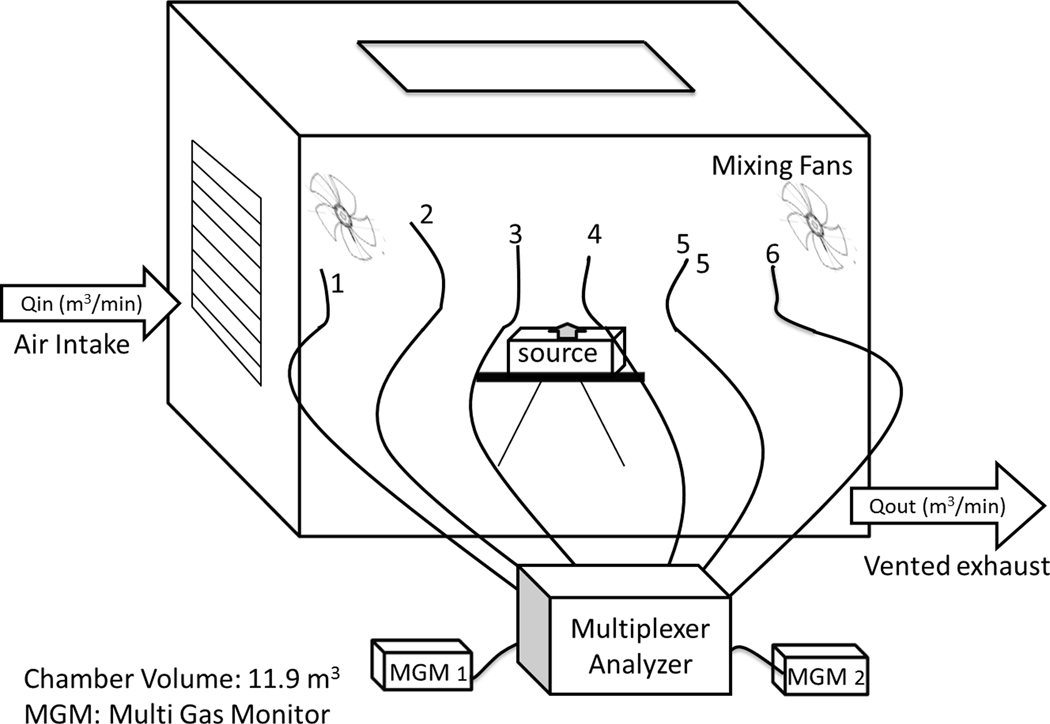
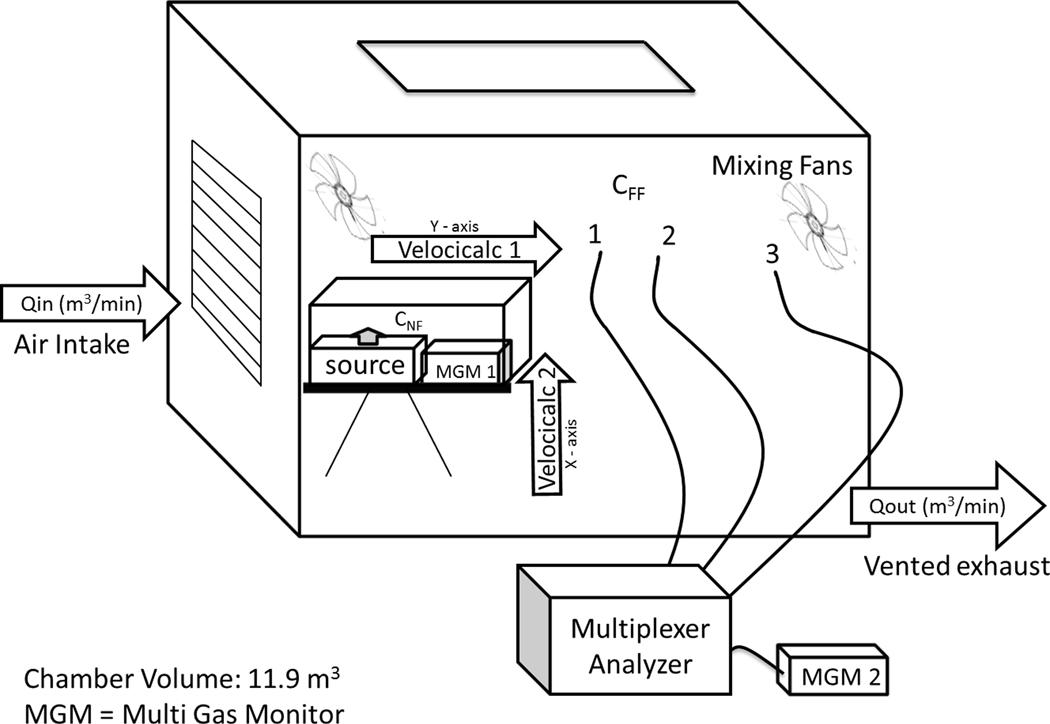
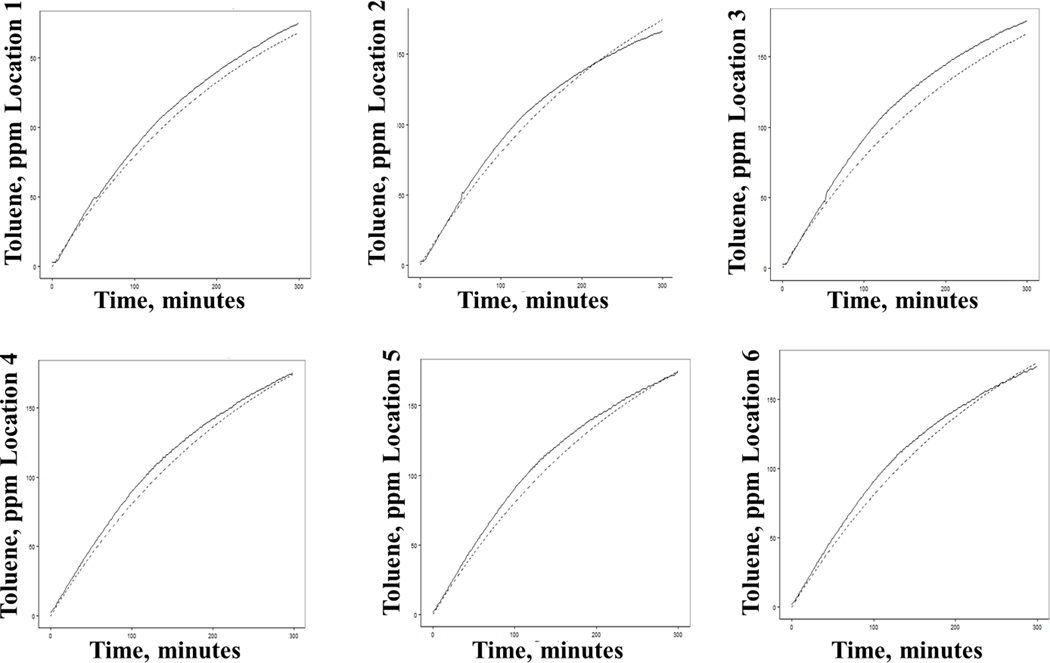
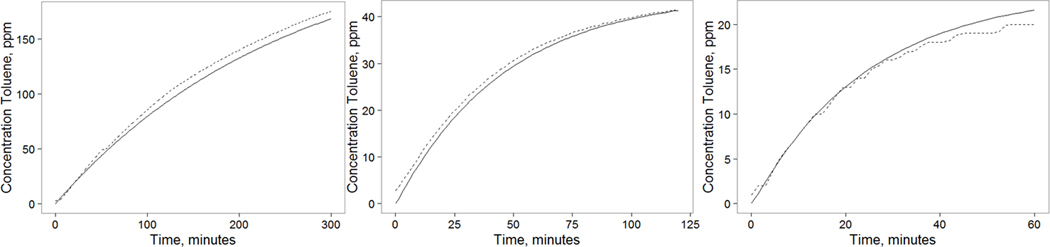
Exposure judgments made without personal exposure data and based instead on subjective inputs tend to underestimate exposure, with exposure judgment accuracy not significantly more accurate than random chance. Therefore, objective inputs that contribute to more accurate decision making are needed. Models have been shown anecdotally to be useful in accurately predicting exposure but their use in occupational hygiene has been limited. This may be attributable to a general lack of guidance on model selection and use and scant model input data. The lack of systematic evaluation of the models is also an important factor. This research addresses the need to systematically evaluate two widely applicable models, the Well-Mixed Room (WMR) and Near-Field-Far-Field (NF-FF) models. The evaluation, conducted under highly controlled conditions in an exposure chamber, allowed for model inputs to be accurately measured and controlled, generating over 800 pairs of high quality measured and modeled exposure estimates. By varying conditions in the chamber one at a time, model performance across a range of conditions was evaluated using two sets of criteria: the ASTM Standard 5157 and the AIHA Exposure Assessment categorical criteria. Model performance for the WMR model was excellent, with ASTM performance criteria met for 88-97% of the pairs across the three chemicals used in the study, and 96% categorical agreement observed. Model performance for the NF-FF model, impacted somewhat by the size of the chamber was nevertheless good to excellent. NF modeled estimates met modified ASTM criteria for 67-84% of the pairs while 69-91% of FF modeled estimates met these criteria. Categorical agreement was observed for 72% and 96% of NF and FF pairs, respectively. These results support the use of the WMR and NF-FF models in guiding decision making towards improving exposure judgment accuracy.
Keywords: Model evaluation; near field far field model; professional judgment; well-mixed room model.
Figures
References
-
- Logan P, and Hewett P: Occupational exposure decisions: Can limited data interpretation training help improve accuracy. Am. Occup. Hyg 1–14 (2009). - PubMed
-
- Vadali M, Ramachandran G, Mulhausen J, and Banerjee S: Effect of training on exposure judgment accuracy of industrial hygienists. J. Ocup. Environ. Hgy 242–256 (2012). - PubMed
-
- Arnold S, Stenzel M, and Ramachandran G: Approaches to improving professional judgment accuracy. In A Strategy for Assessing and Managing Occupational Exposures, Jahn S, Ignacio J, and Bullock W (eds.). Fairfax, VA: AIHA Press, 2015. pp. 90–110.
-
- Apgar V, Holaday D, James L, Weisbrot I, and Berrien C: Evaluation of the newborn infant - second report. JAMA 168(15):1985–1988 (1958). - PubMed
-
- Kahneman D, Slovic P, and Tversky A: Judgment under Uncertainty: Heuristics and Biases. Cambridge: Cambridge University Press, 1982.
Publication types
MeSH terms
Substances
Grants and funding
LinkOut - more resources
Full Text Sources
Other Literature Sources
Medical
Miscellaneous