Caught in the act - protein adaptation and the expanding roles of the PACS proteins in tissue homeostasis and disease
- PMID: 28476937
- PMCID: PMC5482974
- DOI: 10.1242/jcs.199463
Caught in the act - protein adaptation and the expanding roles of the PACS proteins in tissue homeostasis and disease
Abstract
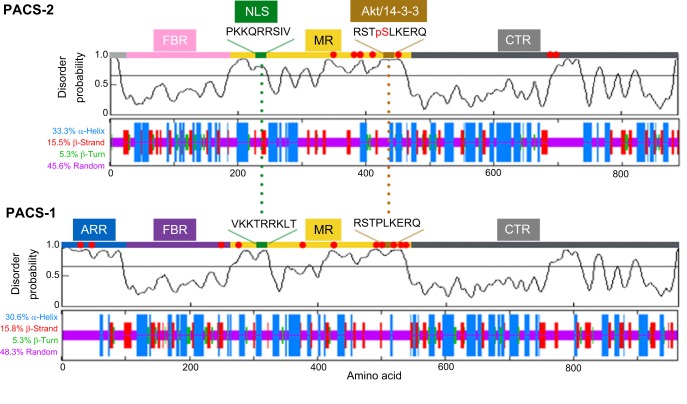
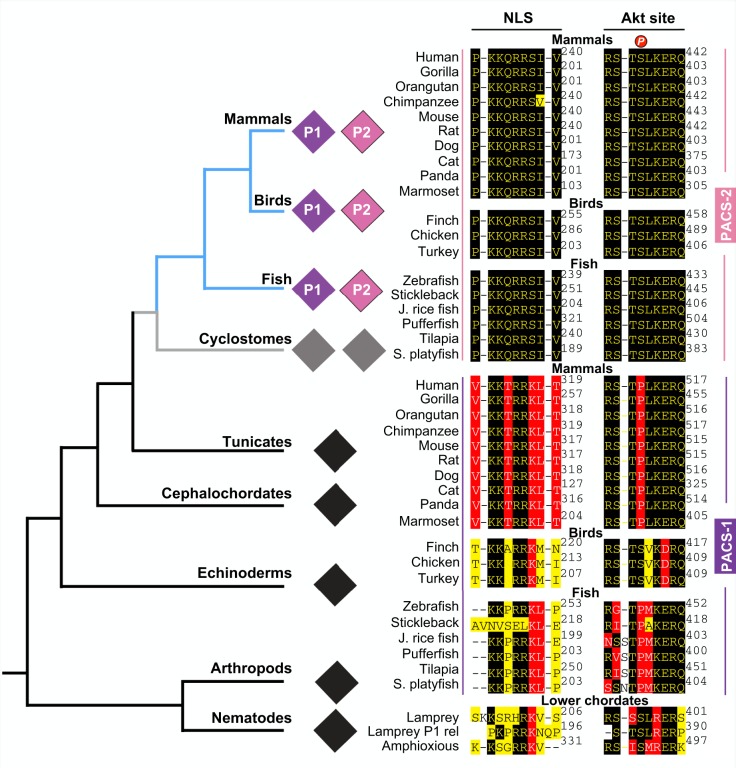
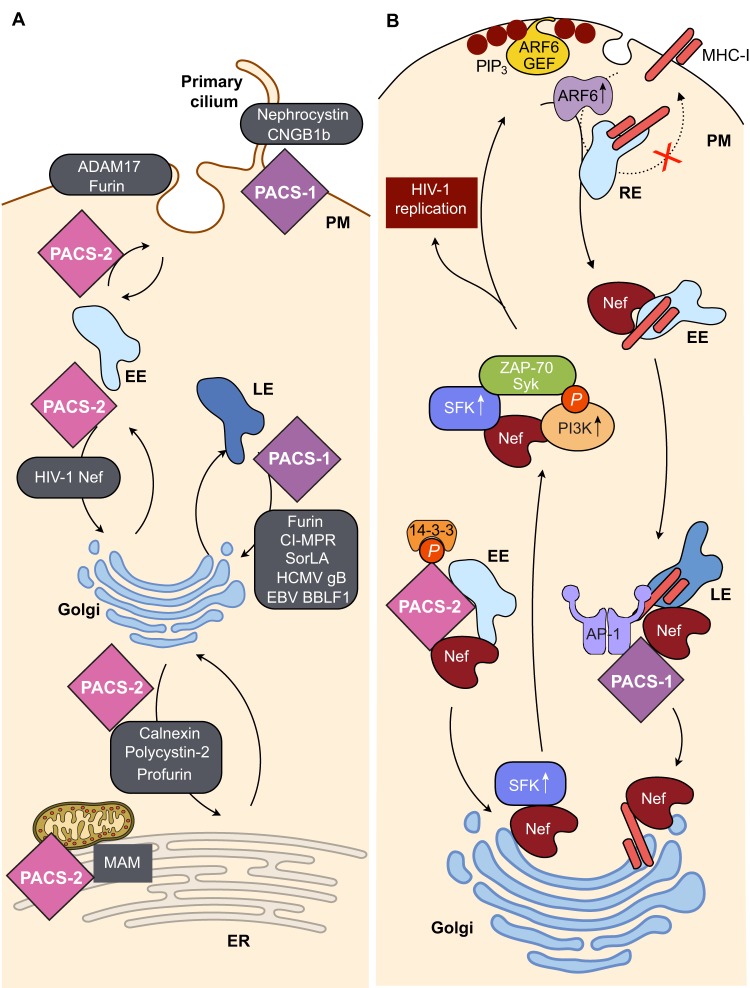
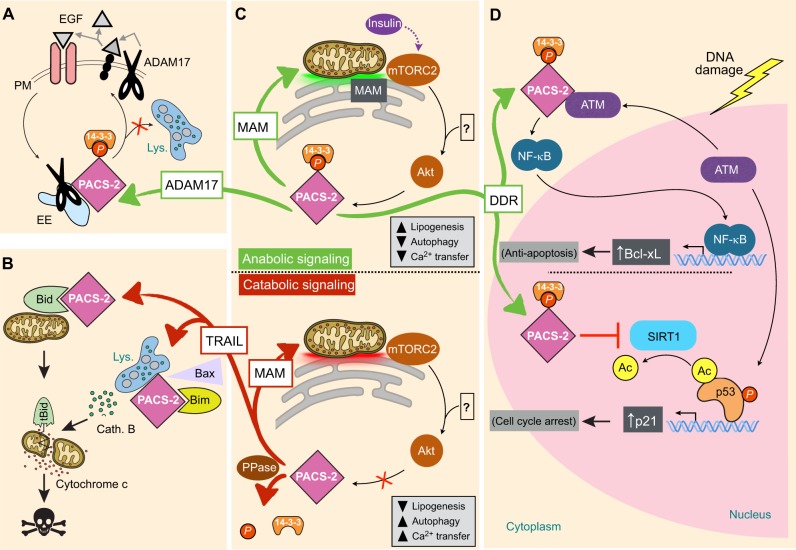
Vertebrate proteins that fulfill multiple and seemingly disparate functions are increasingly recognized as vital solutions to maintaining homeostasis in the face of the complex cell and tissue physiology of higher metazoans. However, the molecular adaptations that underpin this increased functionality remain elusive. In this Commentary, we review the PACS proteins - which first appeared in lower metazoans as protein traffic modulators and evolved in vertebrates to integrate cytoplasmic protein traffic and interorganellar communication with nuclear gene expression - as examples of protein adaptation 'caught in the act'. Vertebrate PACS-1 and PACS-2 increased their functional density and roles as metabolic switches by acquiring phosphorylation sites and nuclear trafficking signals within disordered regions of the proteins. These findings illustrate one mechanism by which vertebrates accommodate their complex cell physiology with a limited set of proteins. We will also highlight how pathogenic viruses exploit the PACS sorting pathways as well as recent studies on PACS genes with mutations or altered expression that result in diverse diseases. These discoveries suggest that investigation of the evolving PACS protein family provides a rich opportunity for insight into vertebrate cell and organ homeostasis.
© 2017. Published by The Company of Biologists Ltd.
Conflict of interest statement
Competing interestsThe authors declare no competing or financial interests.
Figures
References
-
- Anderson G. R., Brenner B. M., Swede H., Chen N., Henry W. M., Conroy J. M., Karpenko M. J., Issa J. P., Bartos J. D., Brunelle J.K. et al. (2001). Intrachromosomal genomic instability in human sporadic colorectal cancer measured by genome-wide allelotyping and inter-(simple sequence repeat) PCR. Cancer Res. 61, 8274-8283. - PubMed
-
- Area-Gomez E., del Carmen Lara Castillo M., Tambini M. D., Guardia-Laguarta C., de Groof A. J. C., Madra M., Ikenouchi J., Umeda M., Bird T. D., Sturley S. L. et al. (2012). Upregulated function of mitochondria-associated ER membranes in Alzheimer disease. EMBO J. 31, 4106-4123. 10.1038/emboj.2012.202 - DOI - PMC - PubMed
-
- Arnoult D., Bartle L. M., Skaletskaya A., Poncet D., Zamzami N., Park P. U., Sharpe J., Youle R. J. and Goldmacher V. S. (2004). Cytomegalovirus cell death suppressor vMIA blocks Bax- but not Bak-mediated apoptosis by binding and sequestering Bax at mitochondria. Proc. Natl. Acad. Sci. USA 101, 7988-7993. 10.1073/pnas.0401897101 - DOI - PMC - PubMed
Publication types
MeSH terms
Substances
Grants and funding
LinkOut - more resources
Full Text Sources
Other Literature Sources
Medical
Molecular Biology Databases