


In vitro and in vivo antifungal properties of silver nanoparticles against Rhizoctonia solani, a common agent of rice sheath blight disease
- PMID: 28476979
- PMCID: PMC8676185
- DOI: 10.1049/iet-nbt.2015.0121
In vitro and in vivo antifungal properties of silver nanoparticles against Rhizoctonia solani, a common agent of rice sheath blight disease
Abstract
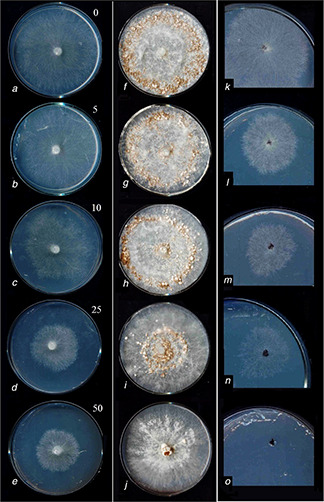
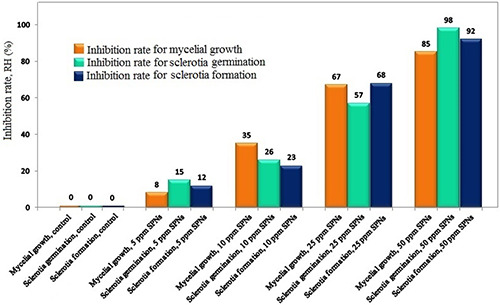
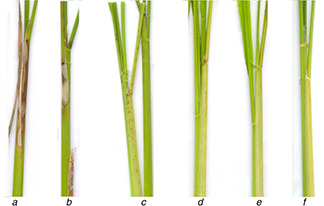
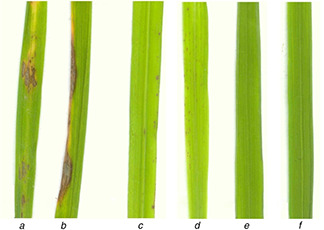
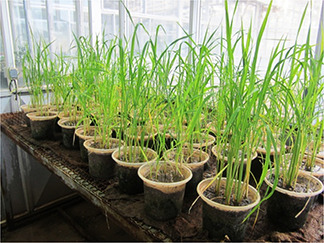
Sheath blight disease in rice has caused major crop losses worldwide. Managing the causal agent of disease Rhizoctonia solani Kühn is difficult because of its broad host range and formation of sclerotia which can survive in harsh environmental conditions; therefore developing innovative disease management methods without application of hazardous chemicals has been considered as the main concern to maintain sustainable agriculture. This presented research has revealed the negative impact of silver nanoparticles (SNPs) on R. solani and disease progress both in vitro and in vivo. The adverse effects of the SNPs on R. solaniare significantly dependent on the quantity of SNPs, sprayed at different concentrations in vitro. The highest inhibition level against sclerotia formation and mycelia growth are 92 and 85%, respectively, at a SNPs concentration of 50 ppm. In vivo glasshouse experiments also showed that SNPs at the same concentration favourably affects both the fresh and dry weight of rice plants with a remarkable suppressive effect on the lesion development in leaves.
Figures
References
-
- Mrinmay C. Raisa K. Alexey V. et al.: ‘Carbon nanomaterials for drug delivery and cancer therapy’, J. Nanosci. Nanotechnol., 2015, 15, (8), pp. 5501 –5511 - PubMed
-
- Amini A. Yang C. Cheng C. et al.: ‘Nanoscale variation in energy dissipation in austenitic shape memory alloys in ultimate loading cycles’, J. Intell. Mater. Syst. Struct., 2014, doi: 10.1177/1045389X14560365
-
- Amini A. Hameed N. Church J.S. et al.: ‘Effect of grahpene on thermomechanical behaviour of NiTi shape memory alloy during nano‐scale phase transition’, Scr. Mater., 2013, 68, pp. 420 –423
-
- Khatami M. Pourseyedi S. Khatami M. et al.: ‘Synthesis of silver nanoparticles using seed exudates of Sinapis arvensis as a novel bioresource, and evaluation of their antifungal activity’, Bioresources Bioprocessing, 2015, 2, (19), pp. 1 –7
-
- Schrofel A. Gabriela K. Ivo Š. et al.: ‘Applications of biosynthesized metallic nanoparticles – a review’, Acta Biomater., 2014, 10, pp. 4023 –4042 - PubMed
MeSH terms
Substances
LinkOut - more resources
Full Text Sources
Other Literature Sources
