Global scientific trends on exosome research during 2007-2016: a bibliometric analysis
- PMID: 28477015
- PMCID: PMC5564662
- DOI: 10.18632/oncotarget.17223
Global scientific trends on exosome research during 2007-2016: a bibliometric analysis
Abstract
Background: Exosomes are small vesicles of endosomal origin, and they can be used for the diagnosis and the treatment. However, limited data were for the evaluation of the trend of exosome researches. This study aims to investigate the trend of exosome researches and compare the contribution of research from different regions, organizations and authors.
Methods: Exosome related publications from 2007 to 2016 were retrieved from the Web of Science database. Excel, GraphPad Prism 5 and VOSviewer software were used to analyze the research trend.
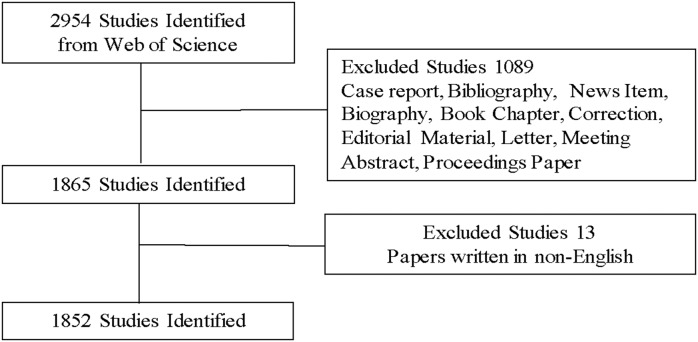
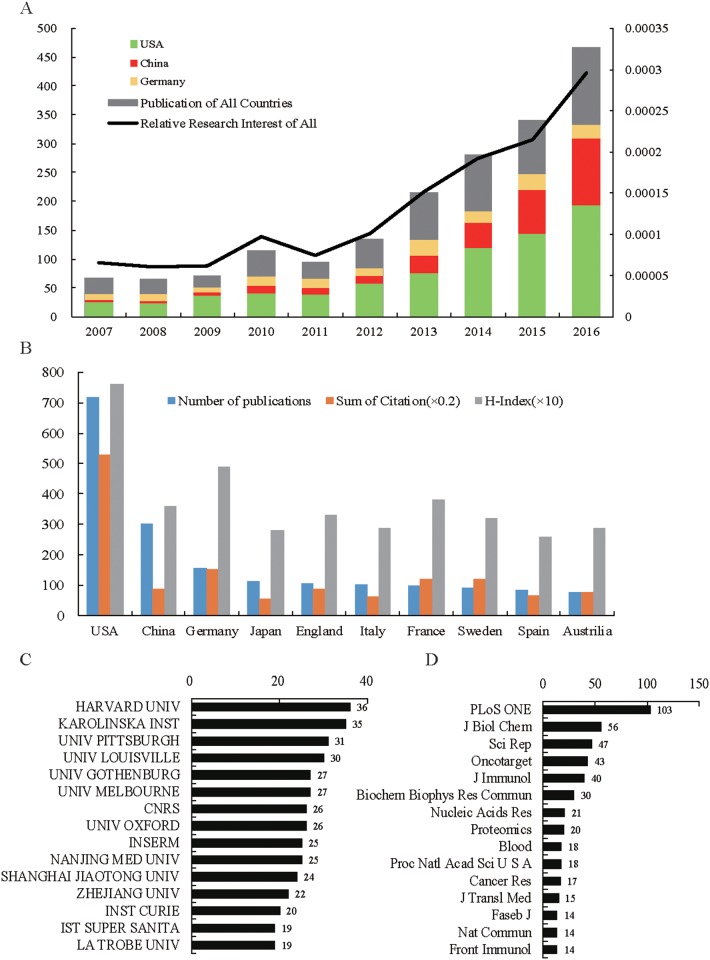
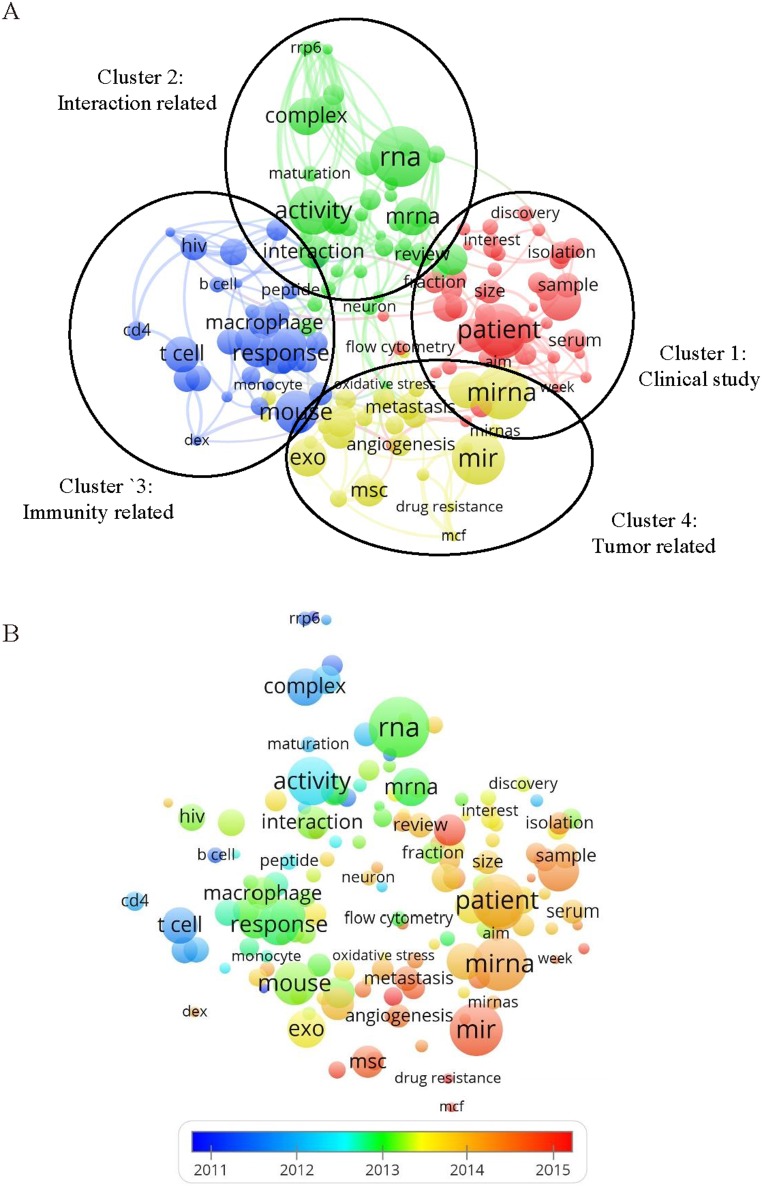
Results: A total of 1852 papers were identified and were cited 62967 times. The United States accounted for 38.8% of the articles, 42.0% of the citations, and the highest H-index (76). China ranked the second in the number of articles, but the sixth in citation frequency (4337) and the fourth in H-index (36). The journals, PLoS ONE and J Biol Chem had the highest number of publications. The author, Gabrielsson S., has published the most papers in this field (22). The keyword "ribonucleic acid" was mentioned the most at 746 times, and the words, "stem cell", "drug resistance" and "monocyte cell factor" were the latest hotspots appeared around 2015.
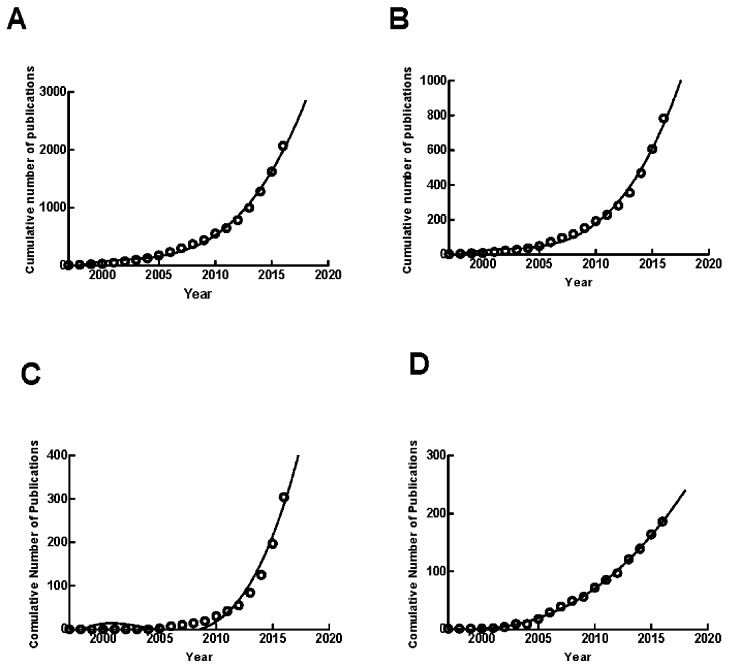
Conclusion: Literature growth related to exosome is expanding rapidly. The quality of the articles from China still requires improvement. Recent studies focus on the relationship with tumor, and "stem cell", "drug resistance" and "michigan cancer foundation-7" may be the newest topics that should be closely followed in exosome research.
Keywords: H-index; VOSviewer; bibliometric; citation; exosome.
Conflict of interest statement
The authors declare that they have no competing interests.
Figures
References
-
- Valcz G, Galamb O, Krenács T, Spisák S, Kalmár A, Patai AV, Wichmann B, Dede K, Tulassay Z, Molnár B. Exosomes in colorectal carcinoma formation: ALIX under the magnifying glass. Mod Pathol. 2016;29:928–38. - PubMed
-
- Johnstone RM, Adam M, Hammond JR, Orr L, Turbide C. Vesicle formation during reticulocyte maturation. Association of plasma membrane activities with released vesicles (exosomes) J Biol Chem. 1987;262:9412–20. - PubMed
-
- Valadi H, Ekström K, Bossios A, Sjöstrand M, Lee JJ, Lötvall JO. Exosome-mediated transfer of mRNAs and microRNAs is a novel mechanism of genetic exchange between cells. Nat Cell Biol. 2007;9:654–59. - PubMed
-
- Zong SF, Wang L, Chen C, Lu J, Zhu D, Zhang YZ, Wang ZY, Cui YP. Facile detection of tumor-derived exosomes using magnetic nanobeads and SERS nanoprobes. Anal Methods. 2016;8:5001–08.
-
- Al-Mayah AH, Bright SJ, Bowler DA, Slijepcevic P, Goodwin E, Kadhim MA. Exosome-Mediated Telomere Instability in Human Breast Epithelial Cancer Cells after X Irradiation. Radiat Res. 2017;187:98–106. - PubMed
Publication types
MeSH terms
LinkOut - more resources
Full Text Sources
Other Literature Sources