Operative microwave ablation for hepatocellular carcinoma: a single center retrospective review of 219 patients
- PMID: 28480072
- PMCID: PMC5401852
- DOI: 10.21037/jgo.2016.09.06
Operative microwave ablation for hepatocellular carcinoma: a single center retrospective review of 219 patients
Abstract
Background: Microwave ablation (MWA) of hepatocellular carcinoma (HCC) offers local regional treatment that can be safely and effectively performed, even in patients with advanced liver disease. We update results from our group's previous analysis of operative MWA for HCC.
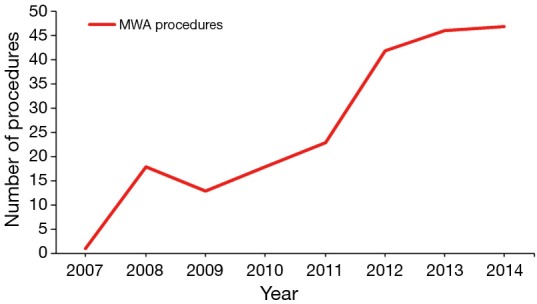
Methods: Retrospective review was performed of all patients who underwent operative MWA for HCC from 2007-2014. Patient demographics, operative characteristics and complications were recorded. Follow up imaging was reviewed to determine rates of complete ablation, local, regional and metastatic recurrence.
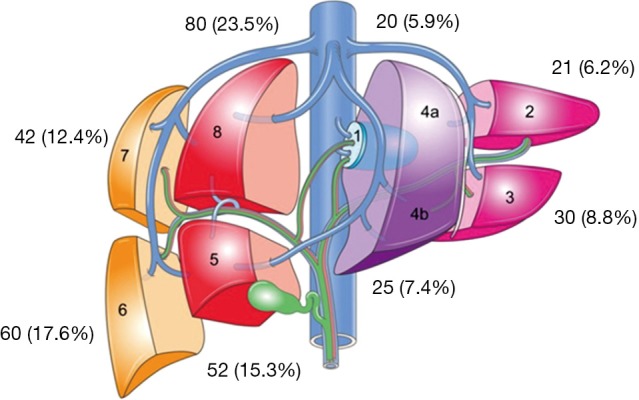
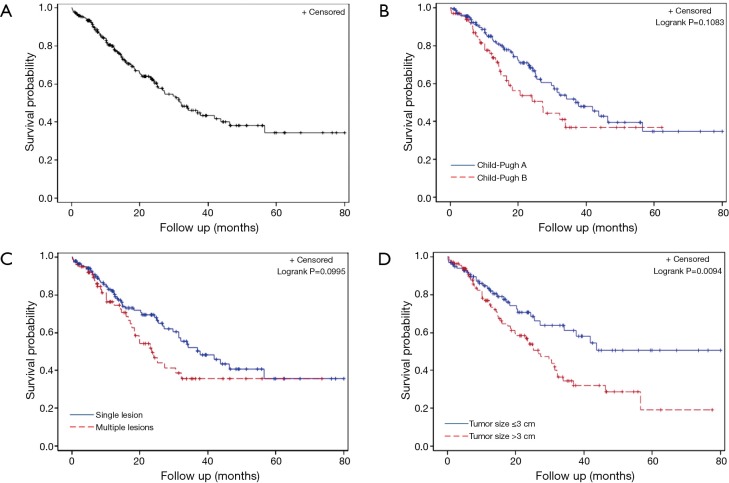
Results: Two hundred and nineteen patients were included with a total of 340 tumors treated with operative MWA. Median tumor size was 3.2 cm (range, 1-6 cm). Cirrhosis was present in 89.5% of patients, 60.7% had hepatitis C, and 8.2% had hepatitis B. Thirty-five point nine percent were Child-Pugh class B/C. Ninety-six point eight percent of MWA procedures were performed laparoscopically. Four deaths occurred within 30 days (1.8%). Clavien-Dindo grade III complications occurred in 3.2% of patients. Complete ablation was identified in 97.1% of tumors, with local recurrence rates of 8.5% at 10.9 months median follow up (0-80 months). Regional recurrence occurred in 34.8% of patients at 10.9 months median follow up and metastatic recurrence was seen in 8.1% of patients. One year overall survival was 80.0% and 2-year survival was 61.5%.
Conclusions: We propose that laparoscopic MWA offers a low morbidity approach for treatment of HCC affording low rates of local recurrence even for patients with significant underlying liver dysfunction. This large series offers insight into outcomes of this modality as definitive treatment for patients with HCC.
Keywords: Microwave ablation (MWA); hepatocellular carcinoma (HCC); outcomes.
Conflict of interest statement
Conflicts of Interest: The authors have no conflicts of interest to declare.
Figures
References
LinkOut - more resources
Full Text Sources
Other Literature Sources