


Hospitalizations for Respiratory Syncytial Virus Among Adults in the United States, 1997-2012
- PMID: 28480262
- PMCID: PMC5414053
- DOI: 10.1093/ofid/ofw270
Hospitalizations for Respiratory Syncytial Virus Among Adults in the United States, 1997-2012
Abstract
Background: Respiratory syncytial virus (RSV) is an established cause of serious lower respiratory disease in children, but the burden in adults is less well studied.
Methods: We conducted a retrospective study of hospitalizations among adults ≥20 years from the 1997-2012 National Inpatient Sample. Trends in RSV admissions were described relative to unspecified viral pneumonia admissions. Hospitalization severity indicators were compared among immunocompromised RSV, non-immunocompromised RSV, and influenza admissions.
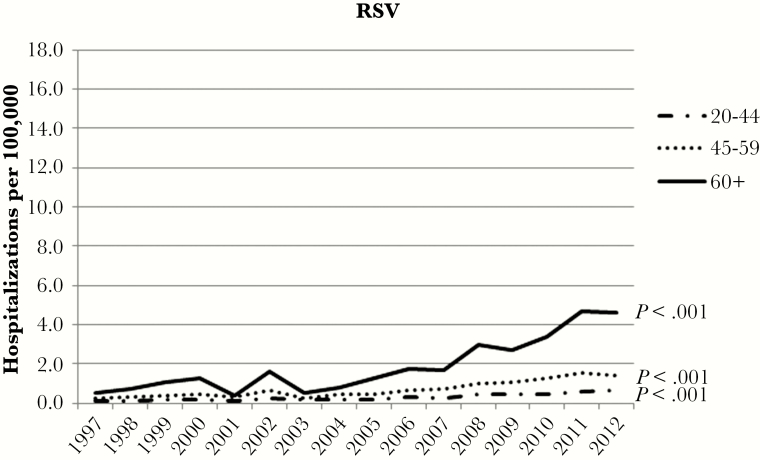
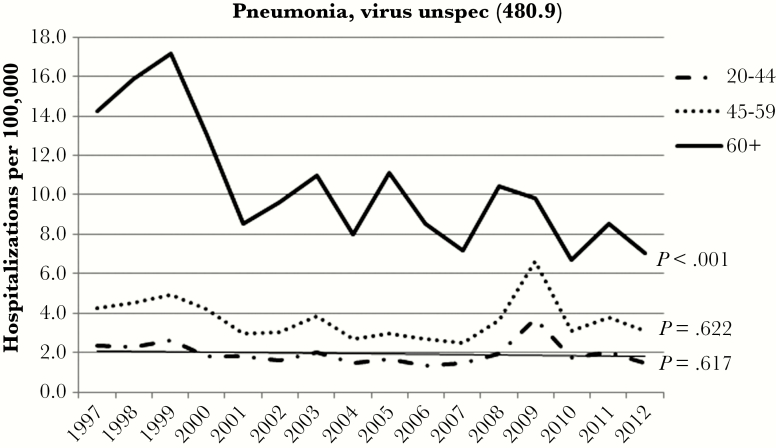
Results: An estimated 28237 adult RSV hospitalizations occurred, compared with 652818 influenza hospitalizations; 34% were immunocompromised individuals. Respiratory syncytial virus and influenza patients had similar age, gender, and race distributions, but RSV was more often diagnosed in urban teaching hospitals (73.0% for RSV vs 34.6% for influenza) and large hospitals (71.9% vs 56.4%). Respiratory syncytial virus hospitalization rates increased from 1997 to 2012, particularly for those ≥60, increasing from 0.5 to 4.6 per 100000, whereas unspecified pneumonia admission rates decreased significantly (P < .001). Immunocompromised patients with RSV hospitalization had significantly higher inpatient mortality (P = .013), use of mechanical ventilation (P = .016), mean length of stay (LOS) (P < .001), and mean cost (P < .001) than non-immunocompromised RSV hospitalizations. Overall, RSV hospitalizations were more severe than influenza hospitalizations (6.2% mortality for RSV vs 3.0% for influenza, 16.7% vs 7.2% mechanical ventilation, mean LOS of 6.0 vs 3.6 days, and mean cost of $38828 vs $14519).
Conclusions: Respiratory syncytial virus hospitalizations in adults are increasing, likely due to increasing recognition and diagnosis. The burden of RSV in adults deserves attention. Although there are fewer hospitalizations than influenza, those that are diagnosed are on average more severe.
Keywords: adult; hospitalizations; respiratory syncytial virus..
© The Author 2017. Published by Oxford University Press on behalf of Infectious Diseases Society of America.
Figures
References
LinkOut - more resources
Full Text Sources
Other Literature Sources
