


Influence of Antibiotics on the Detection of Bacteria by Culture-Based and Culture-Independent Diagnostic Tests in Patients Hospitalized With Community-Acquired Pneumonia
- PMID: 28480285
- PMCID: PMC5414111
- DOI: 10.1093/ofid/ofx014
Influence of Antibiotics on the Detection of Bacteria by Culture-Based and Culture-Independent Diagnostic Tests in Patients Hospitalized With Community-Acquired Pneumonia
Abstract
Background: Specimens collected after antibiotic exposure may reduce culture-based bacterial detections. The impact on culture-independent diagnostic tests is unclear. We assessed the effect of antibiotic exposure on both of these test results among patients hospitalized with community-acquired pneumonia (CAP).
Methods: Culture-based bacterial testing included blood cultures and high-quality sputum or endotracheal tube (ET) aspirates; culture-independent testing included urinary antigen testing (adults) for Streptococcus pneumoniae and Legionella pneumophila and polymerase chain reaction (PCR) on nasopharyngeal and oropharyngeal (NP/OP) swabs for Mycoplasma pneumoniae and Chlamydia pneumoniae. The proportion of bacterial detections was compared between specimens collected before and after either any antibiotic exposure (prehospital and/or inpatient) or only prehospital antibiotics and increasing time after initiation of inpatient antibiotics.
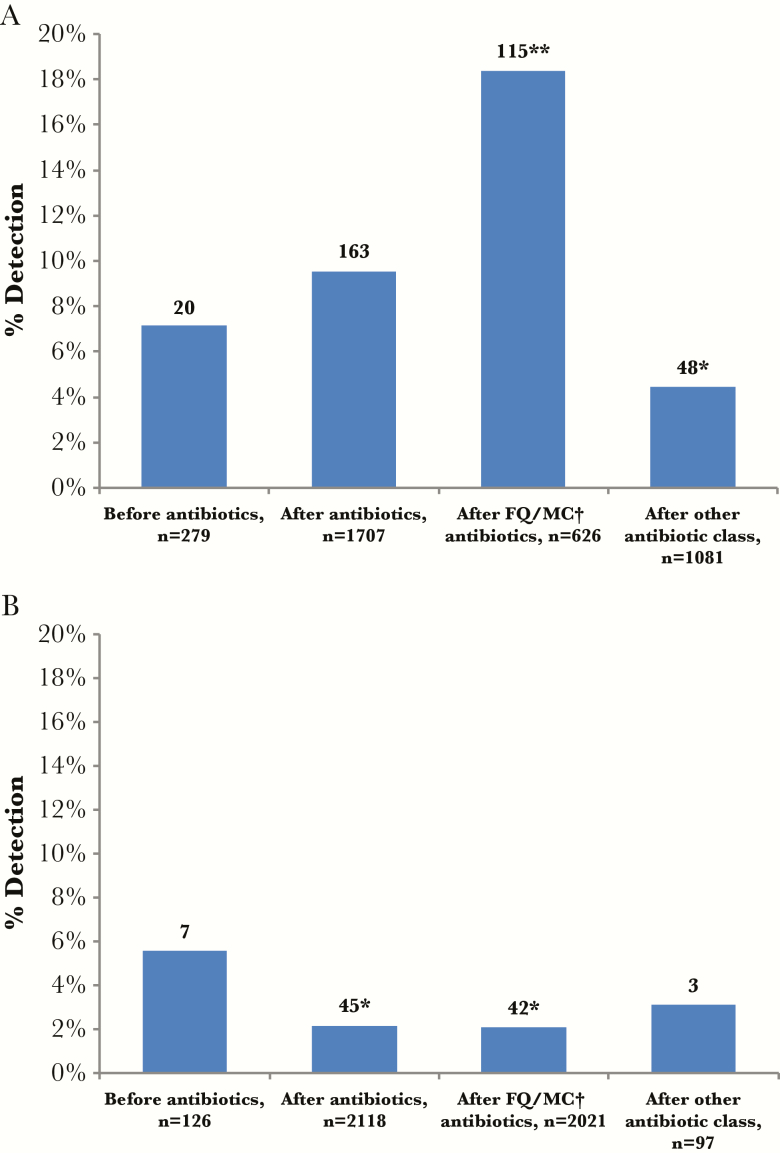
Results: Of 4678 CAP patients, 4383 (94%) received antibiotics: 3712 (85%) only inpatient, 642 (15%) both inpatient and prehospital, and 29 (<1%) only prehospital. There were more bacterial detections in specimens collected before antibiotics for blood cultures (5.2% vs 2.6%; P < .01) and sputum/ET cultures (50.0% vs 26.8%; P < .01) but not urine antigen (7.0% vs 5.7%; P = .53) or NP/OP PCR (6.7% vs 5.4%; P = .31). For all diagnostic testing, bacterial detections declined with increasing time between inpatient antibiotic administration and specimen collection.
Conclusions: Bacteria were less frequently detected in culture-based tests collected after antibiotics and in culture-independent tests that had longer intervals between antibiotic exposure and specimen collection. Bacterial yield could improve if specimens were collected promptly, preferably before antibiotics, providing data for improved antibiotic selection.
Keywords: Pneumonia; antibiotic stewardship; antibiotic use; bacterial disease; pneumonia diagnostics.
Figures
References
-
- Musher DM, Thorner AR. Community-acquired pneumonia. N Engl J Med 2014; 371:1619–28. - PubMed
Grants and funding
LinkOut - more resources
Full Text Sources
Other Literature Sources
Miscellaneous
