


Sialendoscopy-assisted transfacial removal of parotid sialoliths: A systematic review and meta-analysis
- PMID: 28480577
- PMCID: PMC5654665
- DOI: 10.1002/lary.26610
Sialendoscopy-assisted transfacial removal of parotid sialoliths: A systematic review and meta-analysis
Abstract
Objective: To review the literature and conduct a meta-analysis to determine the effectiveness and safety of the combined endoscopic-transfacial approach for parotid sialolith management.
Data sources: PubMed 1946-, Embase 1947-, Cumulative Index to Nursing and Allied Health Literature, the Cochrane Database of Systematic Reviews, Cochrane Database of Abstracts of Review Effects, Cochrane Central Register of Controlled Trials, clinicaltrials.gov, Proquest Dissertations and Theses, and FirstSearch Proceedings to March 2015.
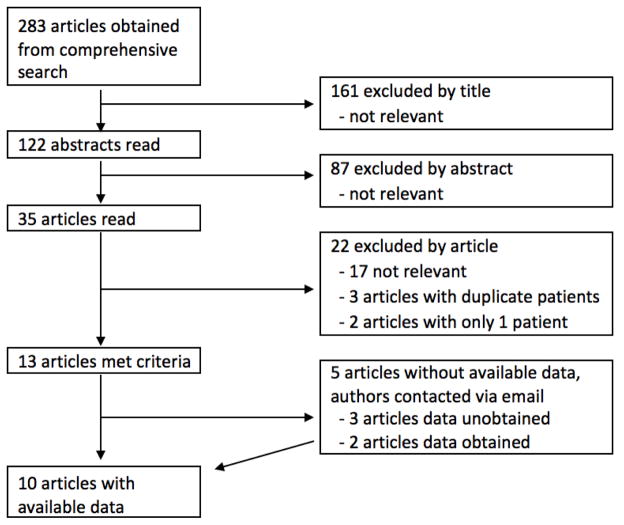
Review methods: Published prospective or retrospective English-language studies with reported outcomes of more than one patient undergoing the combined endoscopic-transfacial procedure for parotid sialolithiasis were included. Two independent authors screened all eligible studies and reviewed and extracted data from relevant publications. Weighted pooled proportions for stone removal, symptom improvement, gland preservation, and complications were calculated.
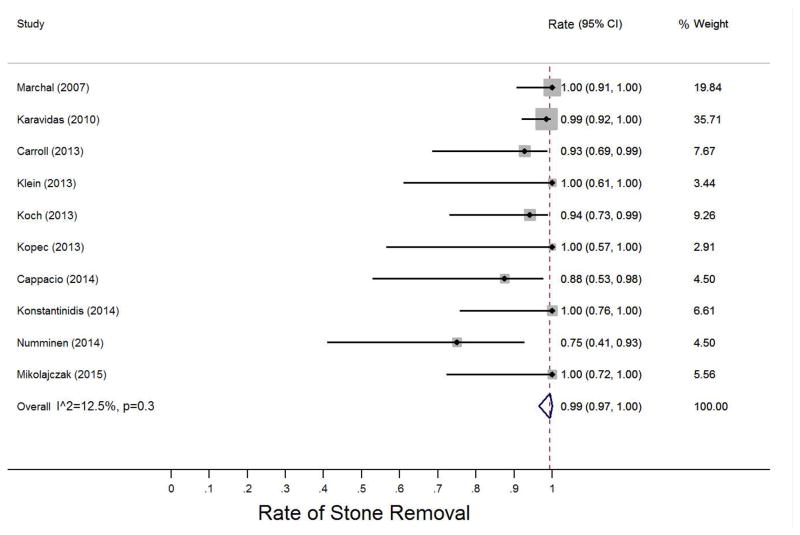
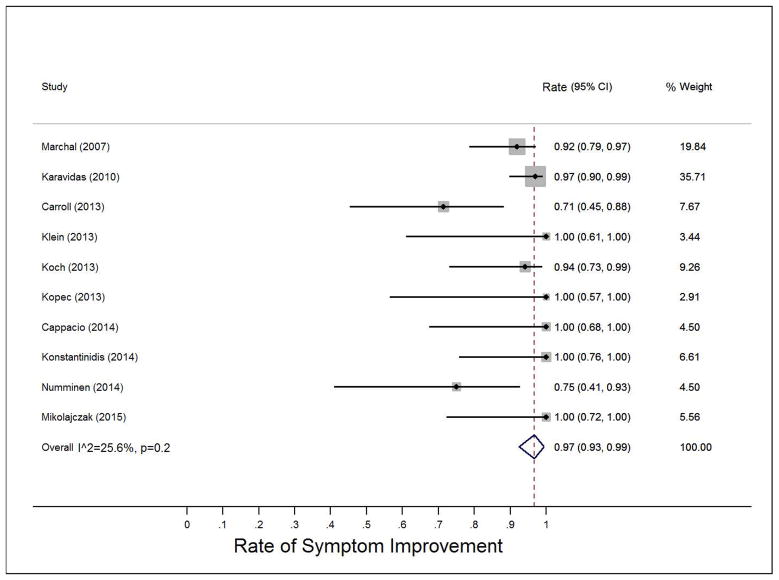
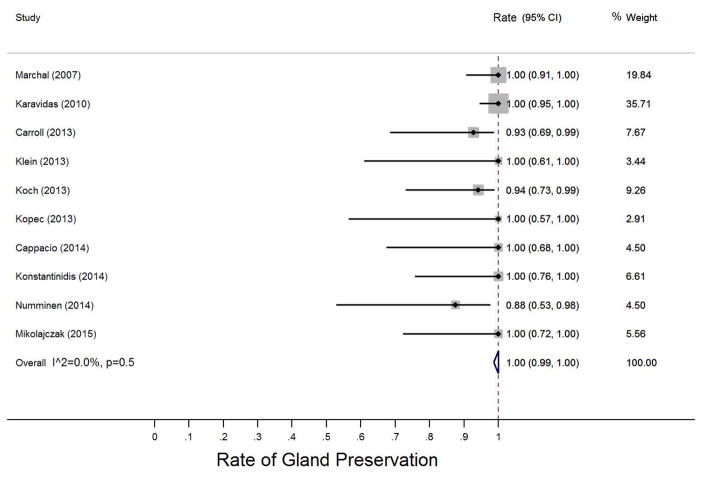
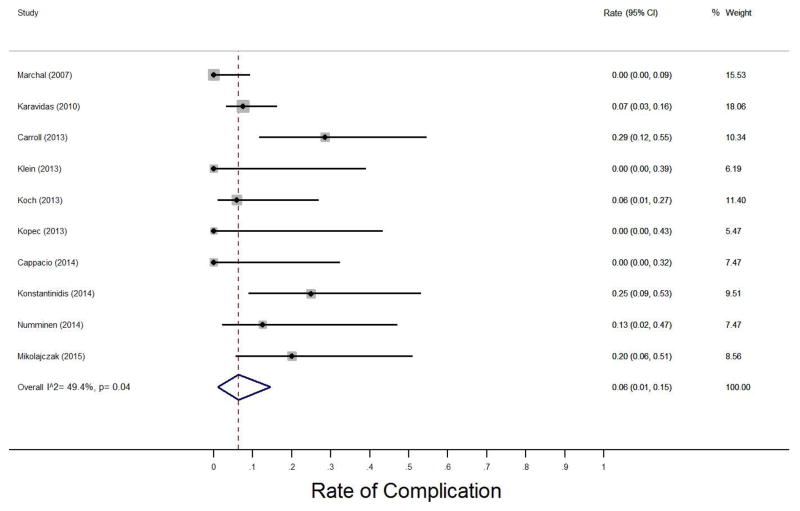
Results: Ten studies, primarily retrospective single-institution studies, were included in the final analysis, with a total of 184 patients. Overall, the procedure was noted to be successful with low risk; the weighted pooled proportions were 0.99 (95% confidence interval [CI]: 0.97 to 1.00) for stone removal, 0.97 (95% CI: 0.93 to 0.99) for symptom improvement, 1 (95% CI: 0.99 to 1.00) for gland preservation, and 0.06 (95% CI: 0.01 to 0.15) for complications.
Conclusions: Although our analysis is primarily based on retrospective data, the evidence shown here suggests that the combined endoscopic-transfacial technique is an effective treatment for parotid gland sialolithiasis not amenable to intraoral or purely endoscopic removal. This approach results in high rates of symptom improvement and gland preservation. The complication rates are low, further supporting the use of this technique. Laryngoscope, 127:2510-2516, 2017.
Keywords: Parotid sialolithiasis; combined endoscopic-transfacial approach; meta-analysis; sialendoscopy.
© 2017 The American Laryngological, Rhinological and Otological Society, Inc.
Conflict of interest statement
Conflicts of interest: none
Figures
References
-
- Ngu RK, Brown JE, Whaites EJ, Drage NA, Ng SK, Makdissi J. Salivary duct strictures: nature and incidence in benign salivary obstruction. Dentomaxillofac Radiol. 2007;36:63–67. - PubMed
-
- Zenk J, Koch M, Klintworth N, et al. Sialendoscopy in the diagnosis and treatment of sialolithiasis: a study on more than 1000 patients. Otolaryngol Head Neck Surg. 2012;147(5):858–863. - PubMed
-
- Atienza G, Lopez-Cedrun JL. Management of obstructive salivary disorders by sialendoscopy: a systematic review. Br J Oral Maxillofac Surg. 2015;53(6):507–519. - PubMed
-
- Strychowsky JE, Sommer DO, Gupta MK, Cohen N, Nahlieli O. Sialendoscopy for the Management of Obstructive Salivary Gland Disease: A Systematic Review and Meta-Analysis. Arch Otolaryngol Head Neck Surg. 2012;138(6) - PubMed
Publication types
MeSH terms
Grants and funding
LinkOut - more resources
Full Text Sources
Other Literature Sources
Medical
