


Loss of H2B monoubiquitination is associated with poor-differentiation and enhanced malignancy of lung adenocarcinoma
- PMID: 28481029
- PMCID: PMC5527746
- DOI: 10.1002/ijc.30769
Loss of H2B monoubiquitination is associated with poor-differentiation and enhanced malignancy of lung adenocarcinoma
Abstract
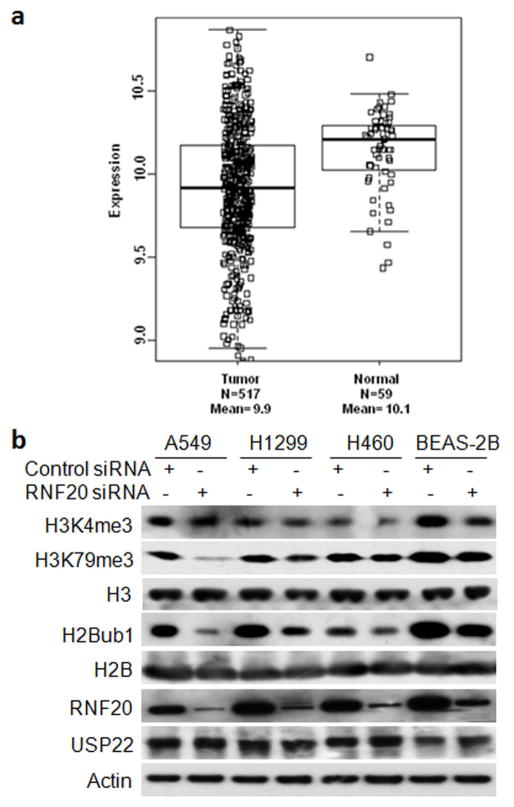
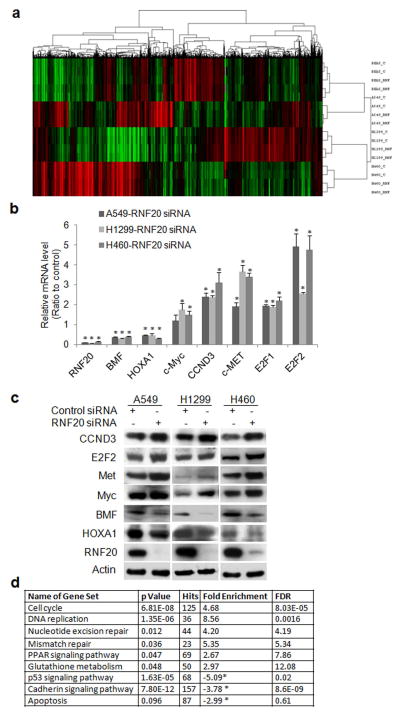
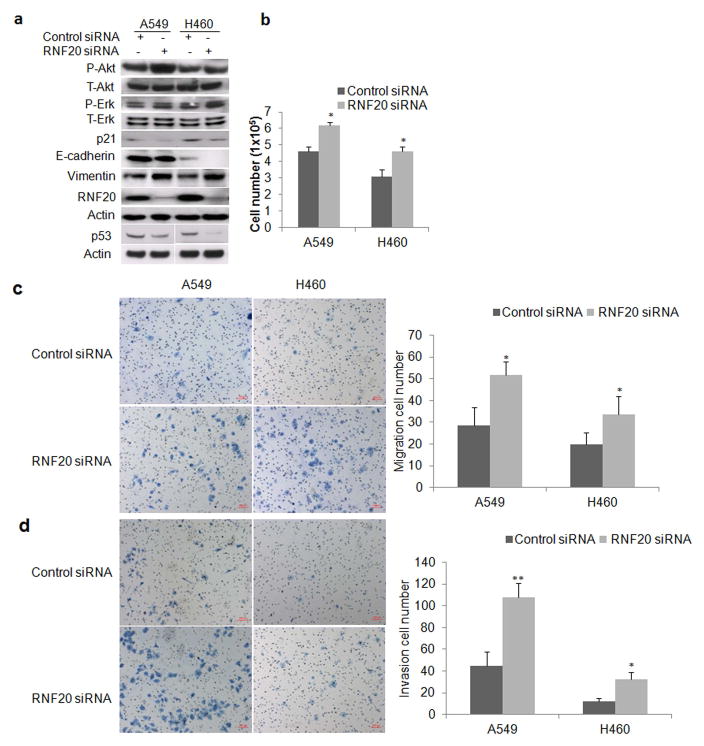
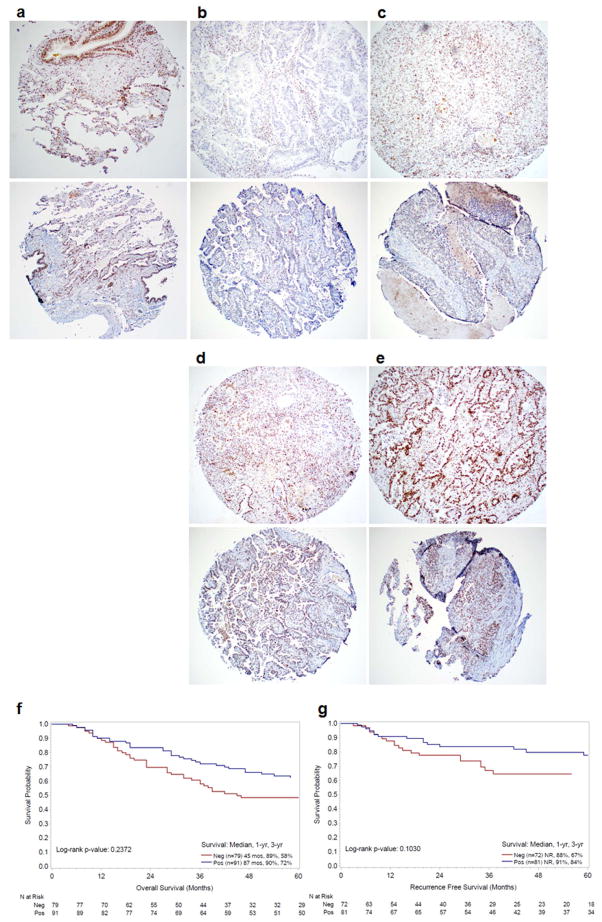
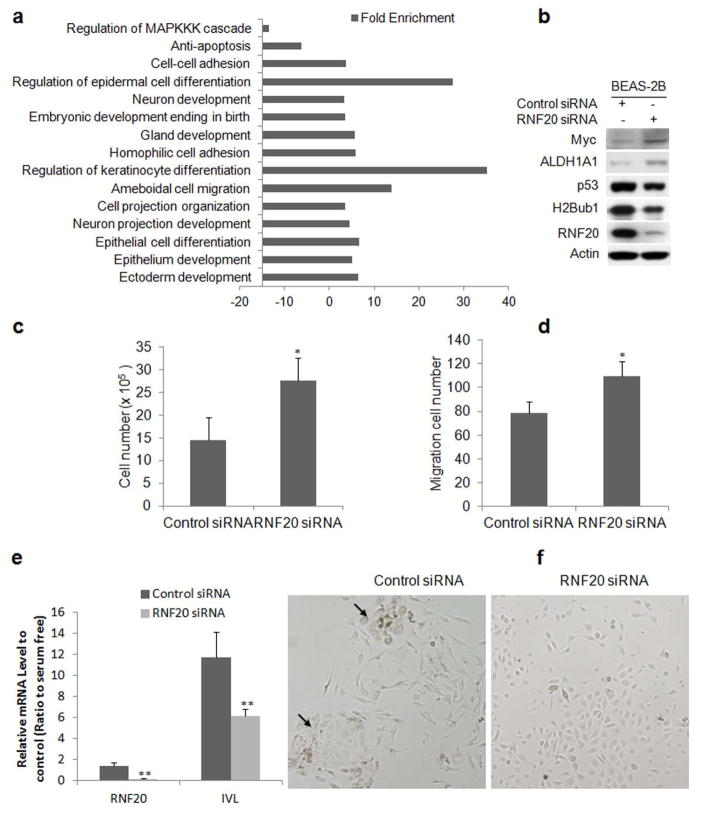
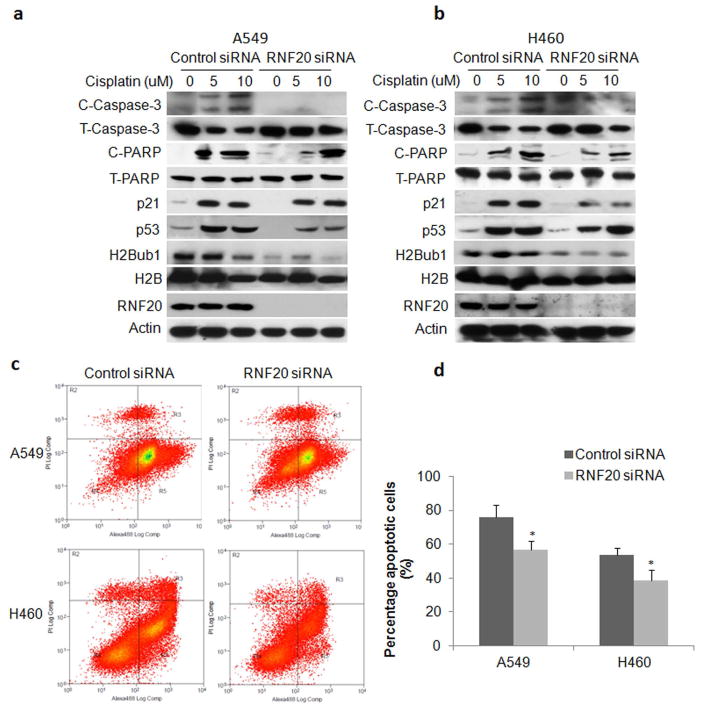
Deregulated monoubiquitination of histone H2B (H2Bub1), mainly catalyzed by E3 ubiquitin-protein ligase RNF20/RNF40 complex, may play an important role in cancer. Here we investigate potential roles of H2Bub1 and the underlying mechanisms through which it contributes to cancer development and progression in lung adenocarcinoma. We show that downregulation of H2Bub1 through RNF20 knockdown dramatically decreases H3K79 and H3K4 trimethylation in both normal and malignant lung epithelial cell lines. Concurrently, global transcriptional profiling analysis reveals that multiple tumor-associated genes such as CCND3, E2F1/2, HOXA1, Bcl2 modifying factor (BMF), Met, and Myc; and signaling pathways of cellular dedifferentiation, proliferation, adhesion, survival including p53, cadherin, Myc, and anti-apoptotic pathways are differentially expressed or significantly altered in these lung epithelial cells upon downregulation of H2Bub1. Moreover, RNF20 knockdown dramatically suppresses terminal squamous differentiation of cultured bronchial epithelial cells, and significantly enhances proliferation, migration, invasion, and cisplatin resistance of lung cancer cells. Furthermore, immunohistochemistry analysis shows that H2Bub1 is extremely low or undetectable in >70% of 170 lung adenocarcinoma samples. Notably, statistical analysis demonstrates that loss of H2Bub1 is significantly correlated with poor differentiation in lung adenocarcinoma (p = 0.0134). In addition, patients with H2Bub1-negative cancers had a trend towards shorter survival compared with patients with H2Bub1-positive cancers. Taken together, our findings suggest that loss of H2Bub1 may enhance malignancy and promote disease progression in lung adenocarcinoma probably through modulating multiple cancer signaling pathways.
Keywords: H2B monoubiquitination; RNF20; differentiation; global transcriptional profiling; lung adenocarcinoma; malignancy.
© 2017 UICC.
Conflict of interest statement
The authors declare no conflict of interest.
Figures
References
-
- Ferlay J, Shin HR, Bray F, et al. Estimates of worldwide burden of cancer in 2008: GLOBOCAN 2008. Int J Cancer. 2010;127:2893–917. - PubMed
-
- Siegel R, Ma J, Zou Z, Jemal A. Cancer statistics, 2014. CA Cancer J Clin. 2014;64:9–29. - PubMed
-
- Wilting RH, Dannenberg JH. Epigenetic mechanisms in tumorigenesis, tumor cell heterogeneity and drug resistance. Drug Resist Updat. 2012;15:21–38. - PubMed
-
- Cole AJ, Clifton-Bligh R, Marsh DJ. Histone H2B monoubiquitination: roles to play in human malignancy. Endocr Relat Cancer. 2015;22:T19–33. - PubMed
-
- Nicassio F, Corrado N, Vissers JH, et al. Human USP3 is a chromatin modifier required for S phase progression and genome stability. Curr Biol. 2007;17:1972–7. - PubMed
MeSH terms
Substances
Grants and funding
LinkOut - more resources
Full Text Sources
Other Literature Sources
Medical
Molecular Biology Databases
Research Materials
Miscellaneous
