


Hydrogen Sulfide: A Novel Player in Airway Development, Pathophysiology of Respiratory Diseases, and Antiviral Defenses
- PMID: 28481637
- PMCID: PMC5650090
- DOI: 10.1165/rcmb.2017-0114TR
Hydrogen Sulfide: A Novel Player in Airway Development, Pathophysiology of Respiratory Diseases, and Antiviral Defenses
Abstract
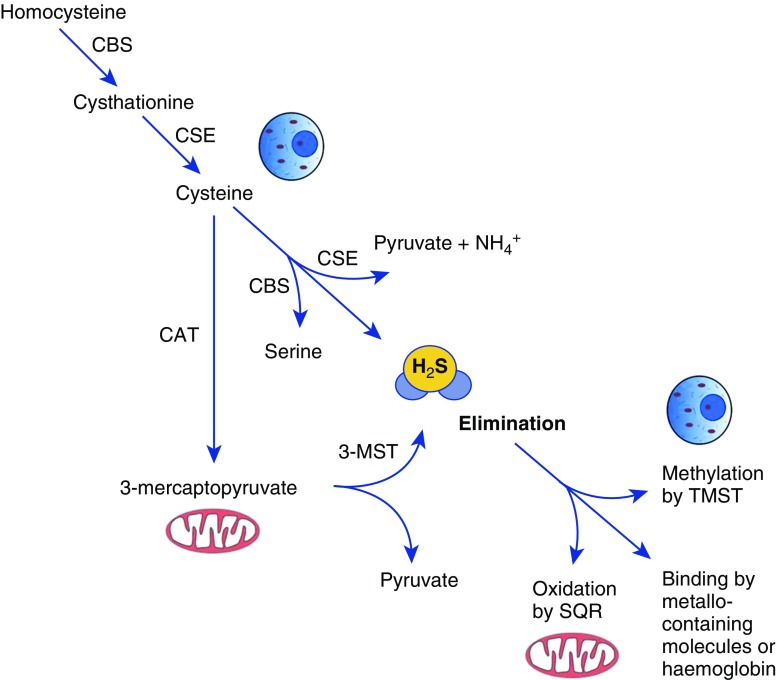
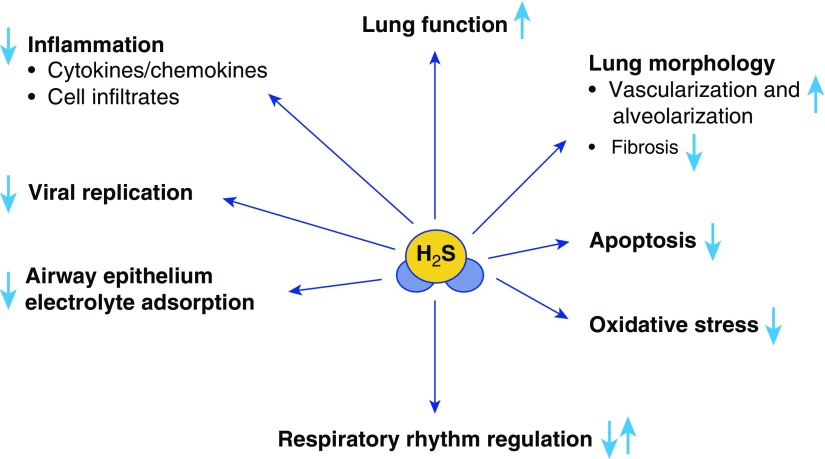
Hydrogen sulfide (H2S) is a biologically relevant signaling molecule in mammals. Along with the volatile substances nitric oxide (NO) and carbon monoxide (CO), H2S is defined as a gasotransmitter. It plays a physiological role in a variety of functions, including synaptic transmission, vascular tone, angiogenesis, inflammation, and cellular signaling. The generation of H2S is catalyzed by cystathionine β-synthase (CBS), cystathionine γ-lyase (CSE), and 3-mercaptopyruvate sulfurtransferase (3-MST). The expression of CBS and CSE is tissue specific, with CBS being expressed predominantly in the brain, and CSE in peripheral tissues, including lungs. CSE expression and activity are developmentally regulated, and recent studies suggest that CSE plays an important role in lung alveolarization during fetal development. In the respiratory tract, endogenous H2S has been shown to participate in the regulation of important functions such as airway tone, pulmonary circulation, cell proliferation or apoptosis, fibrosis, oxidative stress, and inflammation. In the past few years, changes in the generation of H2S have been linked to the pathogenesis of a variety of acute and chronic inflammatory lung diseases, including asthma and chronic obstructive pulmonary disease. Recently, our laboratory made the critical discovery that cellular H2S exerts broad-spectrum antiviral activity both in vitro and in vivo, in addition to independent antiinflammatory activity. These findings have important implications for the development of novel therapeutic strategies for viral respiratory infections, as well as other inflammatory lung diseases, especially in light of recent significant efforts to generate controlled-release H2S donors for clinical therapeutic applications.
Keywords: H2S donors; antiviral; hydrogen sulfide.
Figures
References
-
- Lindenmann J, Matzi V, Neuboeck N, Ratzenhofer-Komenda B, Maier A, Smolle-Juettner FM. Severe hydrogen sulphide poisoning treated with 4-dimethylaminophenol and hyperbaric oxygen. Diving Hyperb Med. 2010;40:213–217. - PubMed
-
- Łowicka E, Bełtowski J. Hydrogen sulfide (H2S)—the third gas of interest for pharmacologists. Pharmacol Rep. 2007;59:4–24. - PubMed
-
- Szabó C. Hydrogen sulphide and its therapeutic potential. Nat Rev Drug Discov. 2007;6:917–935. - PubMed
-
- Bouillaud F, Blachier F. Mitochondria and sulfide: a very old story of poisoning, feeding, and signaling? Antioxid Redox Signal. 2011;15:379–391. - PubMed
Publication types
MeSH terms
Substances
Grants and funding
LinkOut - more resources
Full Text Sources
Other Literature Sources
Medical
Miscellaneous
