


Investigations of a Possible Chemical Effect of Salvadora persica Chewing Sticks
- PMID: 28484501
- PMCID: PMC5412162
- DOI: 10.1155/2017/2576548
Investigations of a Possible Chemical Effect of Salvadora persica Chewing Sticks
Abstract
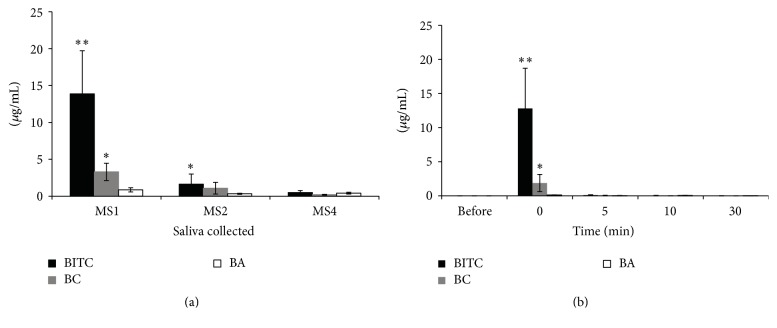
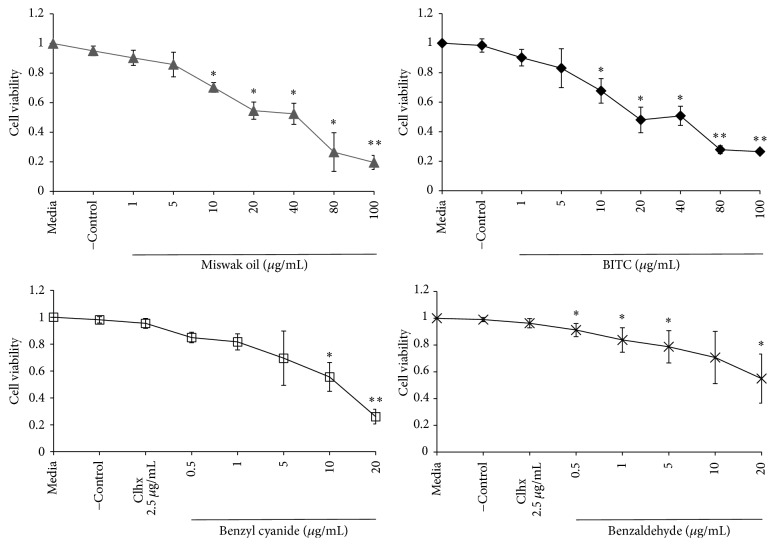
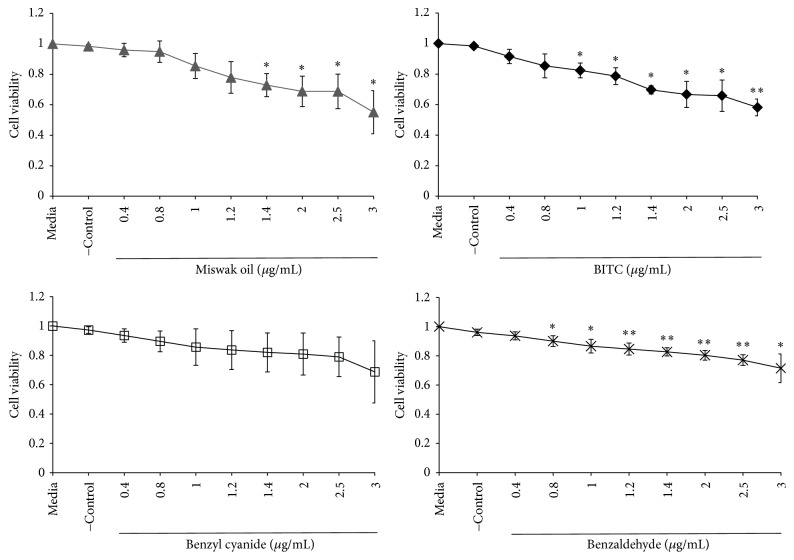
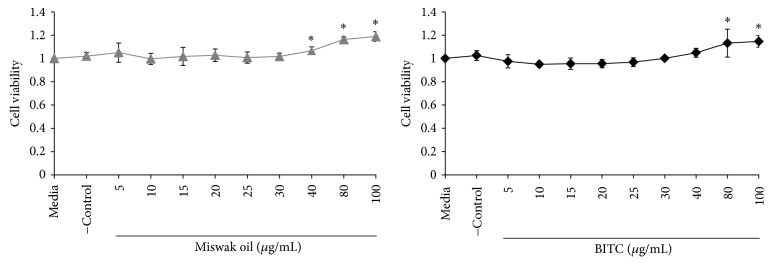
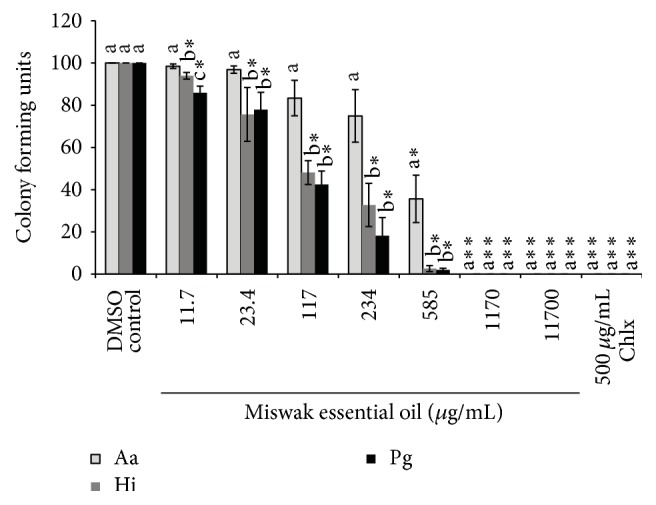
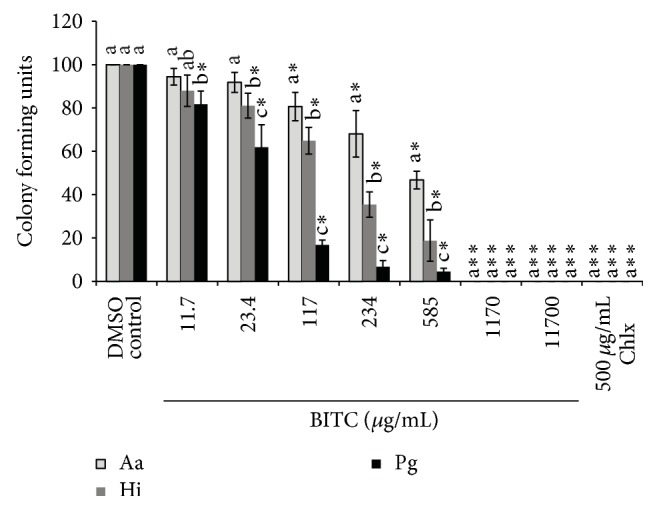
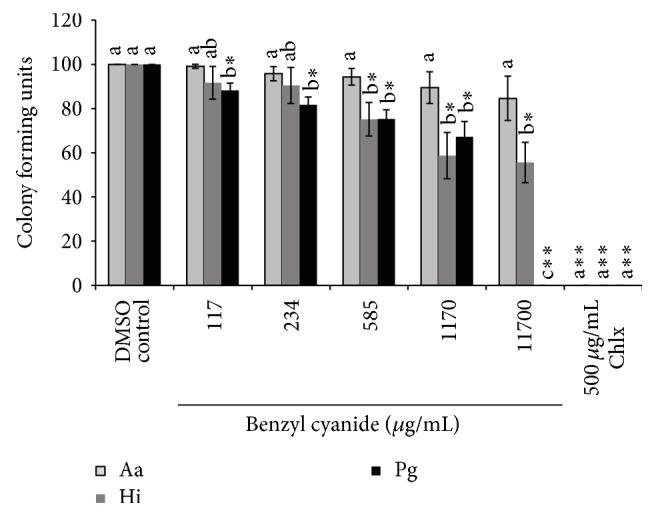
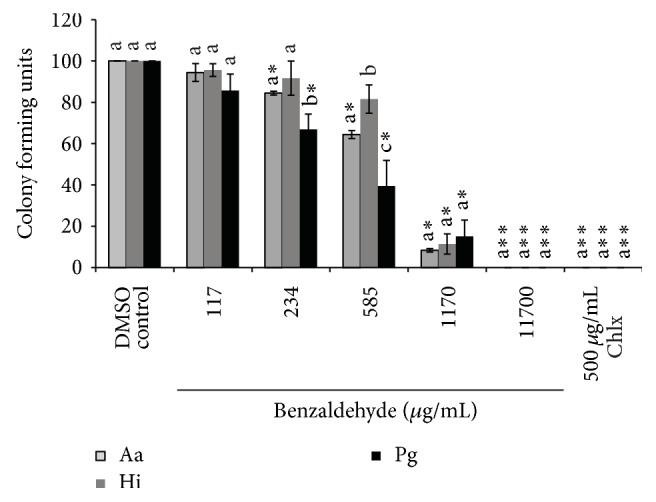
Salvadora persica is commonly used chewing sticks in many parts of the world as an oral hygiene tool. This study measured the amount of benzyl isothiocyanate (BITC) released into the mouth and assessed its retention time in saliva. The study also tested if the released amount of BITC could potentially be antibacterial or cytotoxic. Twelve subjects brushed their teeth with fresh Miswak once, twice, and four times. The amount of BITC in the saliva and in the used brushes was quantified using gas chromatography-mass spectrometry. The antibacterial effect of BITC and Miswak essential oil (MEO) was tested against Haemophilus influenzae, Aggregatibacter actinomycetemcomitans, and Porphyromonas gingivalis. The cytotoxic effect on gingival fibroblasts and keratinocytes was tested using MTT. The highest amount of the active compounds was detected in saliva after using the Miswak tip for once and immediately. It significantly decreased when the Miswak tip was used more than once and thus after 10 min. The growth of the tested bacteria was inhibited by MEO and BITC in a dose dependent manner, P. gingivalis being the most sensitive. MTT assay showed that BITC and MEO were cytotoxic towards gingival fibroblasts while oral keratinocytes showed resistance. This study suggests that the Miswak tip should be cut before each use to ensure the maximum effect.
Figures
References
-
- Al lafi T., Ababneh H. The effect of the extract of the miswak (chewing sticks) used in Jordan and the Middle East on oral bacteria. International Dental Journal. 1995;45(3):218–222. - PubMed
-
- Elvin-Lewis M. Plants used for tooth cleaning throughout the world. Journal of Preventive Dentistry. 1980;6:61–70.
-
- Almas K. The antimicrobial effects of extracts of Azadirachta indica (Neem) and Salvadora persica (Arak) chewing sticks. Indian Journal of Dental Research. 1999;10(1):23–26. - PubMed
LinkOut - more resources
Full Text Sources
Other Literature Sources
Molecular Biology Databases
