


Asymmetric Patterns of Small Molecule Transport After Nanosecond and Microsecond Electropermeabilization
- PMID: 28484798
- PMCID: PMC5910485
- DOI: 10.1007/s00232-017-9962-1
Asymmetric Patterns of Small Molecule Transport After Nanosecond and Microsecond Electropermeabilization
Abstract
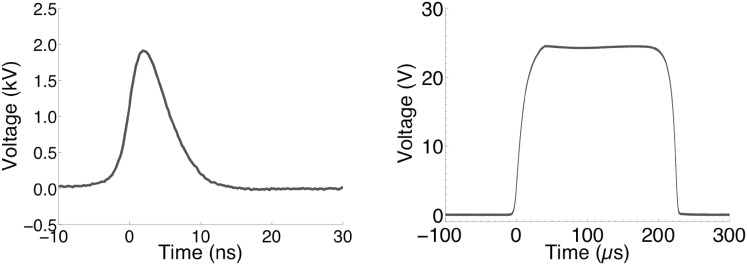
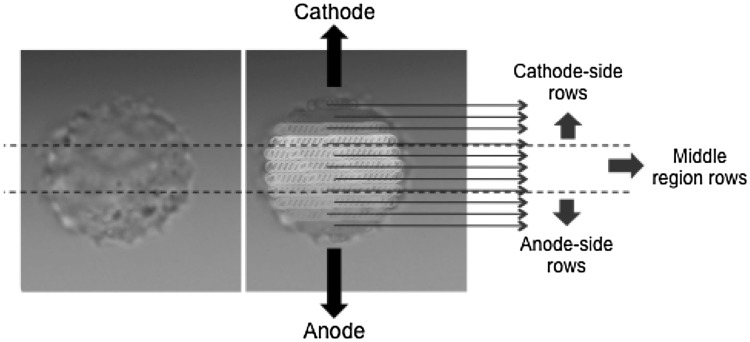
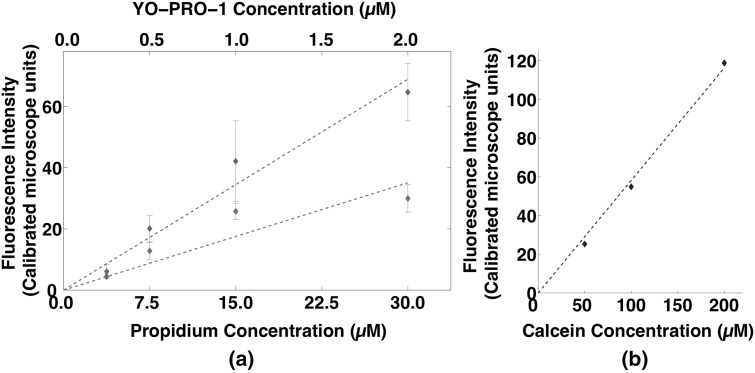
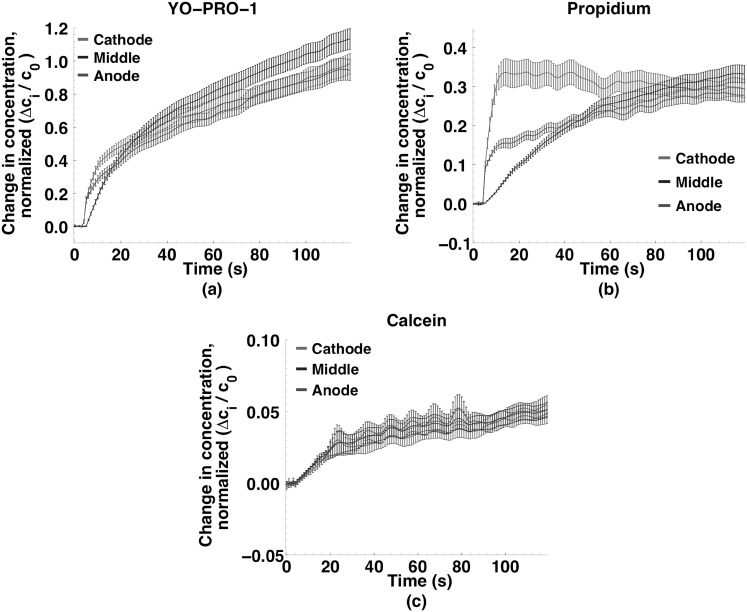
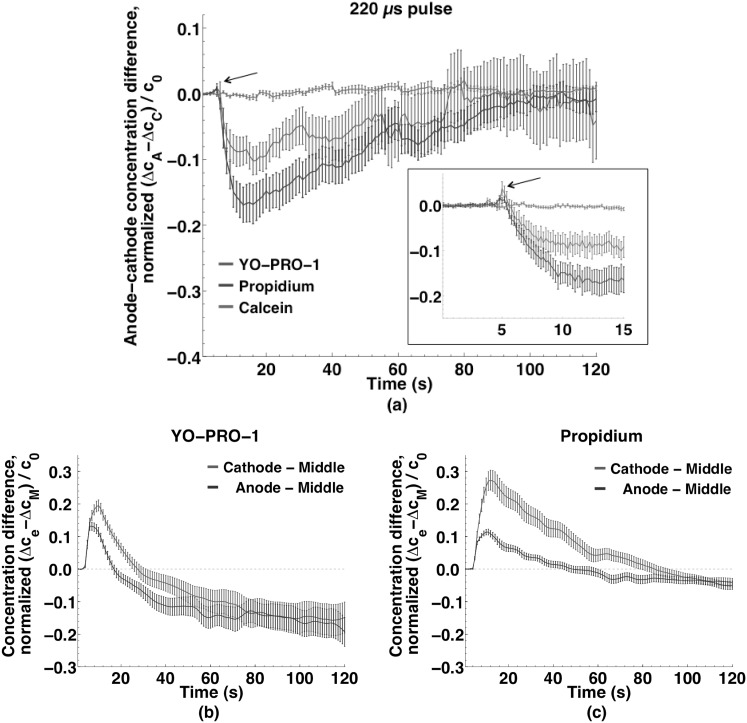
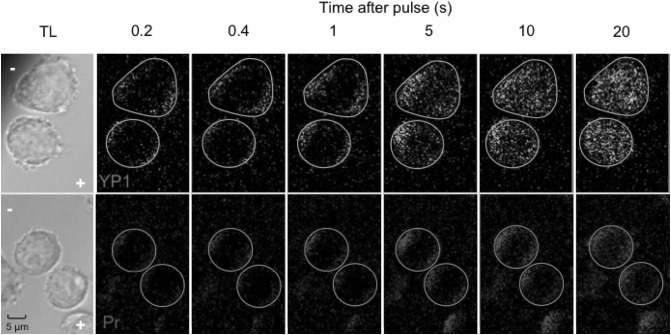
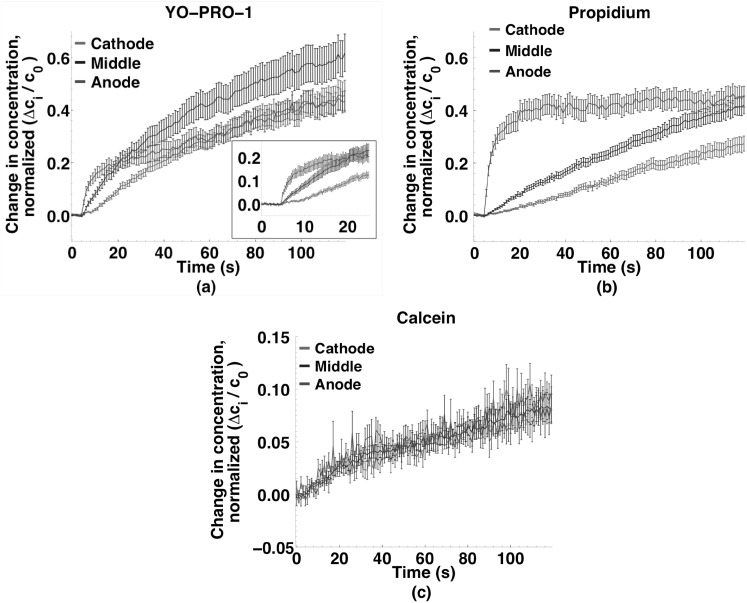
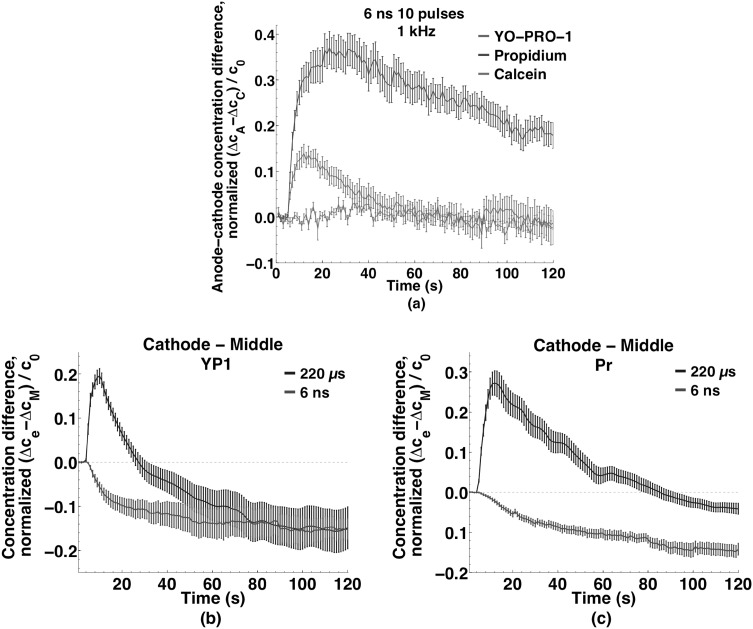
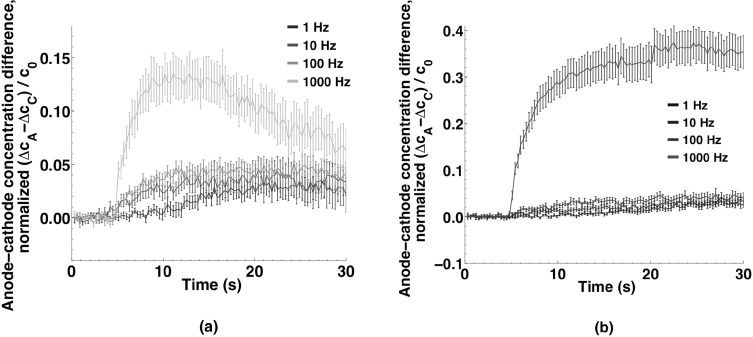
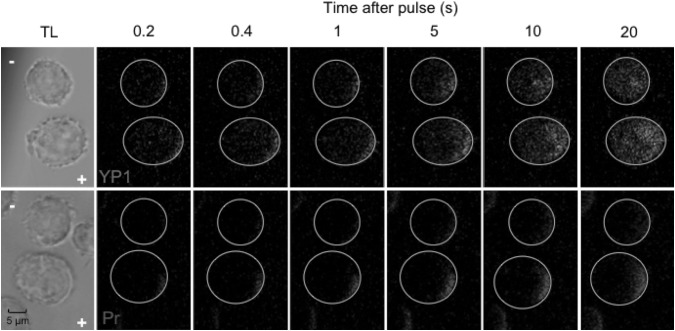
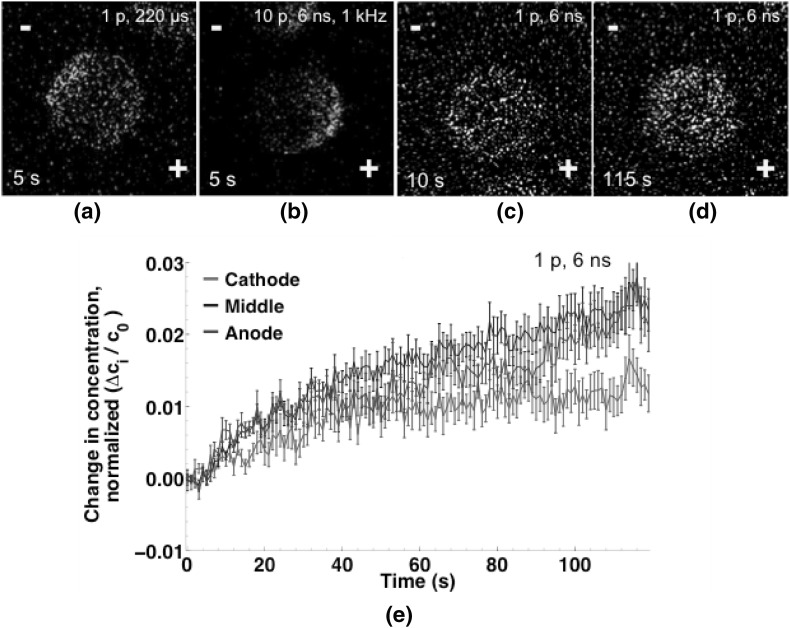
Imaging of fluorescent small molecule transport into electropermeabilized cells reveals polarized patterns of entry, which must reflect in some way the mechanisms of the migration of these molecules across the compromised membrane barrier. In some reports, transport occurs primarily across the areas of the membrane nearest the positive electrode (anode), but in others cathode-facing entry dominates. Here we compare YO-PRO-1, propidium, and calcein uptake into U-937 cells after nanosecond (6 ns) and microsecond (220 µs) electric pulse exposures. Each of the three dyes exhibits a different pattern. Calcein shows no preference for anode- or cathode-facing entry that is detectable with our measurement system. Immediately after a microsecond pulse, YO-PRO-1 and propidium enter the cell roughly equally from the positive and negative poles, but transport through the cathode-facing side dominates in less than 1 s. After nanosecond pulse permeabilization, YO-PRO-1 and propidium enter primarily on the anode-facing side of the cell.
Keywords: Asymmetric molecular transport pattern; Electroporation; Nanosecond electropermeabilization.
Conflict of interest statement
The authors declare that they have no conflict of interest.
Figures
References
-
- Benov LC, Antonov PA, Ribarov SR. Oxidative damage of the membrane lipids after electroporation. Gen Physiol Biophys. 1994;13:85. - PubMed
Publication types
MeSH terms
Substances
Grants and funding
LinkOut - more resources
Full Text Sources
Other Literature Sources
Miscellaneous
