


Role of Bone Marrow Mononuclear Cell Seeding for Nanofiber Vascular Grafts
- PMID: 28486019
- PMCID: PMC5770093
- DOI: 10.1089/ten.TEA.2017.0044
Role of Bone Marrow Mononuclear Cell Seeding for Nanofiber Vascular Grafts
Abstract
Objective: Electrospinning is a promising technology that provides biodegradable nanofiber scaffolds for cardiovascular tissue engineering. However, success with these materials has been limited, and the optimal combination of scaffold parameters for a tissue-engineered vascular graft (TEVG) remains elusive. The purpose of the present study is to evaluate the effect of bone marrow mononuclear cell (BM-MNC) seeding in electrospun scaffolds to support the rational design of optimized TEVGs.
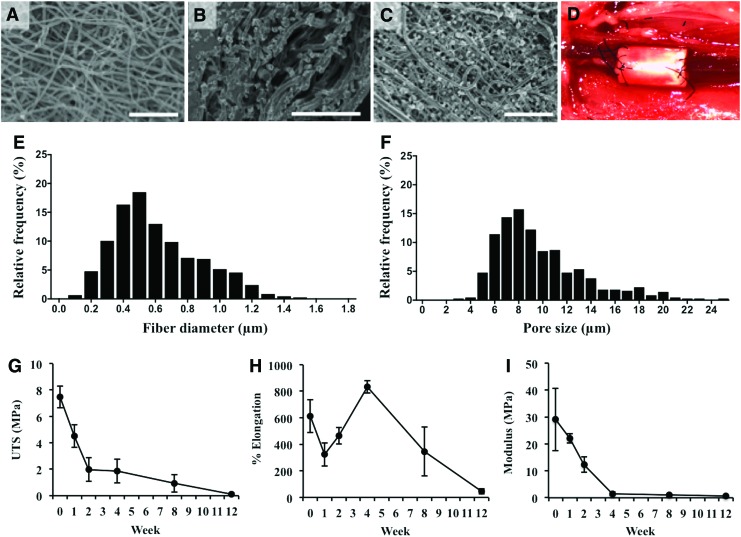
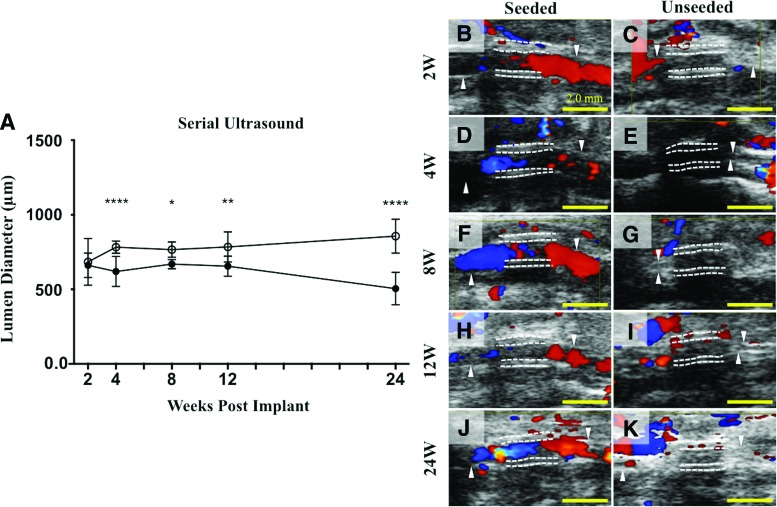
Methods: Nanofiber scaffolds were fabricated from co-electrospinning a solution of polyglycolic acid and a solution of poly(ι-lactide-co-ɛ-caprolactone) and characterized with scanning electron microscopy. Platelet activation and cell seeding efficiency were assessed by ATP secretion and DNA assays, respectively. Cell-free and BM-MNC seeded scaffolds were implanted in C57BL/6 mice (n = 15/group) as infrarenal inferior vena cava (IVC) interposition conduits. Animals were followed with serial ultrasonography for 6 months, after which grafts were harvested for evaluation of patency and neotissue formation by histology and immunohistochemistry (n = 10/group) and PCR (n = 5/group) analyses.
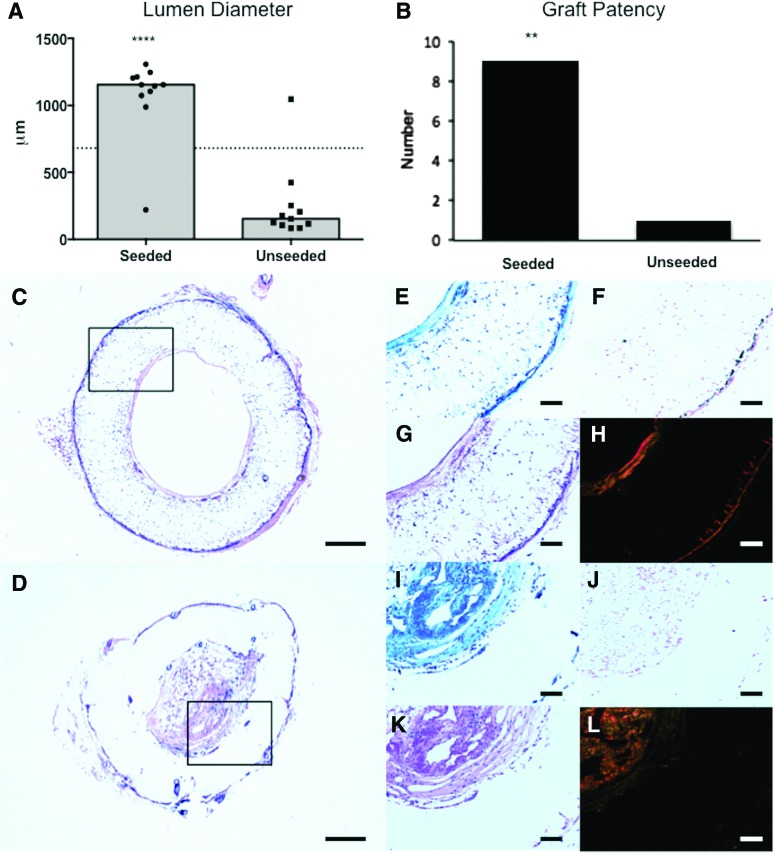
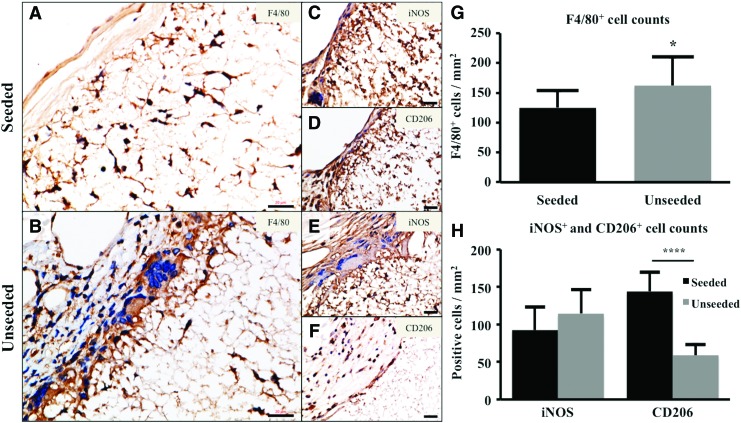
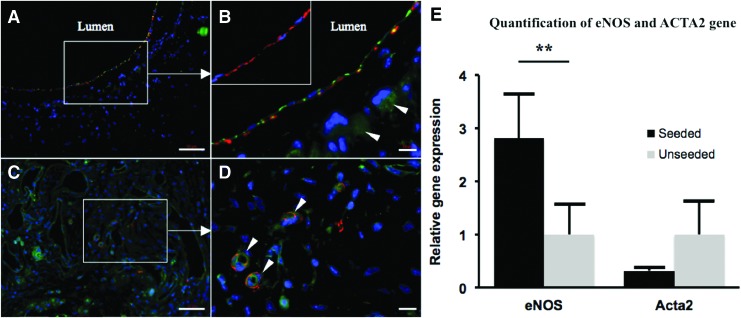
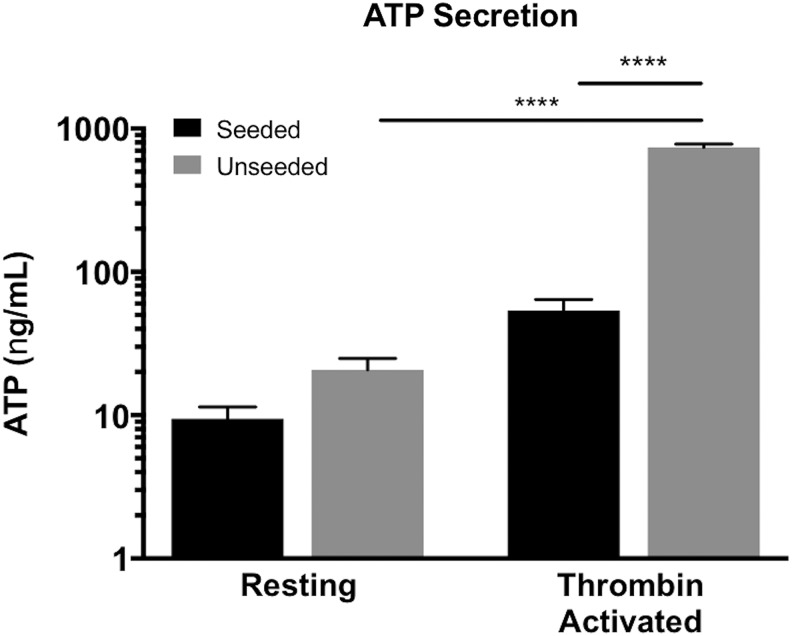
Results: BM-MNC seeding of electrospun scaffolds prevented stenosis compared with unseeded scaffolds (seeded: 9/10 patent vs. unseeded: 1/10 patent, p = 0.0003). Seeded vascular grafts demonstrated concentric laminated smooth muscle cells, a confluent endothelial monolayer, and a collagen-rich extracellular matrix. Platelet-derived ATP, a marker of platelet activation, was significantly reduced after incubating thrombin-activated platelets in the presence of seeded scaffolds compared with unseeded scaffolds (p < 0.0001). In addition, reduced macrophage infiltration and a higher M2 macrophage percentage were observed in seeded grafts.
Conclusions: The beneficial effects of BM-MNC seeding apply to electrospun TEVG scaffolds by attenuating stenosis through the regulation of platelet activation and inflammatory macrophage function, leading to well-organized neotissue formation. BM-MNC seeding is a valuable technique that can be used in the rational design of optimal TEVG scaffolds.
Keywords: biodegradable scaffold; bone marrow mononuclear cell (BM-MNC) seeding; electrospinning; nanofiber; stenosis; tissue-engineered vascular graft (TEVG).
Conflict of interest statement
Drs. Breuer and Shinoka receive research support from Gunze Ltd. (Kyoto, Japan) and Cook Regentec (Indianapolis, IN). Dr. Breuer is on the Scientific Advisory Board of Cook Medical (Bloomington, IN). Dr. Hibino receives research support from Secant Medical (Telford, PA). Jed Johnson is a co-founder of Nanofiber Solutions, Inc. (Columbus, OH). The remaining authors have no conflicts of interest to disclose.
Figures
References
-
- Pham Q.P., Sharma U., and Mikos A.G. Electrospinning of polymeric nanofibers for tissue engineering applications: a review. Tissue Eng 12, 1197, 2006 - PubMed
-
- Cleary M.A., Geiger E., Grady C., Best C., Naito Y., and Breuer C. Vascular tissue engineering: the next generation. Trends Mol Med 18, 394, 2012 - PubMed
-
- Rocco K.A., Maxfield M.W., Best C.A., Dean E.W., and Breuer C.K. In vivo applications of electrospun tissue-engineered vascular grafts: a review. Tissue Eng Part B Rev 20, 628, 2014 - PubMed
-
- Tara S., Rocco K.A., Hibino N., et al. . Vessel bioengineering. Circ J 78, 12, 2014 - PubMed
-
- Rathore A., Cleary M., Naito Y., Rocco K., and Breuer C. Development of tissue engineered vascular grafts and application of nanomedicine. Wiley Interdiscip Rev Nanomed Nanobiotechnol 4, 257, 2012 - PubMed
Publication types
MeSH terms
Grants and funding
LinkOut - more resources
Full Text Sources
Other Literature Sources
Medical
