


Transcriptomics and the Mediterranean Diet: A Systematic Review
- PMID: 28486416
- PMCID: PMC5452202
- DOI: 10.3390/nu9050472
Transcriptomics and the Mediterranean Diet: A Systematic Review
Abstract
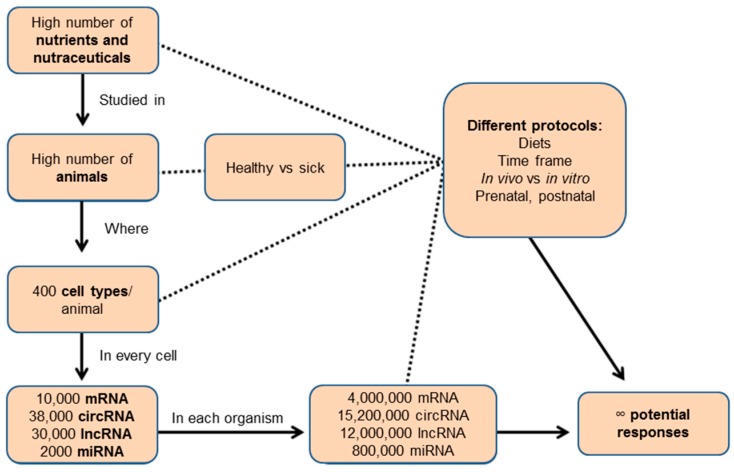
The Mediterranean diet has been proven to be highly effective in the prevention of cardiovascular diseases and cancer and in decreasing overall mortality. Nowadays, transcriptomics is gaining particular relevance due to the existence of non-coding RNAs capable of regulating many biological processes. The present work describes a systematic review of current evidence supporting the influence of the Mediterranean diet on transcriptomes of different tissues in various experimental models. While information on regulatory RNA is very limited, they seem to contribute to the effect. Special attention has been given to the oily matrix of virgin olive oil. In this regard, monounsaturated fatty acid-rich diets prevented the expression of inflammatory genes in different tissues, an action also observed after the administration of olive oil phenolic compounds. Among these, tyrosol, hydroxytyrosol, and secoiridoids have been found to be particularly effective in cell cycle expression. Less explored terpenes, such as oleanolic acid, are important modulators of circadian clock genes. The wide range of studied tissues and organisms indicate that response to these compounds is universal and poses an important level of complexity considering the different genes expressed in each tissue and the number of different tissues in an organism.
Keywords: Mediterranean diet; gene expression profile; microarray; olive oil; transcriptome.
Conflict of interest statement
The authors declare no conflict of interest.
Figures


References
-
- Corella D., Ordovas J.M. How does the mediterranean diet promote cardiovascular health? Current progress toward molecular mechanisms: Gene-diet interactions at the genomic, transcriptomic, and epigenomic levels provide novel insights into new mechanisms. Bioessays. 2014;36:526–537. doi: 10.1002/bies.201300180. - DOI - PubMed
-
- Toledo E., Salas-Salvado J., Donat-Vargas C., Buil-Cosiales P., Estruch R., Ros E., Corella D., Fito M., Hu F.B., Aros F., et al. Mediterranean diet and invasive breast cancer risk among women at high cardiovascular risk in the predimed trial: A randomized clinical trial. JAMA Intern. Med. 2015;175:1752–1760. doi: 10.1001/jamainternmed.2015.4838. - DOI - PubMed
Publication types
MeSH terms
Substances
LinkOut - more resources
Full Text Sources
Other Literature Sources
