


Earliest signs of life on land preserved in ca. 3.5 Ga hot spring deposits
- PMID: 28486437
- PMCID: PMC5436104
- DOI: 10.1038/ncomms15263
Earliest signs of life on land preserved in ca. 3.5 Ga hot spring deposits
Erratum in
-
Corrigendum: Earliest signs of life on land preserved in ca. 3.5 Ga hot spring deposits.Nat Commun. 2017 Aug 16;8:16149. doi: 10.1038/ncomms16149. Nat Commun. 2017. PMID: 28812546 Free PMC article.
Abstract
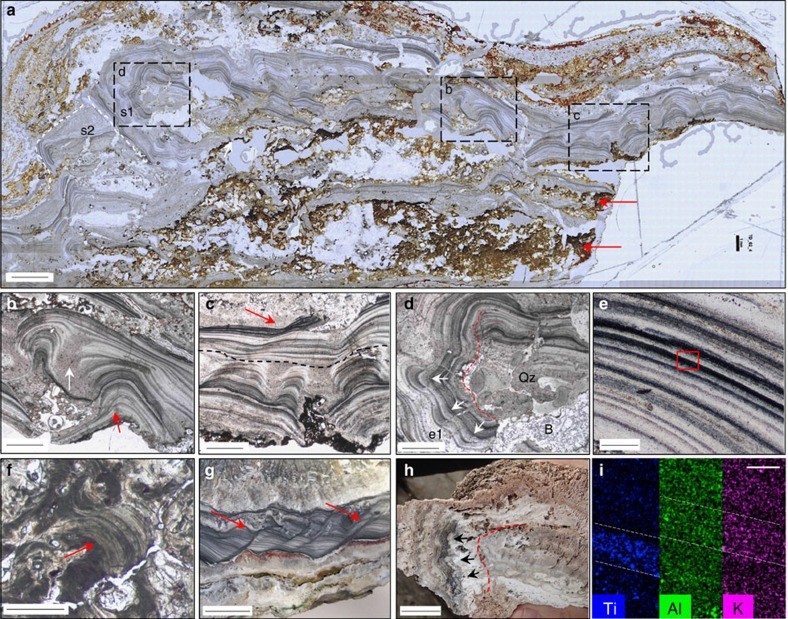
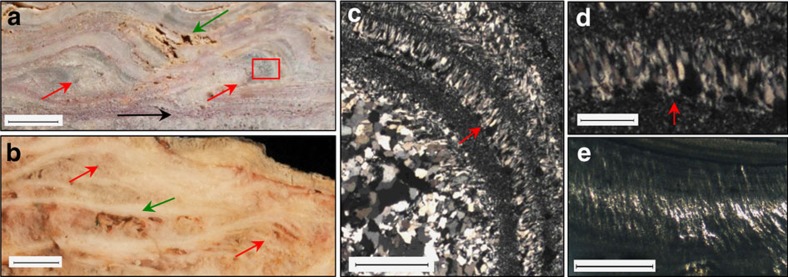
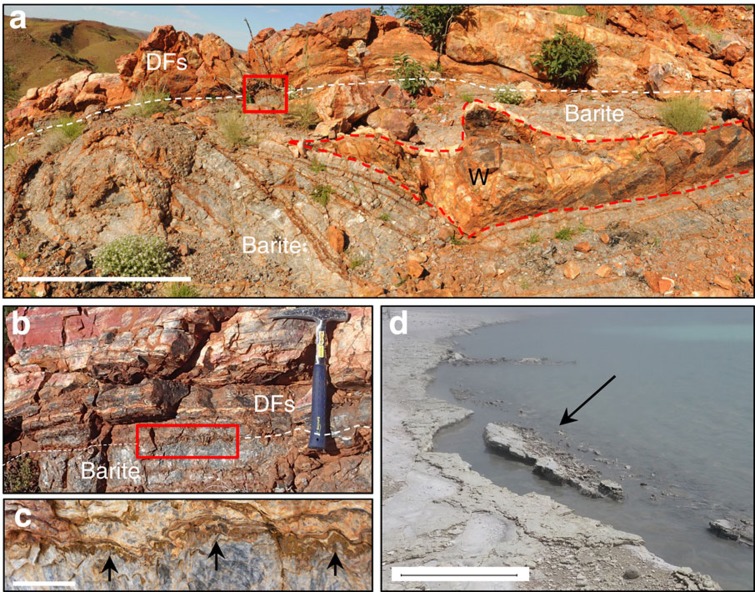
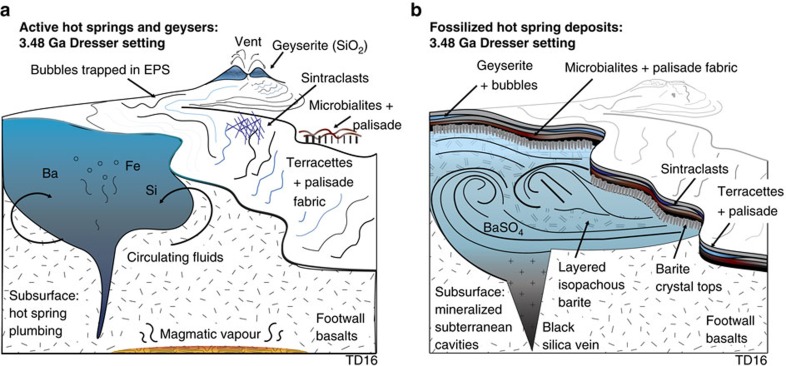
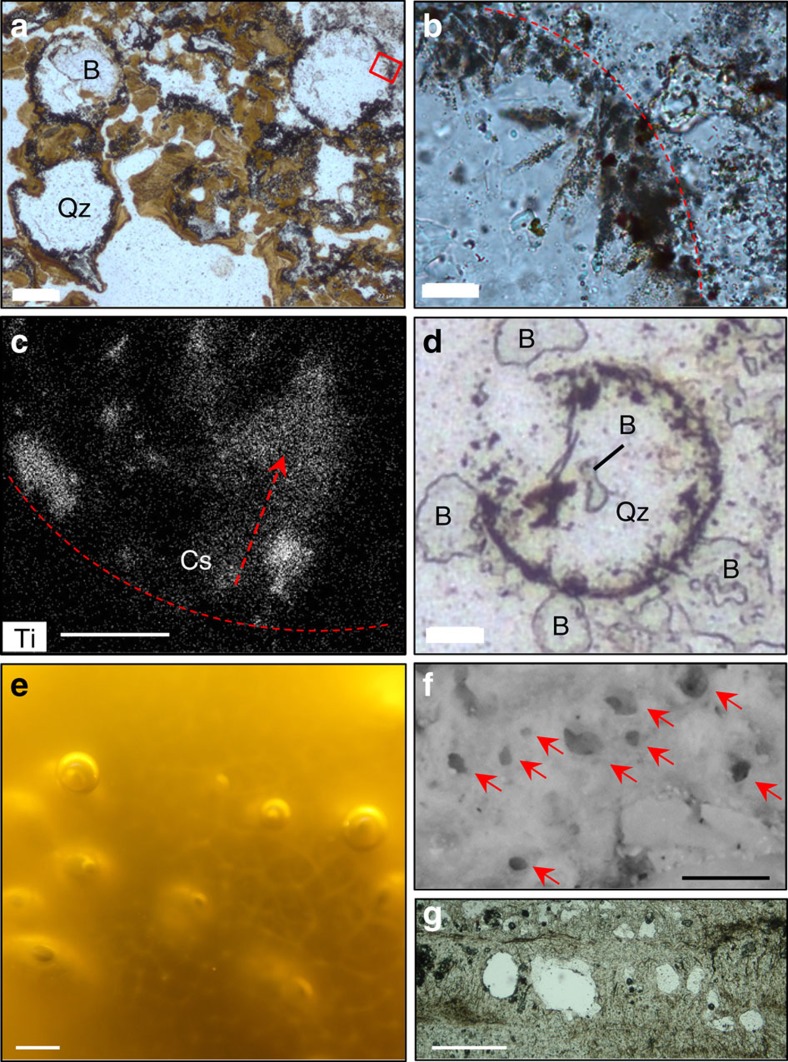
The ca. 3.48 Ga Dresser Formation, Pilbara Craton, Western Australia, is well known for hosting some of Earth's earliest convincing evidence of life (stromatolites, fractionated sulfur/carbon isotopes, microfossils) within a dynamic, low-eruptive volcanic caldera affected by voluminous hydrothermal fluid circulation. However, missing from the caldera model were surface manifestations of the volcanic-hydrothermal system (hot springs, geysers) and their unequivocal link with life. Here we present new discoveries of hot spring deposits including geyserite, sinter terracettes and mineralized remnants of hot spring pools/vents, all of which preserve a suite of microbial biosignatures indicative of the earliest life on land. These include stromatolites, newly observed microbial palisade fabric and gas bubbles preserved in inferred mineralized, exopolymeric substance. These findings extend the known geological record of inhabited terrestrial hot springs on Earth by ∼3 billion years and offer an analogue in the search for potential fossil life in ancient Martian hot springs.
Conflict of interest statement
The authors declare no competing financial interests.
Figures
References
-
- Walter M. R., Buick R. & Dunlop J. S. R. Stromatolites 3,400–3,500 Myr old from the North Pole area, Western Australia. Nature 248, 443–445 (1980).
-
- Buick R. & Dunlop J. S. R. Evaporitic sediments of early Archaean age from the Warrawoona Group, North Pole, Western Australia. Sedimentology 37, 247–277 (1990).
-
- Nijman W., de Bruijne K. C. H. & Valkering M. E. Growth fault control of early Archaean cherts, barite mounds and chert-barite veins, North Pole Dome, Eastern Pilbara, Western Australia. Precambrian Res. 88, 25–52 (1998).
-
- Van Kranendonk M. J. & Pirajno F. Geochemistry of metabasalts and hydrothermal alteration zones associated with c. 3.45 Ga chert and barite deposits: implications for the geological setting of the Warrawoona Group, Pilbara Craton, Australia. Geochemistry 4, 253–278 (2004).
-
- Van Kranendonk M. J. Volcanic degassing, hydrothermal circulation and the flourishing of early life on Earth: a review of the evidence from c. 3490-3240 Ma rocks of the Pilbara Supergroup, Pilbara Craton, Western Australia. Earth Sci. Rev. 74, 197–240 (2006).
Publication types
LinkOut - more resources
Full Text Sources
Other Literature Sources
