Mortality and kidnapping estimates for the Yazidi population in the area of Mount Sinjar, Iraq, in August 2014: A retrospective household survey
- PMID: 28486492
- PMCID: PMC5423550
- DOI: 10.1371/journal.pmed.1002297
Mortality and kidnapping estimates for the Yazidi population in the area of Mount Sinjar, Iraq, in August 2014: A retrospective household survey
Abstract
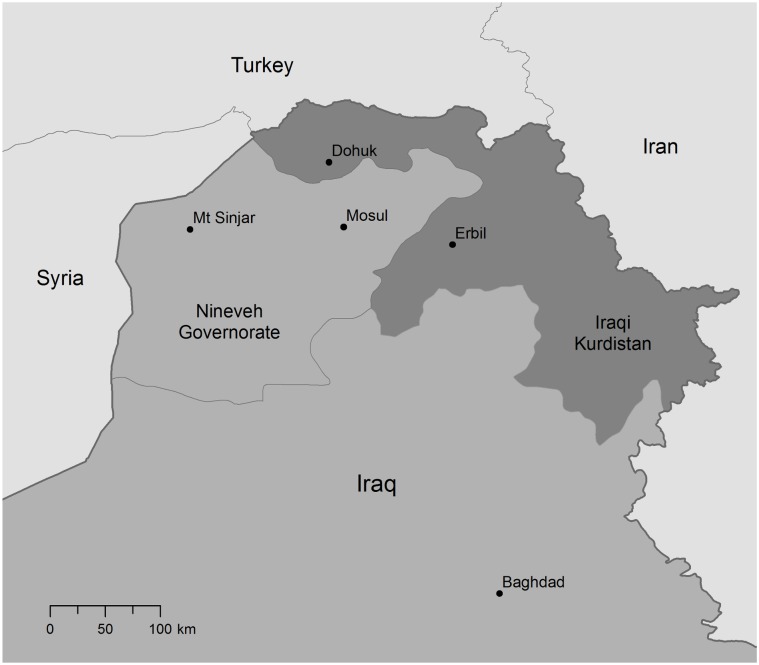
Background: In August 2014, the so-called Islamic State of Iraq and Syria (ISIS) attacked the Yazidi religious minority living in the area of Mount Sinjar in Nineveh governorate, Iraq. We conducted a retrospective household survey to estimate the number and demographic profile of Yazidis killed and kidnapped.
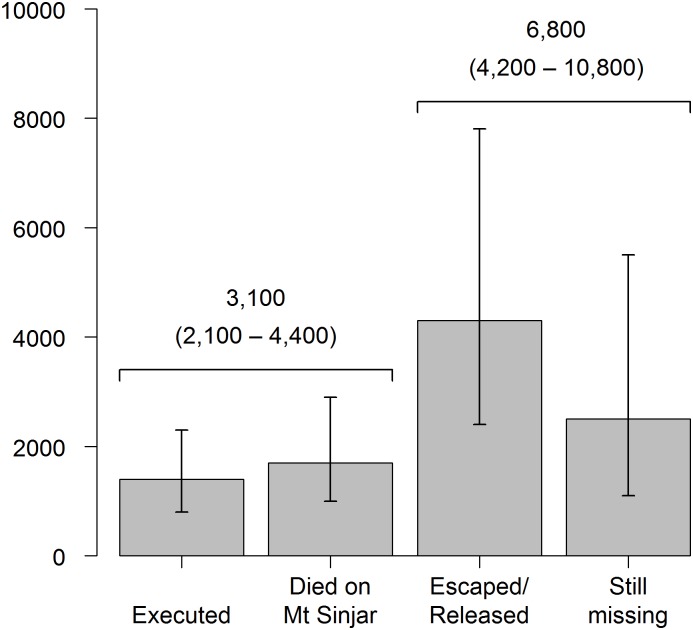
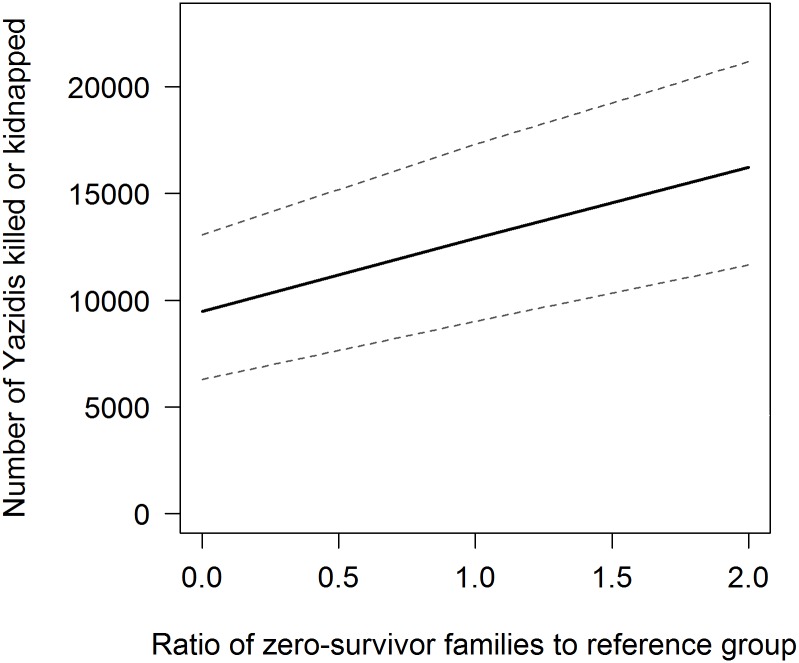
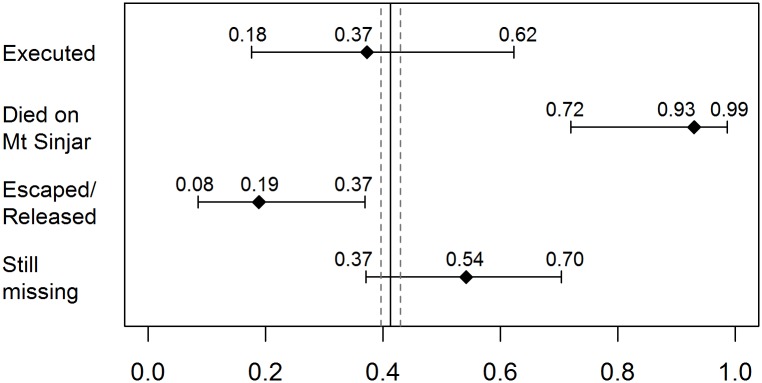
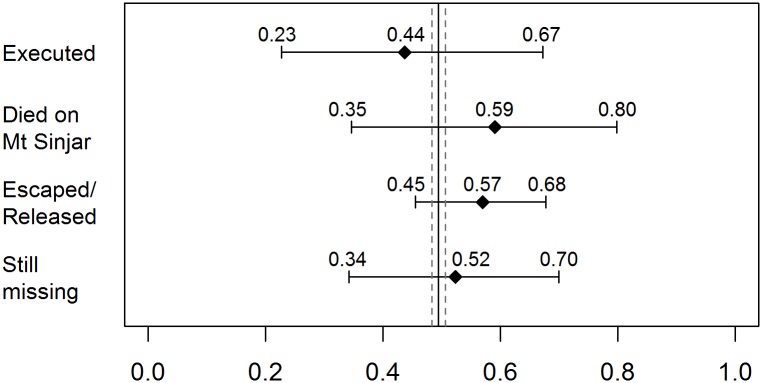
Methods and findings: The survey covered the displaced Yazidi population from Sinjar residing in camps in the Kurdistan Region of Iraq. Fieldwork took place between 4 November and 25 December, 2015. A systematic random sample of 1,300 in-camp households were interviewed about the current household composition and any killings and kidnappings of household members by ISIS. Of the 1,300 interviewed households, 988 were Yazidi from Sinjar. Yazidi households contained 6,572 living residents at the time of the survey; 43 killings and 83 kidnappings of household members were reported. We calculated the probability of being killed and kidnapped by dividing the number of reported killings and kidnappings by the number of sampled Yazidis at risk, adjusting for sampling design. To obtain the overall toll of killings and kidnappings, those probabilities were multiplied by the total Yazidi population living in Sinjar at the time of the ISIS attack, estimated at roughly 400,000 by the United Nations and Kurdish officials. The demographic profile of those killed and kidnapped was examined, distinguishing between children and adults and females and males. We estimated that 2.5% of the Yazidi population was either killed or kidnapped over the course of a few days in August 2014, amounting to 9,900 (95% CI 7,000-13,900) people in total. An estimated 3,100 (95% CI 2,100-4,400) Yazidis were killed, with nearly half of them executed-either shot, beheaded, or burned alive-while the rest died on Mount Sinjar from starvation, dehydration, or injuries during the ISIS siege. The estimated number kidnapped is 6,800 (95% CI 4,200-10,800). Escapees recounted the abuses they had suffered, including forced religious conversion, torture, and sex slavery. Over one-third of those reported kidnapped were still missing at the time of the survey. All Yazidis were targeted regardless of age and sex, but children were disproportionately affected. They were as likely as adults to be executed but constituted 93.0% (95% CI 71.9-98.6) of those who died on Mount Sinjar. Moreover, children only accounted for 18.8% (95% CI 8.4-36.9) of those who managed to escape captivity. A sensitivity analysis suggests that the actual toll of killings and kidnappings may be underestimated in our data because of survival bias. The uncertainty associated with inference from a small sample of in-camp households and the reliance on a rough figure of 400,000 for extrapolation to the total Yazidi population of Sinjar at the time of the ISIS attack are the main limitations of this study.
Conclusions: Consistent with other existing evidence, our data provide a clear indication of the severity of the ISIS attack against the Yazidis in terms of both the number and demographic profile of those targeted.
Conflict of interest statement
The authors have declared that no competing interests exist.
Figures
References
-
- Amnesty International. Ethnic cleansing on a historic scale: Islamic State’s systematic targeting of minorities in Northern Iraq. Amnesty International Report; 2014. https://www.es.amnesty.org/uploads/media/Iraq_ethnic_cleansing_final_for...
-
- Simon-Skjodt Center for the Prevention of Genocide. “Our Generation is gone.” The Islamic State’s targeting of Iraqi minorities in Ninewa. Bearing Witness Trip Report; 2015. https://www.ushmm.org/m/pdfs/Iraq-Bearing-Witness-Report-111215.pdf
-
- OHCHR. “They came to destroy”: ISIS Crimes Against the Yazidis. A/HRC/32/CRP.2; 2016. http://www.ohchr.org/Documents/HRBodies/HRCouncil/CoISyria/A_HRC_32_CRP....
-
- EKurd Daily. Iraqi Kurdistan says 400,000 Yazidi Kurds were displaced from Sinjar district. EKurd Daily; 2015. http://ekurd.net/400000-displaced-yazidi-kurds-in-kurdistan-2015-08-05
-
- Maisel S. Social Change Amidst Terror and Discrimination: Yezidis in the New Iraq. The Middle East Institute Policy Brief. 2008;18. https://www.files.ethz.ch/isn/90905/No_18_Social_Change_Amidst_Terror.pdf
MeSH terms
LinkOut - more resources
Full Text Sources
Other Literature Sources
Molecular Biology Databases