Inflammatory Bowel Disease: Updates on Molecular Targets for Biologics
- PMID: 28486793
- PMCID: PMC5491079
- DOI: 10.5009/gnl16308
Inflammatory Bowel Disease: Updates on Molecular Targets for Biologics
Abstract
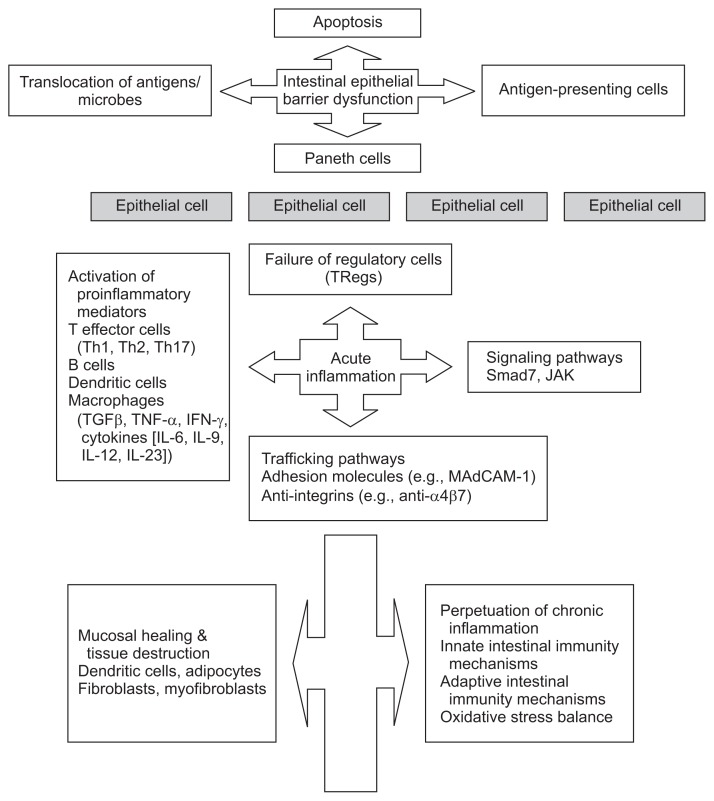
Therapy for inflammatory bowel disease (IBD) has changed, with several new agents being evaluated. The era of anti-tumor necrosis factor (anti-TNF) antibody therapy saw remarkable progress in IBD therapy. Some patients, however, do not respond to anti-TNF treatment, or their response decreases over time. This phenomenon highlights the need to identify new molecular targets for therapy in IBD. The targets of new therapeutic molecules in IBD must aim to restore immune dysregulation by the inhibition of proinflammatory cytokines (TNF-α, interleukin [IL]-6, IL-13, IL-17, IL-18, and IL-21) and augmentation of the effect of anti-inflammatory cytokines (IL-10, IL-11, and transforming growth factor β) and to pursue new anti-inflammatory targets, such as regulatory T-cell therapy, Smad7 antisense, Janus-activated kinase inhibition, Toll-like receptor stimulation, leukocyte adhesion, and blockade of T-cell homing via integrins and mucosal addressin cellular adhesion molecule-1. In addition, potential molecular targets could restore mucosal barrier function and stimulate mucosal healing. Despite these potential targets, the value and clinical significance of most new molecules remain unclear, and clinical efficacy and safety must be better defined before their implementation in clinical practice. This article aims to review the promising and emerging molecular targets that could be clinically meaningful for novel therapeutic approaches.
Keywords: Colitis, ulcerative; Crohn disease; Inflammatory bowel disease; Molecular targets; Therapy targets.
Conflict of interest statement
No potential conflict of interest relevant to this article was reported.
Figures
References
-
- Bernstein CN, Loftus EV, Jr, Ng SC, Lakatos PL, Moum B Epidemiology and Natural History Task Force of the International Organization for the Study of Inflammatory Bowel Disease (IOIBD) Hospitalisations and surgery in Crohn’s disease. Gut. 2012;61:622–629. doi: 10.1136/gutjnl-2011-301397. - DOI - PubMed
Publication types
MeSH terms
Substances
LinkOut - more resources
Full Text Sources
Other Literature Sources
Molecular Biology Databases
Miscellaneous