


Progression of the epidemiological transition in a rural South African setting: findings from population surveillance in Agincourt, 1993-2013
- PMID: 28486934
- PMCID: PMC5424387
- DOI: 10.1186/s12889-017-4312-x
Progression of the epidemiological transition in a rural South African setting: findings from population surveillance in Agincourt, 1993-2013
Abstract
Background: Virtually all low- and middle-income countries are undergoing an epidemiological transition whose progression is more varied than experienced in high-income countries. Observed changes in mortality and disease patterns reveal that the transition in most low- and middle-income countries is characterized by reversals, partial changes and the simultaneous occurrence of different types of diseases of varying magnitude. Localized characterization of this shifting burden, frequently lacking, is essential to guide decentralised health and social systems on the effective targeting of limited resources. Based on a rigorous compilation of mortality data over two decades, this paper provides a comprehensive assessment of the epidemiological transition in a rural South African population.
Methods: We estimate overall and cause-specific hazards of death as functions of sex, age and time period from mortality data from the Agincourt Health and socio-Demographic Surveillance System and conduct statistical tests of changes and differentials to assess the progression of the epidemiological transition over the period 1993-2013.
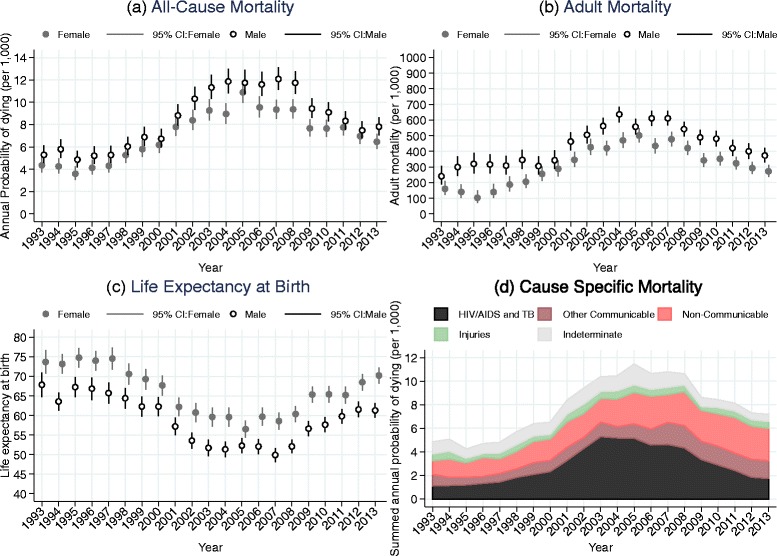
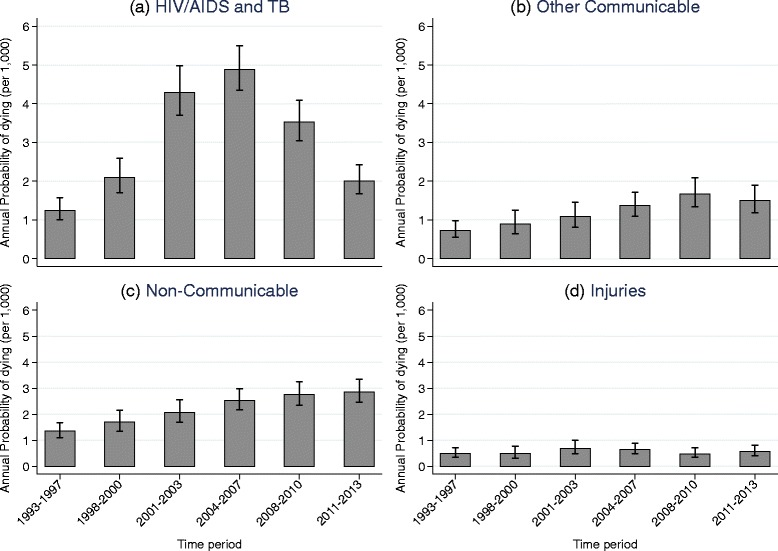
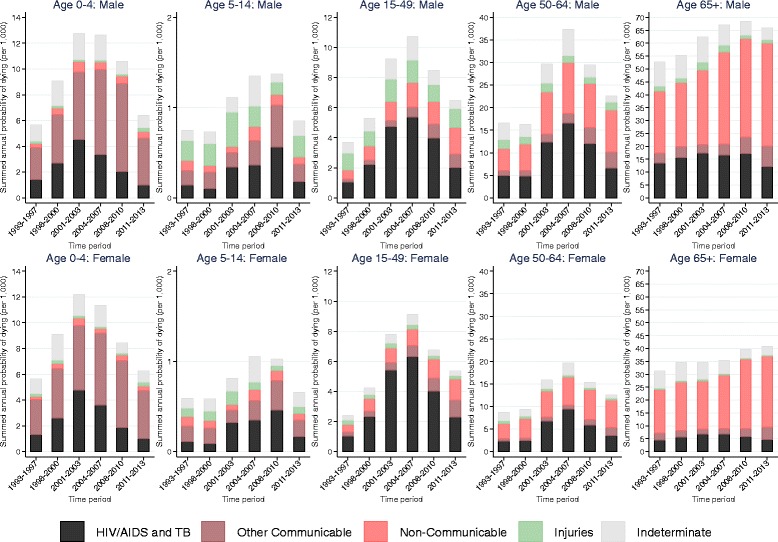
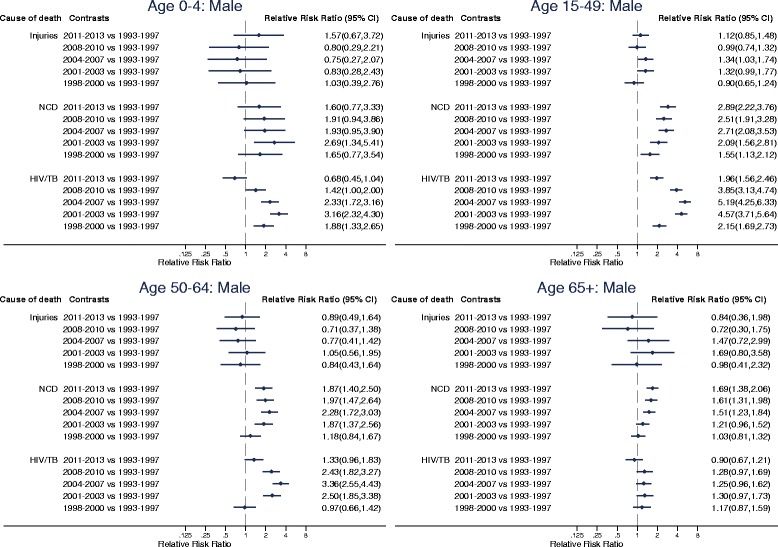
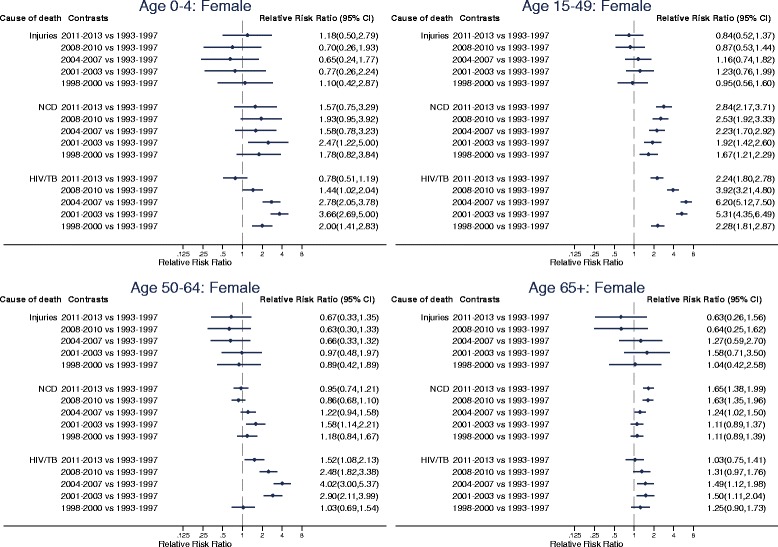
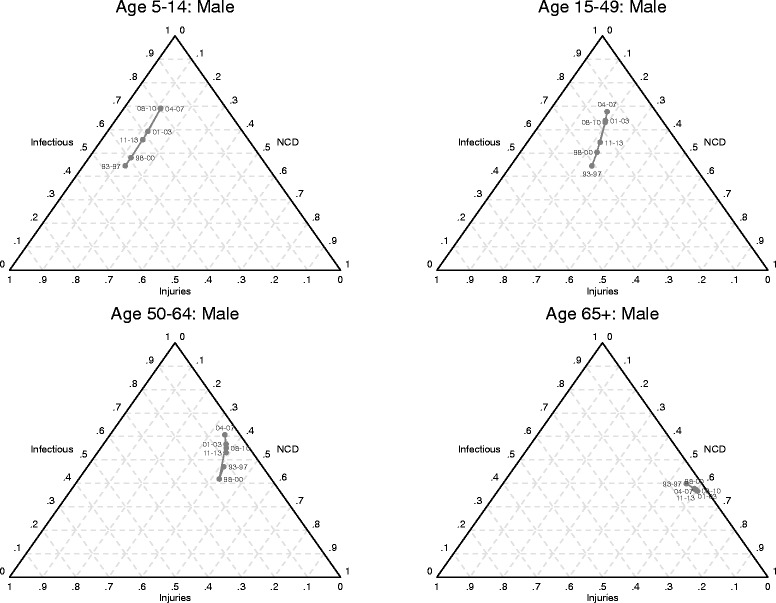
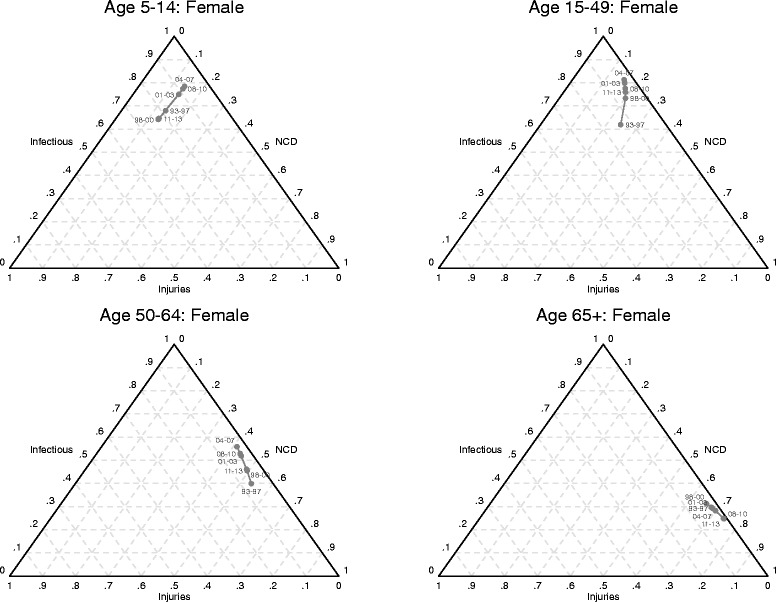
Results: From the early 1990s until 2007 the population experienced a reversal in its epidemiological transition, driven mostly by increased HIV/AIDS and TB related mortality. In recent years, the transition is following a positive trajectory as a result of declining HIV/AIDS and TB related mortality. However, in most age groups the cause of death distribution is yet to reach the levels it occupied in the early 1990s. The transition is also characterized by persistent gender differences with more rapid positive progression in females than males.
Conclusions: This typical rural South African population is experiencing a protracted epidemiological transition. The intersection and interaction of HIV/AIDS and antiretroviral treatment, non-communicable disease risk factors and complex social and behavioral changes will impact on continued progress in reducing preventable mortality and improving health across the life course. Integrated healthcare planning and program delivery is required to improve access and adherence for HIV and non-communicable disease treatment. These findings from a local, rural setting over an extended period contribute to the evidence needed to inform further refinement and advancement of epidemiological transition theory.
Keywords: Agincourt; Cause composition; HIV/Aids; InterVA; Mortality; Non-communicable diseases, epidemiological transition; Rural; South Africa; Verbal autopsy.
Figures
References
-
- Rogers RG, Hackenberg R. Extending epidemiologic transition theory: a new stage. Soc Biol. 1987;34(3–4):234. - PubMed
-
- Olshansky SJ, Ault AB. The fourth stage of the epidemiologic transition: the age of delayed degenerative diseases. The Milbank Memorial Fund Quarterly. 1986;64:355–391. - PubMed
-
- Caselli G, Mesle F, Vallin J. Epidemiologic transition theory exceptions. Genus. 2002;58(1):9–51.
-
- Frenk J, Bobadilla JL, Sepúlveda J, Cervantes ML. Health transition in middle-income countries: new challenges for health care. Health Policy Plan. 1989;4(1):29. doi: 10.1093/heapol/4.1.29. - DOI
MeSH terms
Grants and funding
LinkOut - more resources
Full Text Sources
Other Literature Sources
Medical
