


ANTI-INFLAMMATORY ACTIVITY OF EUCALYPTUS SPP. AND PISTASCIA LENTISCUS LEAF EXTRACTS
- PMID: 28487887
- PMCID: PMC5416627
- DOI: 10.21010/ajtcam.v13i5.1
ANTI-INFLAMMATORY ACTIVITY OF EUCALYPTUS SPP. AND PISTASCIA LENTISCUS LEAF EXTRACTS
Abstract
Background: Eucalyptus spp. and Pistascia lentiscus are among the Palestinian trees that are traditionally used in folkloric medicine in treating many diseases; leaves of which are thought to have anti-inflammatory, antibacterial and antioxidant effects. The goal of this study is to evaluate the in vitro inhibitory effect of Eucalyptus spp. and Pistascia lentiscus extracts on Lipopolysacaride (LPS)-induced Interlukin-6 (Il-6) and Tumor Necrosis Factor-α (TNF-α) by polymorphonuclear Cells (PMNCs).
Materials and methods: Polymorphonuclear cells were isolated from the whole blood using Histopaque (Ficol-1077) method and then cultured in an enriched Roswell Park Memorial Institute (RBMI) medium. Supernatants' Interlukin-6 (IL-6) and Tumor Necrosis Factor (TNF-α) levels were determined 24 hour after LPS stimulation. HPLC was employed to determine the concentration of phenolic compounds in the extracts. The concentrations of TNF-α and IL-6 were compared using paired-samples t test.
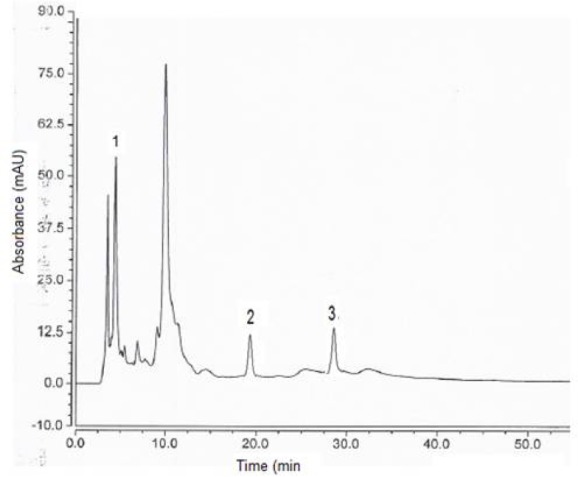
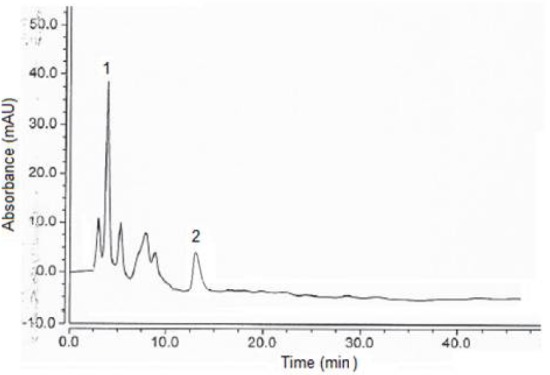
Results: Eucalyptus spp. and Pistascia lentiscus leaves extracts have shown significant reduction in the levels of both Il-6 and TNF-α Gallic acid; a strong anti-inflammatory agent was found to be the major phenolic compound in both leaf extracts. However, other anti-inflammatory phenolic compounds were detected in Pitascia lentiscus extract including syringic acid and p-coumaric acid, while chlorogenic acid was detected in Eucalyptus spp. leaf extract.
Conclusion: Reduction in the levels of Il-6 and TNF-α upon the effect of both Eucalyptus spp. and Pistascia lentiscus extract is an indication of their anti-inflammatory effects. Our results may also indicate that the observed anti-inflammatory effect of the above extracts may be due to the presence of gallic acid and other phenolic compounds. List of Abbreviations and Nomenclature: LPS: Lipopolysacaride, Il-6: Interlukin-6, TNF-α: Tumor Necrosis Factor-α, PMNCs: Polymorphonuclear Cells, HPLC: High Performance Liquid Chromatography, ELISA: Enzyme Linked Immune Sorbent Assay, EDTA: Ethylene Diamine Tetra Acetic acid, PBS: phosphate buffered saline, RPMI: Roswell Park Memorial Institute medium FBS: Fetal Bovine Serum.
Keywords: Anti-inflammatory; Eucalyptus spp; HPLC; IL-6; Pistascia lentiscus; TNF-alpha.
Figures
References
-
- Bampouli A, Kyriakopoulou K, Papaefstathiou G, Louli V, Aligiannis N, Magoulas K, Magoulas K, Krokida M. Evaluation of total antioxidant potential of Pistacia lentiscus var. chia leaves extracts using UHPLC-HRMS. J. Food Eng. 2015;167:25–31.
-
- Cho J.Y, Kim P.S, Park J, Yoo E.S, Baik K.U, Kim Y.K, Park M.H. Inhibitor of tumor necrosis factor-αproduction in lipopolysaccharide-stimulated RAW264.7 cells from Amorpha fruticosa. J. Ethnopharmacol. 2000;70(2):127–133. - PubMed
-
- Gaestel M, Kotlyarov A, Kracht M. Targeting innate immunity protein kinase signalling in inflammation. Nat. Rev. Drug Discov. 2009;8(6):480–499. - PubMed
-
- Gbenou J.D, Ahounou J.F, Akakpo H.B, Laleye A, Yayi E, Gbaguidi F, Baba-Moussa L, Darboux R, Dansou P, Moudachirou M, Kotchoni S.O. Phytochemical composition of Cymbopogon citratus and Eucalyptus citriodora essential oils and their anti-inflammatory and analgesic properties on Wistar rats. Mol. Biol. Rep. 2013;40(2):1127–1134. - PubMed
MeSH terms
Substances
LinkOut - more resources
Full Text Sources
Miscellaneous