


Comparative Analysis of the Major Chemical Constituents in Salvia miltiorrhiza Roots, Stems, Leaves and Flowers during Different Growth Periods by UPLC-TQ-MS/MS and HPLC-ELSD Methods
- PMID: 28489029
- PMCID: PMC6154317
- DOI: 10.3390/molecules22050771
Comparative Analysis of the Major Chemical Constituents in Salvia miltiorrhiza Roots, Stems, Leaves and Flowers during Different Growth Periods by UPLC-TQ-MS/MS and HPLC-ELSD Methods
Abstract
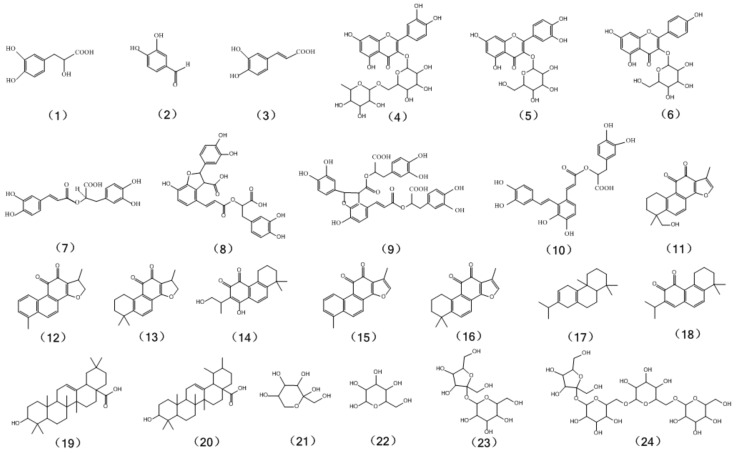
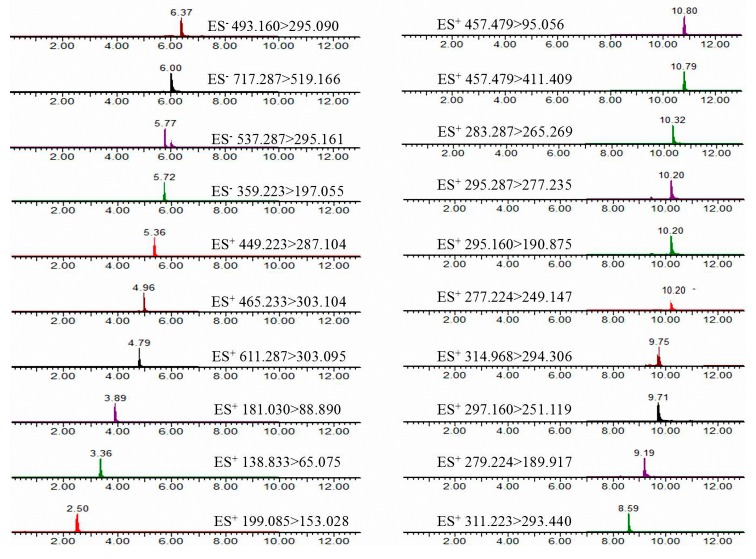
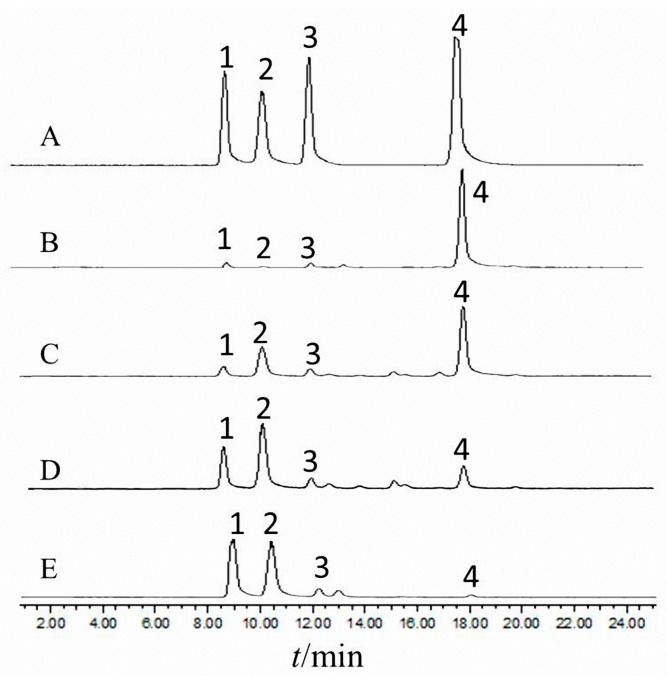
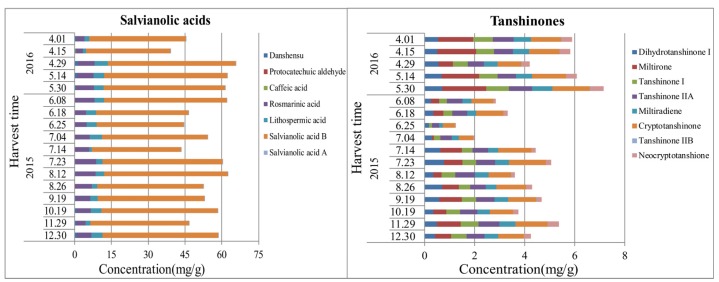
Salvia miltiorrhiza is a traditional Chinese herbal medicine containing multiple components that contribute to its notable bioactivities. This article investigated the distribution and dynamic changes of chemical constituents in various parts of S. miltiorrhiza from different growth periods. An ultra-high performance liquid chromatography-triple quadrupole mass spectrometer (UPLC-TQ-MS/MS) and high-performance liquid chromatography coupled with evaporative light scattering detector (HPLC-ELSD) methods were developed for accurate determination of 24 compounds (including phenolic acids, flavonoids, triterpenes, and saccharides) in S. miltiorrhiza. The established methods were validated with good linearity, precision, repeatability, stability, and recovery. Results indicated that there were category and quantity discrepancies in different parts of the plant, for the roots mainly contained salvianolic acids and tanshinones, and most of the saccharides are stachyose. In the aerial parts, salvianolic acids, flavonoids, and triterpenes, except the tanshinones, were detected, and the saccharides were mainly monosaccharides. Dynamic accumulation analysis suggested the proper harvest time for S. miltiorrhiza Bunge was the seedling stage in spring, and for the aerial parts was July to August. This study provided valuable information for the development and utilization value of the aerial parts of S. miltiorrhiza and was useful for determining the optimal harvest time of the plant.
Keywords: S. miltiorrhiza Bunge; aerial parts; distribution; dynamic changes; harvest time.
Conflict of interest statement
The authors declare no conflict of interest.
Figures
References
-
- Yang L., Ding G.H., Lin H.Y., Cheng H.N., Kong Y., Wei Y.K., Fang X., Liu R.Y., Wang L.J., Chen X.Y., et al. Transcriptome analysis of medicinal plant Salvia miltiorrhiza and identification of genes related to tanshinone biosynthesis. PLoS ONE. 2013;8:e80464. doi: 10.1371/annotation/fd65b655-d35b-47d1-8793-07da2273c144. - DOI - PMC - PubMed
-
- Cai H.D., Su S.L., Li Y.H., Zhu Z.H., Guo J.M., Zhu Y., Guo S., Qian D.W., Duan J.A. Simultaneous determination of four tanshinones by UPLC-TQ/MS and their pharmacokinetic application after administration of single ethanol extract of danshen combined with water extract in normal and adenine-induced chronic renal failure rats. Molecules. 2016;21:1630. doi: 10.3390/molecules21121630. - DOI - PMC - PubMed
-
- Zhang J., An S.J., Fu J.Q., Liu P., Shao T.M., Li M., Li X., Jiao Z., Chai X.Q. Mixed aqueous extract of Salvia miltiorrhiza reduces blood pressure through inhibition of vascular remodelling and oxidative stress in spontaneously hypertensive rats. Cell. Physiol. Biochem. 2016;40:347–360. doi: 10.1159/000452550. - DOI - PubMed
Publication types
MeSH terms
Substances
LinkOut - more resources
Full Text Sources
Other Literature Sources
